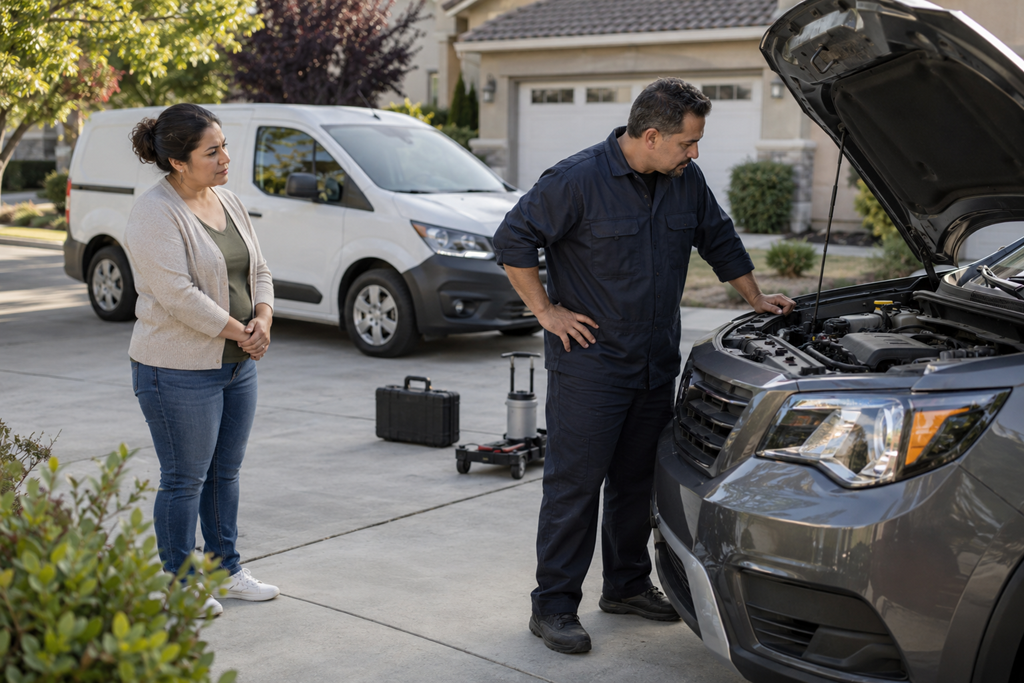
Mobile auto repair usually begins with a booking conversation, followed by an on-site inspection, a clearer explanation of what the vehicle needs, authorization to proceed, the repair itself when it can be completed safely on location, and a final check before the mechanic leaves. The exact sequence can vary because the first visit may reveal a different problem, a needed part, or a service that cannot reasonably be finished where the vehicle is parked.
For Sacramento-area drivers, one of the main advantages of mobile repair is that the mechanic comes to the vehicle rather than requiring the vehicle to be brought to a traditional shop. That convenience does not mean every appointment follows a perfectly predictable path, however. Understanding the basic progression can make it easier to know what to expect and what questions to ask along the way.
Booking Usually Starts With a Description of the Vehicle and the Problem
The process generally begins when you contact a mobile mechanic and explain what you need help with.
Depending on the provider and the situation, you may be asked for basic vehicle information such as the year, make, and model, along with where the vehicle is located and what you have noticed. If you are requesting a specific maintenance service rather than troubleshooting a problem, you can explain that instead.
The mechanic may also need to know whether the vehicle starts, whether it can be moved, and what kind of parking or working space is available.
This early conversation helps the provider decide what to bring and whether the requested service appears suitable for mobile repair. It is better to think of the booking information as preparation for the visit, not necessarily as a final determination of what the vehicle needs.
The On-Site Inspection May Clarify What Is Actually Needed
Once the mechanic arrives, the next stage is usually confirming the problem or service request in person.
That distinction matters.
A symptom that sounds straightforward during booking may have more than one possible cause. The mechanic may need to inspect the vehicle before determining what work makes sense.
For example, what initially sounds like a request for one specific repair may turn into a different recommendation after the vehicle is examined. That does not automatically mean something went wrong with the booking process. It may simply mean the mechanic now has information that was impossible to gather remotely.
A useful mobile repair experience should give you a clearer understanding of the situation before additional work moves forward.
The Scope Should Become Clearer Before the Repair Proceeds
After evaluating the vehicle, the mechanic can explain what was found and what the next step would involve.
This is an important transition point in the appointment.
If the recommended work differs from what you originally expected, you should have an opportunity to understand why. You can also ask whether the work can be completed during the current visit, whether another part is needed, and whether anything about the original estimate or expected timing has changed.
You do not need to understand every technical detail to make an informed decision.
What matters is being able to understand the basic connection between the problem being discussed, the work being recommended, and what you are being asked to approve.
Some Mobile Repairs Can Be Completed in One Visit
When the issue has been identified, the needed parts and equipment are available, and the location is appropriate for the work, the mechanic may be able to complete the service during the same appointment.
This is the version of mobile repair many consumers picture: the mechanic arrives, confirms the problem, performs the agreed-upon work, checks the result, and finishes the visit without the vehicle ever leaving the property.
That can happen, but it should not be treated as a guarantee for every appointment.
The ability to finish in one visit depends on what the inspection reveals.
Other Repairs May Require a Second Visit or a Different Service Setting
Sometimes the initial visit answers the question without completing the entire repair.
A needed part may not have been identifiable before inspection. The problem may turn out to involve something different from the original description. The location may not offer enough suitable working space, or the repair may require equipment or conditions that are better handled somewhere else.
Weather and access can matter as well. A mobile mechanic working at a Sacramento-area home, apartment property, workplace, or other parking location has to work with the conditions available at that location.
If the repair cannot be completed during the first appointment, the most useful information is what happens next.
You should understand whether another mobile visit is practical, whether a part needs to be obtained first, or whether the vehicle needs a different type of repair setting.
Completion Is More Than the Moment the Repair Work Stops
When the agreed-upon service is finished, the appointment usually moves into a final review.
Depending on the type of work, the mechanic may perform an appropriate final check and then explain what was completed. This is also a reasonable time to ask whether there is anything you should know about the work that was performed or whether any separate concern was noticed during the visit.
The work area should also transition back from a service space to your normal driveway, parking area, or property.
A good ending should leave you knowing what was done rather than simply knowing that the mechanic is leaving.
Timing Can Change Between Booking and Completion
Mobile repair appointments can feel especially uncertain when the original booking sounds simple but the actual visit develops differently.
Several factors can affect how quickly the process reaches completion, including:
- whether the original description matches what is found on site
- whether the required part is already available
- whether additional evaluation is needed
- whether the vehicle's location is suitable for the work
- whether weather or access affects the appointment
- whether the repair is appropriate for mobile service at all
This is why an estimated appointment length and the total time from booking to completed repair are not always the same thing.
The first tells you approximately how a scheduled visit may fit into your day. The second can depend on what the mechanic learns after seeing the vehicle.
A Few Questions Can Make the Process Easier to Understand
Before booking or while discussing the appointment, practical questions may include:
- What information do you need from me before the visit?
- Is this normally something you can evaluate at the vehicle's location?
- Will you inspect the vehicle before confirming the repair?
- What happens if the needed work is different from what we discussed during booking?
- If the repair cannot be finished during the first visit, what would the next step be?
- How will I know when the agreed-upon work is considered complete?
These questions are less about managing the mechanic's work and more about understanding the process you are agreeing to.
A Clear Process Matters More Than a Perfectly Predictable Appointment
Mobile auto repair is convenient partly because the service comes to the vehicle, but the process still involves evaluation, decisions, and practical limitations.
Booking starts the process. The on-site visit adds information. The inspection clarifies the scope. Authorization establishes what will be done. The repair moves forward when it can reasonably be completed on location, and the final handoff closes the appointment.
For Sacramento-area drivers comparing mobile mechanics, it can be useful to look beyond promises of convenience and pay attention to how clearly a provider explains those stages. Knowing how the process usually works makes it easier to recognize when an appointment is progressing normally and when you need more information before moving forward.