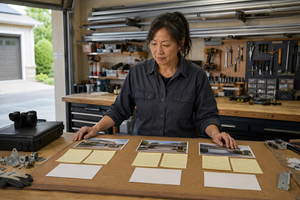
Locally relevant video topics do not have to begin with a Sacramento landmark or a city name in the title. The strongest ideas usually come from ordinary questions, service conditions, timing issues, and customer decisions that happen repeatedly while serving people in the Sacramento area. Start with what local customers genuinely need to understand, then make the location part of the explanation only when it changes the context.
For a small service business, this approach is usually more manageable than trying to constantly invent new video ideas. The material is already being created during estimates, appointments, consultations, service visits, follow-up conversations, and other normal interactions with customers.
The goal is to notice which of those moments are worth explaining.
Local Relevance Is More Than Putting “Sacramento” In The Title
A video does not become locally useful simply because the business adds Sacramento to a generic subject.
A topic such as “Questions To Ask Before Hiring A Contractor” could apply almost anywhere. That does not make it a bad topic, but adding a city name alone does not make the information meaningfully local.
A stronger approach is to look for situations your Sacramento-area customers actually encounter while researching, comparing, preparing for, or receiving your service.
Local relevance may come from the types of questions customers ask, the way appointments are handled, recurring property conditions, service-area logistics, seasonal timing, common preparation issues, or decisions customers repeatedly need help understanding.
Sometimes the resulting topic will need Sacramento in the title. Sometimes it will not.
What matters is that the subject came from the experience of serving a local audience rather than from a generic list of content ideas.
Start With Questions That Already Appear In Your Business
One of the simplest sources of useful video topics is a question you have answered more than once.
A home inspector may repeatedly need to explain what areas should be accessible before an inspection. A senior-care provider may hear families ask how an initial service conversation works. A flooring company may find that customers often wonder why a sample looks different once it is placed in their home.
Those are not manufactured marketing topics. They are communication needs that already exist.
When the same question keeps appearing, it may deserve a short educational video of its own.
This is especially useful for a small business because you are not creating content about something separate from your work. You are explaining something you already know customers want to understand.
Pay Attention To The Moments When Customers Hesitate
Questions are not the only source of ideas.
Sometimes the better clue is a decision point.
A customer may pause when comparing two service options. A homeowner may be surprised by something included or excluded from an estimate. A client may arrive without information that would have made the appointment easier. A prospect may misunderstand what happens before the actual service begins.
Those moments can reveal useful topics because they show where additional explanation may help.
Instead of asking, “What video should we make this month?” ask, “Where do our customers regularly need more context?”
That shift makes topic development much more practical.
Use Real Service Conditions As Topic Triggers
A local business can also find topics by noticing physical or operational conditions that repeatedly affect customer conversations.
Imagine a flooring professional who regularly shows customers how the same material can look different under different lighting conditions. That observation could lead to a useful video about what homeowners should notice when comparing flooring samples.
A locksmith may repeatedly receive calls where the customer is unsure how to describe the type of service needed. That pattern could suggest a video explaining what information is useful to have ready when contacting a locksmith.
A home inspection company may notice that customers frequently overlook access to certain areas before an appointment. That could become a straightforward preparation video.
None of these requires a complicated content strategy.
The business is simply turning recurring service knowledge into information that future customers can understand before they call.
Localize The Explanation Only Where It Helps
There is a difference between serving a local audience and forcing every topic to sound geographically specific.
If the useful answer is essentially the same everywhere, there may be no reason to repeatedly mention Sacramento throughout the video.
On the other hand, location belongs in the topic when the local context genuinely affects what the customer should understand.
That might include a service-area consideration, a common type of appointment preparation, a local property situation the business frequently encounters, or another recurring condition that shapes actual conversations with Sacramento-area customers.
The location should clarify the topic, not decorate it.
This helps keep the video useful to the people you actually serve without making it sound artificially optimized around a city name.
Turn Broad Subjects Into Specific Customer Questions
Broad topics are often difficult to record because they invite the business to explain too much at once.
“Everything You Need To Know About Home Inspections” is broad.
“What Should Be Accessible Before A Home Inspection?” gives the business one clear question to answer.
“Complete Guide To Choosing Flooring” is broad.
“Why Can A Flooring Sample Look Different Once It Is In Your Home?” creates a focused explanation.
“Everything About Hiring A Locksmith” is broad.
“What Information Should You Have Ready When Calling A Locksmith?” is easier for both the business and the viewer to understand.
A narrow question also gives the video a clear stopping point. You do not have to cover the entire service to make one useful piece of content.
Look For Topics In Five Ordinary Parts Of The Customer Experience
When you need ideas, review the normal path a customer takes through your business:
- Before contacting you: What do prospects often misunderstand while deciding whether your service fits their situation?
- Before an appointment or estimate: What information, access, preparation, or expectations would be helpful to clarify?
- While comparing options: Which legitimate choices regularly require explanation?
- During the service process: Which parts of the experience tend to create questions?
- After the service: What do customers commonly need to understand about what was completed, what remains unchanged, or what happens next?
You do not need to create videos for every question you uncover.
The exercise simply helps reveal which topics already have a reason to exist.
A Useful Local Topic Should Pass A Simple Test
Before recording a video, ask whether the topic solves a real communication problem.
Have customers actually asked about it?
Does the subject come up often enough to be worth explaining once?
Could someone watch the video before contacting your business and understand the service more clearly?
Can the topic be explained without making promises, giving individualized professional advice, or turning the video into a sales pitch?
Would the video still make sense several months from now?
If most of those answers are yes, you probably have a stronger topic than one chosen simply because it sounds marketable.
Avoid Making Every Video About The Business Itself
Another common limitation is starting every topic with what the business wants to say.
“We have experienced employees.”
“We provide several services.”
“We care about our customers.”
Those messages may have a place, but they do not automatically answer a question someone is trying to solve.
Customer-centered video topics usually begin somewhere else.
What is the customer comparing?
What are they uncertain about?
What regularly surprises them?
What should they understand before the appointment?
What do you find yourself explaining again and again?
A business can demonstrate experience naturally while answering those questions. It does not have to make experience itself the subject of every video.
Build A Small Library Instead Of Chasing Endless Ideas
A Sacramento small business does not need an enormous publishing schedule to benefit from useful educational videos.
A modest collection of focused videos can cover recurring questions, common decisions, appointment preparation, service expectations, and other subjects that remain relevant to future prospects.
That makes the goal much simpler.
Instead of trying to continually think of something new to say, document what your business repeatedly has to explain.
The best locally relevant video topics are often already hiding inside the work you do every week.
Related resource: If you would rather turn one of those recurring customer questions into a professionally created educational video asset, the Sacramento Local Pros Video Package includes a customized educational content video designed around your business.