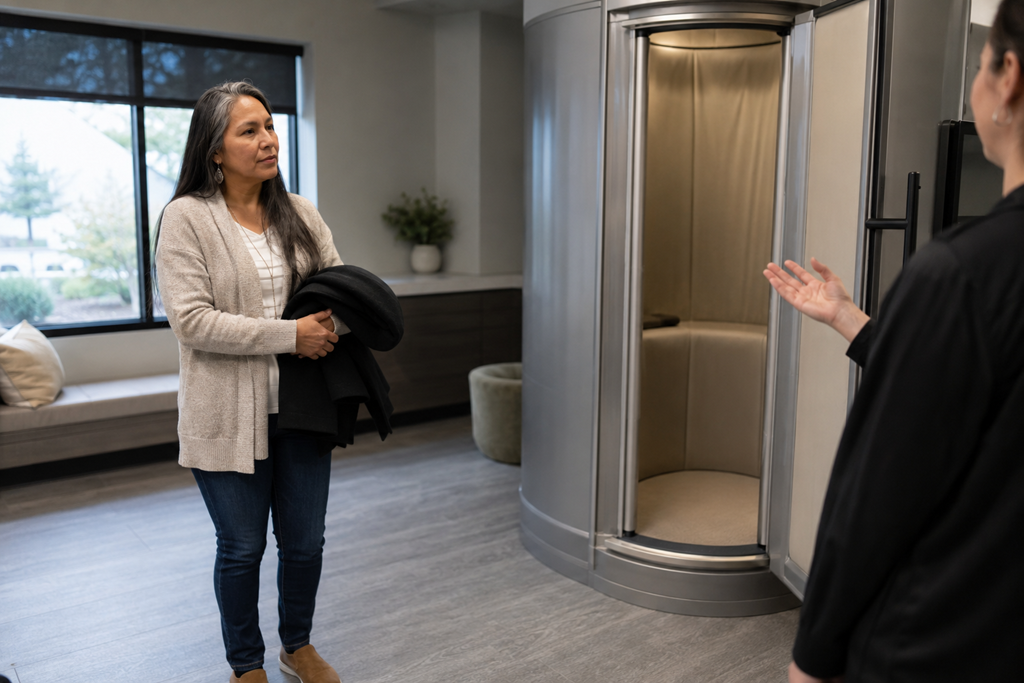
Cryotherapy may be worth exploring when you have a specific reason for considering it, understand that results are uncertain, and can find a facility that screens clients carefully and explains its protocols without making broad promises. It is less useful to approach it as a general cure-all or to commit to a package before you know what type of cryotherapy is being offered, what the session is intended to do, and whether your health history raises concerns.
For many Sacramento-area residents, the question begins with a recommendation from a friend, trainer, wellness professional, or social media post. The service may be described as helpful for soreness, recovery, pain, energy, sleep, weight loss, or general wellness. With so many possible claims attached to one service, deciding whether to explore it can become more confusing than the session itself.
The most useful starting point is not whether cryotherapy is popular. It is whether the service has a clearly defined purpose that makes sense for your situation.
Start With the Reason You Are Considering It
“Trying cryotherapy” is not a specific goal.
A more useful reason might be that you are curious whether a brief cold-exposure session could complement your existing post-exercise recovery routine. Another person may be looking for an additional option to discuss with a medical professional while managing ongoing discomfort. Someone else may simply want to understand the experience before deciding whether it belongs in a broader wellness routine.
These are different situations, and they should not automatically lead to the same decision.
Before comparing facilities, try to complete this sentence:
I am considering cryotherapy because I hope it may help me better understand or manage ________.
The blank should describe the actual reason you are interested—not a long list of possible benefits advertised by a facility.
A defined goal gives you something concrete to discuss with a qualified provider. It also makes it easier to notice when marketing claims have expanded far beyond your original reason for considering the service.
Cryotherapy Is Not One Uniform Service
The term cryotherapy can describe several uses of cold, ranging from localized applications to whole-body cold exposure. These approaches may involve different equipment, temperatures, exposure methods, intended uses, risks, and provider protocols.
The FDA distinguishes whole-body cryotherapy from other forms of cold therapy and notes that it presents a different set of risks. The agency also states that the healing benefits of whole-body cryotherapy remain unconfirmed.
That distinction matters when you contact a Sacramento-area facility. A general statement such as “we offer cryotherapy” does not tell you enough to evaluate the service.
Ask what type of cryotherapy is being offered, which parts of the body are exposed, how the equipment works, who supervises the session, and what the facility believes the service can realistically accomplish.
A provider should be able to explain those points without relying on dramatic claims or vague wellness language.
Treat Benefit Claims as Questions, Not Conclusions
Cryotherapy is sometimes promoted for a wide range of goals, but a long list of claimed benefits should not be mistaken for proof that the service is appropriate for every person or every concern.
Research findings can vary depending on the cryotherapy method, session protocol, population studied, and outcome being measured. For example, a Cochrane review found insufficient evidence to determine whether whole-body cryotherapy reduced self-reported muscle soreness or improved subjective recovery after exercise.
This does not mean no one will report a positive experience. It means personal testimonials and promotional claims should not be treated as guaranteed outcomes.
A thoughtful facility should be comfortable saying:
- what the service is intended to support;
- what remains uncertain;
- what a client may or may not notice;
- whether one session can meaningfully answer the client’s question;
- and when another type of qualified provider should be involved.
Be cautious when nearly every concern seems to receive the same answer. A service presented as the solution for soreness, chronic pain, sleep, mood, metabolism, immunity, weight loss, inflammation, athletic performance, and general health may be relying more on breadth of marketing than precision of explanation.
Screening Is Part of the Service
A cryotherapy facility should not treat screening as a formality.
Cold exposure can be inappropriate for some people, and the relevant concerns are not always obvious from appearance or fitness level. A recent expert consensus process identified both temporary and absolute contraindications to whole-body cryostimulation, reinforcing the importance of reviewing a client’s health history before exposure.
You do not need to diagnose your own candidacy. You do need to notice whether the provider asks meaningful questions.
Screening may include discussion of circulation, cold sensitivity, skin sensation, cardiovascular concerns, respiratory issues, medications, pregnancy, recent illness, prior reactions to cold, and other health factors. The appropriate questions will depend on the method being offered and the provider’s scope.
A facility that barely asks about your health before directing you toward a chamber or treatment area is giving you useful information about its priorities.
Discuss personal risks, symptoms, candidacy, and treatment decisions with a qualified healthcare professional. A cryotherapy facility’s intake process should not replace individualized medical guidance.
A First Session Should Feel Structured, Not Rushed
The session experience can reveal whether a provider takes its protocols seriously.
Before exposure begins, staff should be able to explain what you will wear, which items must remain dry, how long the exposure is expected to last, how communication will work, and how the session can be stopped. You should know what sensations are expected and what symptoms should be reported immediately.
The equipment should not be treated like a novelty attraction.
A safety review found documented adverse events associated with whole-body cryotherapy while also concluding that risks may be reduced through appropriate recommendations, contraindication screening, and operating practices.
That makes provider behavior especially important. Even a brief session deserves clear preparation and active supervision.
Notice whether staff members:
- explain the process before asking you to change clothes or enter the equipment;
- remain available throughout the exposure;
- answer questions without becoming dismissive;
- explain what happens if you become uncomfortable;
- and encourage you to stop rather than “push through” concerning sensations.
You should not feel embarrassed for asking how the equipment is maintained, how emergencies are handled, or what training staff members receive.
Compare the Commitment, Not Just the Introductory Price
A discounted first session can make cryotherapy easy to sample, but the longer-term cost may depend on how frequently the facility recommends returning.
Before buying a package, clarify whether the provider expects one session, a short series, or ongoing visits. Ask what reasoning supports that schedule and how you would decide whether continuing is worthwhile.
A large prepaid package can make it harder to reconsider once you have more information. Starting with the smallest reasonable commitment may give you space to evaluate the facility, your comfort with the experience, and whether the service seems connected to your original goal.
Consider the full practical cost as well:
- session price;
- recommended frequency;
- travel time;
- preparation and changing time;
- cancellation terms;
- package expiration policies;
- and whether cryotherapy would be added to services you already use.
For Sacramento-area residents balancing work, family responsibilities, training schedules, or a cross-town drive, repeated appointments may be a more significant commitment than the advertised session length suggests.
The service does not become more worthwhile simply because a package lowers the price per visit. It becomes worthwhile only when the total commitment still makes sense for your goal, budget, schedule, and level of uncertainty.
Questions That Reveal How a Facility Operates
A brief conversation can tell you more than a long list of promotional benefits.
Consider asking:
What type of cryotherapy do you provide?
The answer should identify the equipment and exposure method clearly.
How do you screen first-time clients?
Listen for a real process rather than a quick waiver.
Who should not use this service?
A responsible answer should acknowledge that the service is not appropriate for everyone.
What results should I realistically expect?
Be wary of guaranteed outcomes or promises that extend across unrelated health concerns.
What happens if I become uncomfortable?
The provider should explain communication, supervision, and stopping procedures.
How do you determine the recommended number of sessions?
The answer should connect the recommendation to a defined purpose rather than automatically steering everyone toward the same package.
When should I speak with a medical professional first?
A facility should recognize the limits of its role and be willing to recommend outside guidance.
When It May Make Sense to Pause
Cryotherapy may not be worth exploring yet when your reason for considering it is unclear, your symptoms have not been appropriately evaluated, or the facility cannot explain its screening and safety procedures.
It may also be sensible to pause when:
- the provider treats a waiver as the entire screening process;
- staff members minimize questions about health history;
- the proposed benefits sound unusually broad;
- the facility pressures you to buy a package before a first session;
- you are told that discomfort proves the service is working;
- the equipment or process is not explained;
- or the provider discourages you from discussing the service with your healthcare professional.
Pausing does not mean you have permanently rejected cryotherapy. It means you are waiting until the purpose, risks, expectations, and provider practices are clearer.
The Decision Should Be More Specific Than “Why Not Try It?”
Cryotherapy may be reasonable to explore as an optional service when you have a defined goal, realistic expectations, appropriate health guidance, and access to a facility with careful screening and transparent protocols.
It should not require belief in sweeping promises.
A sound decision can be modest: learn exactly what is being offered, ask how the provider protects clients, avoid committing to more sessions than you can evaluate, and decide whether the experience remains relevant to the reason you considered it in the first place.
That approach helps you judge cryotherapy as one possible service—not as a shortcut, a cure-all, or an obligation created by an introductory offer.