Security screens may be right for your home when you want stronger screening at a door or window without giving up the airflow, visibility, and everyday access that make the opening useful. The decision is less about choosing the toughest-looking product and more about whether the screen, frame, hardware, and installation fit how your household actually uses that part of the home.
This decision often comes up when an ordinary insect screen feels too lightweight, tears repeatedly, or does not provide the sense of separation a household wants when a door or window is open. At the same time, homeowners may hesitate because they do not want the opening to feel darker, more enclosed, harder to operate, or visually out of place.
A security screen is not automatically the right solution for every opening. It is worth considering when its practical benefits align with a specific need and the tradeoffs remain acceptable in daily use.
Begin With What You Want the Opening to Do
Before comparing screen materials or product names, identify what you are trying to improve.
You may want to:
- Let fresh air move through the home while keeping the main door closed
- Maintain a view of the porch, yard, or walkway
- Keep insects outside
- Replace a screen that is frequently damaged by pets or regular use
- Create a more substantial boundary at an open door or window
- Improve the durability and appearance of an existing screened opening
These goals can overlap, but they are not identical. A screen that feels especially substantial may affect visibility or light differently from a lighter screen. A design that works well at a front entrance may not suit a bedroom window, sliding opening, or frequently used side door.
The right question is not simply, “Is this a strong screen?” It is, “Will this screen improve the way this particular opening works for my household?”
The Existing Opening Matters as Much as the Screen
Security screen products are installed as part of an opening, not as isolated panels. The condition and configuration of that opening can affect the project.
A professional evaluation may need to consider:
- Whether the surrounding frame is straight, stable, and in suitable condition
- How the door or window currently opens
- Available clearance around handles, trim, thresholds, tracks, and nearby walls
- Whether the proposed screen will swing, slide, or operate comfortably
- Whether damaged framing or hardware should be addressed first
- How the new installation will connect to the existing structure
An older or uneven opening does not necessarily rule out a security screen, but it may change the installation scope. A proposal that includes frame preparation, adjustments, or related repairs may look different from one based on a newer, well-aligned opening.
This is one reason it helps to compare complete project scopes rather than comparing only the price of the screen panel.
Airflow and Visibility Should Be Judged in Real Conditions
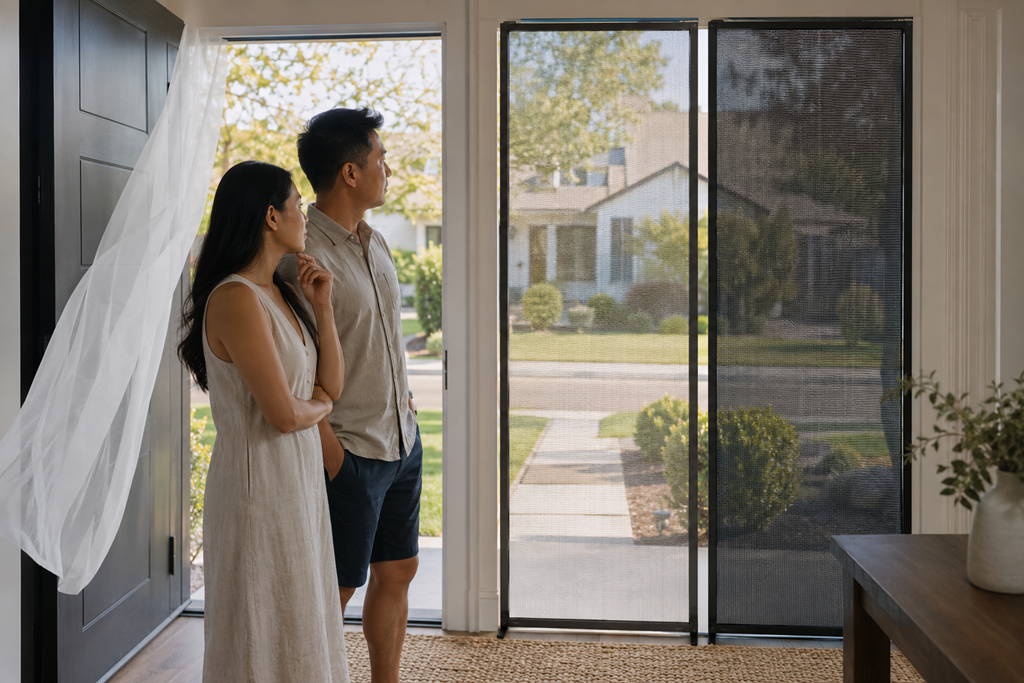
Sacramento-area households may value the ability to use cooler outdoor air during suitable parts of the day. Security screens can support that goal, but different mesh patterns and materials may affect airflow, light, and visibility differently.
Small display samples can be useful, but they may not show how the product will look across an entire door or window. Indoor lighting, exterior sunlight, viewing distance, and the direction you are looking can all influence how noticeable the screen feels.
Before choosing a product, consider asking to see a sufficiently large sample in conditions similar to the intended opening. Look through it from inside and outside when possible. Notice whether the view still feels comfortable and whether the screen changes the amount or direction of light in the room.
The goal is not to find a screen that is visually invisible. It is to decide whether the balance of airflow, visibility, appearance, and added durability works for you.
The Mesh Is Only One Part of the Installation
It is easy to focus on the screen material because it is the most visible component. However, the performance and everyday usability of the installation also depend on the surrounding assembly.
Depending on the product and opening, that assembly may include:
- The screen material
- The supporting frame
- Hinges or sliding components
- Locks, latches, handles, or release mechanisms
- Fasteners and attachment points
- Closers, thresholds, seals, or related trim
- Adjustments needed for smooth operation
A demonstration that focuses only on the strength of a mesh sample does not explain how the complete installed system will function at your home.
Ask providers to describe the entire proposed assembly and what is included in the estimate. Avoid treating broad terms such as “security screen” as though they always describe the same materials, hardware, installation method, or level of performance.
No screen should be treated as a guarantee against intrusion or as a substitute for broader household safety planning.
Think About the People Who Use the Opening Every Day
A security screen can appear suitable during a brief demonstration and still feel inconvenient once it becomes part of a daily routine.
Consider how the opening is used when family members are carrying groceries, managing pets, helping children, moving outdoor furniture, receiving deliveries, or entering with mobility equipment. A new handle position, threshold, door swing, or locking routine may be easy for one person and awkward for another.
At a frequently used entrance, pay attention to questions such as:
- Can household members operate it comfortably?
- Will the screen interfere with an existing main door?
- Is there enough space for the door to open without blocking a walkway?
- Will pets or children regularly press against the screen?
- How will the screen be unlocked from each side?
- How will routine cleaning and maintenance be handled?
For openings used as regular exits or for emergency access, ask a qualified professional how the proposed system affects operation and what requirements may apply to the property. Do not assume that every product or locking arrangement is appropriate for every location.
Renters and landlords should also clarify responsibility, approval, access, and ownership of the installation before work is scheduled.
A Security Screen May Be More Than the Situation Requires
Sometimes the underlying problem is narrower than it first appears.
A torn insect screen, worn roller, loose latch, damaged spline, misaligned door, or deteriorated frame may be repairable without changing the entire opening to a security-screen system. In other cases, repeated damage or a desire for a more substantial screened boundary may make a broader upgrade worth discussing.
A security screen may be more than you need when:
- The current issue is limited to a small, repairable component
- You rarely open the door or window for airflow
- Maintaining a nearly unobstructed view is the highest priority
- The opening itself needs major correction before any new screen will operate well
- The proposed product adds features that do not address your actual concern
Choosing a simpler repair is not automatically settling for less. It may be the more appropriate response when the existing setup already serves the household well apart from one localized problem.
Ask Providers to Explain the Tradeoffs
A useful consultation should help you understand what the proposed screen improves and what may change after installation.
Questions worth asking include:
- What specific need is this product intended to address at this opening?
- How might it affect airflow, visibility, natural light, and appearance?
- Does the existing frame need repair or preparation?
- What screen, frame, hardware, and locking components are included?
- How will the door or window operate after installation?
- What routine cleaning, adjustment, or maintenance may be expected?
- How are removal, disposal, finishing work, and final adjustments handled?
- Are there any access or opening requirements that should be reviewed for this location?
Clear answers should connect the recommendation to your property and household routine. Be cautious when a recommendation depends mainly on pressure, fear, vague strength claims, or a demonstration that does not explain the complete installation.
Avoid Making the Decision From a Product Demonstration Alone
A dramatic screen-material demonstration can attract attention, but it does not answer every practical question.
It may not show:
- How the full-size screen will affect the view
- Whether the frame fits the existing opening
- How comfortably the hardware will operate
- Whether the installation changes the entry path
- What preparation or finish work is included
- How the screen will look from inside the home
- Whether a smaller repair could address the original problem
The product is only one part of the decision. The opening condition, installation scope, household habits, and expected tradeoffs are equally important.
Choose the Screen That Fits the Opening and the Routine
Security screens are most likely to feel worthwhile when they solve a clearly defined problem while preserving the everyday qualities you value in the opening. That may include airflow, visibility, insect control, appearance, comfortable access, or greater resistance to routine wear.
Before comparing estimates, decide which of those qualities matter most. Then ask each provider to explain how the proposed screen, frame, hardware, and installation support those priorities.
A thoughtful decision is not based on choosing the strongest-sounding product. It is based on understanding what will change, what will stay the same, and whether the completed installation will work naturally in your home.