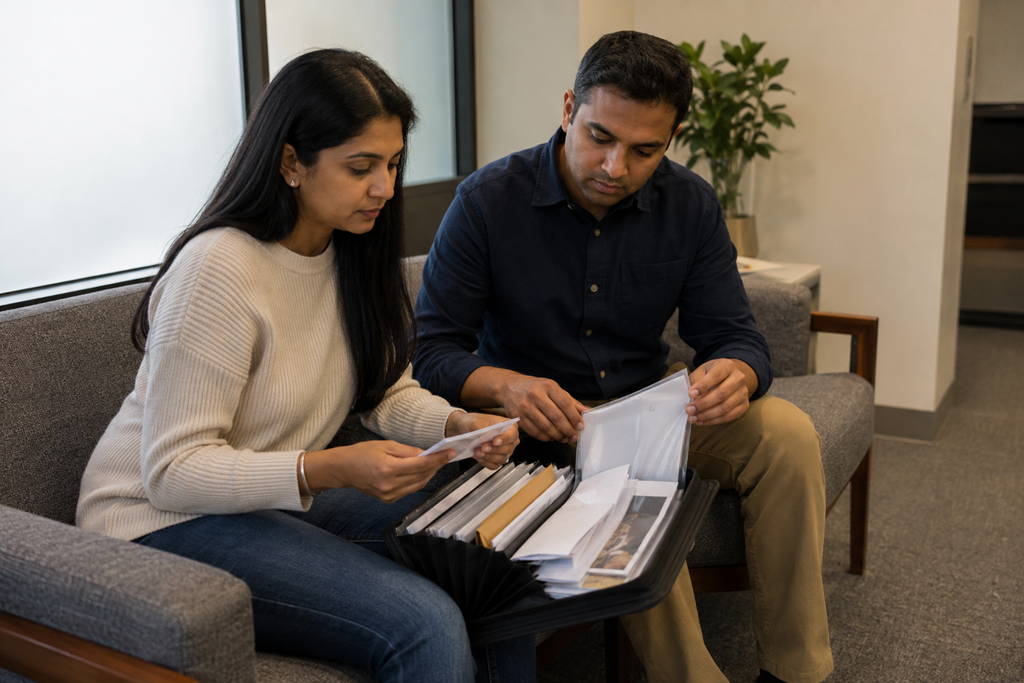
Organizing your traffic ticket documents does not require building a complicated legal file. The goal is simply to separate official paperwork, supporting records, and your own notes so you can understand what you have and ask more focused questions.
After a traffic stop, it is common to place the citation, registration, insurance information, photographs, and other papers into one envelope or leave them in the vehicle. That may seem manageable until you need to find a particular date, explain what happened, or speak with a legal professional.
A few minutes of organization can turn a confusing stack of paperwork into a clearer picture of the situation.
Start By Separating Documents According To Their Purpose
Not every document in your ticket file serves the same role. Separating the paperwork into a few basic groups makes it easier to see what is official, what supports your recollection, and what may require further explanation.
A simple traffic ticket file might contain four sections.
The citation and official notices
Keep the original citation and any later notices together. These documents may contain information about the alleged violation, the issuing agency, response instructions, and important dates.
Do not assume that every date appearing on a document means the same thing. One date may refer to the traffic stop, while another may relate to when a response is expected. Procedures can vary, so questions about a specific date should be directed to the appropriate court, agency, or qualified legal professional.
Driver and vehicle records
Place related records in a separate section. Depending on the situation, these might include copies of:
- Your driver’s license
- Vehicle registration
- Insurance information
- Rental or company vehicle documents
- Employment records connected to driving responsibilities
These records should not be mixed into the citation itself. Keeping them separate helps you identify what was available at the time of the stop and what may be relevant only because of your personal or work circumstances.
Supporting information
Supporting information may include photographs, repair records, dash-camera files, location information, or other materials connected to the incident.
The purpose of gathering these items is not to decide what they prove. It is to preserve potentially useful information so a qualified professional can help determine whether it matters.
Personal notes and questions
Your recollection belongs in its own section. Write down what you remember while keeping your notes separate from the original citation.
Useful notes might include:
- Where you were traveling
- What you noticed before the stop
- What the officer said the stop was about
- Weather, traffic, or road conditions you remember
- Whether passengers were present
- Questions that came to mind afterward
Describe what you remember without trying to make the notes sound formal or legal. A straightforward account is usually easier to discuss than a document filled with conclusions or arguments.
Protect The Original Paperwork Before Writing Anything
One common source of confusion is using the original citation as a worksheet.
Writing questions, highlighting sections, or attaching unrelated notes directly to the citation can make it harder to distinguish the original information from your later observations. Instead, place the citation in a protective sleeve or folder and make a copy for personal review.
A digital copy can also be useful. Photograph or scan each page clearly, including the front and back when both contain information. Confirm that the entire document is visible and that the image is not blurred, cropped, or covered by glare.
Keep the original even after creating a digital copy. A photograph is useful for reference, but it may not capture every physical detail of the document.
If the citation or a later notice arrived by mail, consider keeping the envelope with it. The envelope may help you remember when and how the document arrived, even if it does not ultimately affect the situation.
Create A Basic Timeline Without Filling In The Gaps
A simple timeline can help you explain the sequence of events without searching through every document during a conversation.
Record only the dates and events you can confirm. For example, your timeline might include:
- The date of the traffic stop
- The date a notice was received
- A response date shown on the paperwork
- The date you contacted a court, agency, or professional
- The date you received any additional correspondence
Leave uncertain details marked as uncertain rather than guessing. An incomplete but accurate timeline is more useful than a polished timeline containing assumptions.
You do not need to interpret what every date legally means. The timeline is only a reference tool that helps you identify which dates need clarification.
Organized Documents Lead To More Useful Questions
A disorganized file often produces broad questions such as, “What should I do about this ticket?”
That question is understandable, but a professional may need additional information before offering meaningful guidance. Organized paperwork allows you to ask narrower questions, such as:
- Which date on this citation should I focus on?
- What does the listed violation appear to allege?
- Is any information on the citation unclear or incomplete?
- Could this citation affect my employment or driving responsibilities?
- Are there documents I should gather before a consultation?
- What information would help a professional evaluate my options?
- Does this notice require a different response from the original citation?
These questions do not assume a particular outcome. They help establish what needs to be understood first.
For Sacramento-area drivers comparing traffic ticket defense professionals, document organization can also make an initial conversation more productive. You will be in a better position to describe the situation consistently and determine whether the professional clearly explains what information is relevant.
Keep Facts, Questions, And Conclusions Separate
It is easy to begin interpreting the ticket while organizing it. You may notice something that appears incorrect, remember a disagreement from the traffic stop, or feel certain that a particular detail should resolve the matter.
Record the concern, but avoid treating your interpretation as an established conclusion.
A useful way to separate the information is:
Documented fact: What appears on the citation, notice, photograph, or record.
Personal recollection: What you remember seeing, hearing, or doing.
Question: What you want a professional to explain.
For example, instead of writing, “The ticket is invalid because this section is blank,” record that the section appears blank and ask whether the missing information has any significance.
This distinction helps keep the conversation focused on what can be verified.
Paperwork Habits That Can Create More Confusion
Traffic ticket documents are often handled during a stressful or inconvenient moment. It is understandable that paperwork organization may not be the first priority. However, a few common habits can make later conversations harder.
Mixing unrelated paperwork into the same folder
Vehicle repair receipts, parking notices, registration documents, and the citation may all seem connected because they involve the same car. Separating them by purpose prevents unrelated material from hiding the documents you need.
Relying entirely on memory
Memories can fade or become less precise. Brief notes made reasonably close to the event may help you remember details, but those notes should still be treated as your recollection rather than official documentation.
Keeping only photographs of the citation
Digital images are convenient, but phones can be lost, replaced, or damaged. Keep the original and consider storing a backup copy somewhere secure.
Assuming every piece of paper is equally important
Some records may be central to the questions you need answered, while others may have little relevance. Keep what seems connected, but allow a qualified professional to help determine what matters.
Waiting until a conversation begins to locate documents
Searching through your vehicle, email, photographs, and mail during a consultation uses time that could be spent discussing the situation. Gather the available materials beforehand whenever practical.
What To Have Ready Before Speaking With A Professional
You do not need to arrive with a legal argument or a perfectly prepared case. A modest, organized file is enough to begin asking informed questions.
Have the following materials available when they apply to your situation:
- The original citation and a clear copy
- Any notices or correspondence received afterward
- Relevant driver and vehicle records
- Supporting photographs or files
- A brief factual timeline
- Your written questions
- Information about employment or commercial driving concerns
If something is missing, make a note of it. Knowing that a document is unavailable is better than assuming you have it somewhere.
Before hiring a traffic ticket defense professional, pay attention to how the person discusses your documents. A helpful conversation should identify which materials may be relevant, which questions require more information, and what the professional can and cannot determine from the initial paperwork.
Avoid relying on promises about outcomes based only on a brief description. Traffic ticket situations can depend on details that are not obvious from the citation alone.
Organization Is Preparation, Not A Legal Strategy
Sorting your ticket documents will not determine whether the citation can be challenged, reduced, dismissed, or handled in a particular way. It simply helps you understand the paperwork and communicate more effectively.
The most useful file is not necessarily the thickest one. It is the file that allows you to locate the original citation, distinguish official information from personal notes, identify important questions, and explain the basic sequence of events.
This article is educational and does not provide legal advice. Questions about your specific citation, obligations, deadlines, driving record, employment concerns, or possible responses should be discussed with the appropriate court or agency and, when needed, a qualified legal professional.
For Sacramento residents, organizing the paperwork before making those calls can make the next conversation less scattered and more productive.