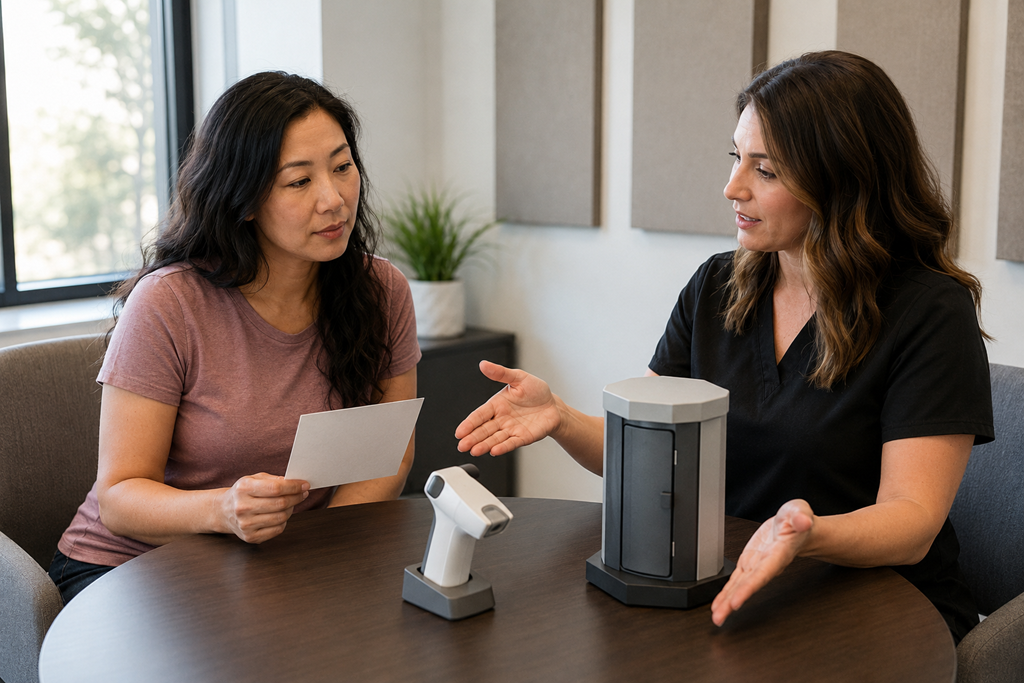
Preparing questions before a cryotherapy appointment starts with identifying what you hope the service will help with, what type of cryotherapy is being offered, and what personal health information the provider may need to know.
You do not need to create a long medical questionnaire or understand every technical detail. A short list of focused questions can help you understand the service, discuss possible risks, set realistic expectations, and decide whether the provider communicates clearly.
For Sacramento-area residents comparing cryotherapy services, this preparation can also make it easier to distinguish a thoughtful consultation from a rushed sales conversation.
First Confirm What “Cryotherapy” Means At This Facility
The term cryotherapy can describe several different uses of cold. A provider may offer whole-body cryotherapy in a chamber, localized cold treatment for a particular area, cosmetic cold-based services, or a clinician-directed medical procedure.
These services are not interchangeable. They may use different equipment, involve different temperatures, and require different levels of screening or supervision.
Before developing the rest of your questions, ask:
- What exact type of cryotherapy will I receive?
- Will my entire body or only one area be exposed?
- What equipment will be used?
- Who will supervise the session?
- Is this a wellness service or a medical treatment?
This clarification may sound basic, but it prevents an important misunderstanding. Two businesses can use the word cryotherapy while offering noticeably different experiences.
Turn Your General Goal Into A Specific Question
People often arrive with a broad goal such as feeling better, recovering faster, reducing soreness, supporting athletic recovery, or trying a new wellness service.
A broad goal is a useful starting point, but it can be difficult for a provider to address clearly. Try turning it into a more precise question.
Instead of asking, “Will cryotherapy work for me?” you might ask:
- What result would be reasonable to expect for my particular goal?
- How would I know whether the sessions are helping?
- Is this service intended to provide temporary relief or a longer-lasting change?
- What factors could make the experience less useful for me?
- When would you suggest that someone speak with a healthcare professional instead?
This approach encourages the provider to explain both the possible value and the limits of the service.
Claims surrounding whole-body cryotherapy can vary, and research does not support every advertised use with the same level of certainty. Asking how a provider connects the service to your specific goal is more useful than relying on a long list of general benefits.
Decide Which Personal Details You Need To Mention
A cryotherapy appointment may look simple from the outside, but cold exposure may not be appropriate for every person or every situation.
You do not have to decide on your own whether a health condition creates a concern. Your role is to identify information that may need to be discussed with the provider or with a qualified healthcare professional.
Before the appointment, consider whether you need to mention:
- A condition involving circulation, blood pressure, the heart, lungs, nerves, or skin
- Unusual sensitivity or reactions to cold
- Reduced feeling or numbness in part of the body
- A recent injury, procedure, or significant health change
- Pregnancy or the possibility of pregnancy
- Prescription medications or medical devices
- Open wounds, irritated skin, or an active skin concern
- Previous dizziness, fainting, breathing difficulty, or panic in enclosed spaces
This is not a list for self-diagnosis. It is a reminder that effective screening depends on honest information.
Medical literature addressing whole-body cryotherapy identifies a range of possible contraindications and emphasizes the importance of screening rather than treating cold exposure as appropriate for everyone.
A useful question is:
“Is there anything in my health history, medication use, or current condition that I should discuss with my doctor before participating?”
A provider who cannot answer should be willing to direct you to someone qualified to evaluate the concern.
Ask What Will Happen Before You Enter The Treatment Area
Uncertainty often comes from not knowing what the appointment will actually involve.
Ask the provider to describe the process from arrival through departure. This gives you an opportunity to understand the preparation requirements before you are standing near the equipment.
Helpful questions may include:
- Do I need to arrive with completely dry skin and clothing?
- What should I wear during the session?
- Will protective socks, gloves, footwear, or other garments be provided?
- Will I need to remove jewelry, a watch, or wearable equipment?
- Can I eat, exercise, shower, or apply lotion before the appointment?
- How long will the cold exposure last?
- Will a staff member remain nearby throughout the session?
The answers may differ based on the equipment and the type of service. That is why instructions from one cryotherapy business should not automatically be assumed to apply to another.
Separate Comfort Questions From Safety Questions
One useful way to organize your list is to divide it into two categories: what may feel uncomfortable and what may signal a reason to stop.
For example, feeling intensely cold may be expected during certain services. Sharp pain, difficulty breathing, severe dizziness, loss of sensation, or another unusual reaction may require immediate attention.
Ask the provider:
- What sensations are commonly expected?
- What sensations are not considered normal?
- How can I stop the session immediately?
- Will I be able to communicate with staff at all times?
- What does the staff do if a client becomes dizzy, uncomfortable, or distressed?
- What should I report after the session?
You are not being difficult by asking how the session can be stopped. A clear stopping procedure is a practical part of understanding any service involving extreme temperatures.
Find Out How The Provider Screens New Clients
A consultation should involve more than confirming your appointment time and collecting payment.
Ask what information the provider reviews before a first session. Depending on the service, this may include an intake form, a conversation about health history, a blood pressure check, an explanation of protective clothing, or a discussion of circumstances that require medical clearance.
Questions worth asking include:
- What screening do you complete before a first appointment?
- Who reviews the information I provide?
- Are there situations in which you decline or postpone a session?
- When do you require approval from a healthcare professional?
- Will I have time to ask questions before deciding to continue?
The provider does not need to turn the appointment into a lengthy medical examination. However, dismissing health questions or treating screening as an inconvenience may indicate that the conversation is focused more on completing the sale than understanding the client.
Ask How Expectations And Results Are Discussed
Cryotherapy marketing may use phrases such as recovery, inflammation support, energy, wellness, pain relief, or improved performance. These terms can mean different things to different people.
Ask the provider to explain what those words mean in practical terms.
For example:
- Is the expected effect temporary?
- How soon do clients typically notice whether the service feels useful?
- What outcome should I not expect?
- Are the claims based on research involving this exact type of equipment?
- Is cryotherapy being presented as a stand-alone service or as one part of a broader recovery plan?
- What happens if I notice no meaningful benefit?
Be cautious when answers sound absolute. A thoughtful provider can explain possibilities without promising that every client will have the same experience.
Include At Least One Question About Pricing
Even when the appointment is mainly about wellness or recovery, it is still a local service decision.
Before agreeing to a package, find out what the quoted price includes. Ask whether the amount covers one session, an introductory visit, protective garments, a consultation, or additional services.
You may also want to ask:
- Can I try one session before considering a package?
- Do package sessions expire?
- Are unused sessions refundable or transferable?
- Are there cancellation or rescheduling charges?
- Is tipping expected?
- Will another service be recommended or offered during the visit?
These questions help you separate the experience of one appointment from a longer financial commitment.
A provider should give you enough information to consider the service without pressuring you to purchase multiple sessions before you understand how your body responds.
Pay Attention To How The Provider Answers
Your questions are not only a way to collect information. They also help you evaluate the provider.
Clear communication may include:
- Explaining the service without relying on exaggerated claims
- Acknowledging that results and experiences can vary
- Taking health disclosures seriously
- Describing the equipment and supervision process
- Explaining when medical input may be appropriate
- Giving you a clear way to stop the session
- Allowing you to consider pricing without pressure
Unclear communication may include vague answers, guaranteed outcomes, minimal screening, dismissal of health concerns, or pressure to purchase a large package immediately.
One imperfect answer does not automatically make a business unsuitable. The broader question is whether you feel encouraged to understand the service or encouraged to stop asking questions.
A Short Question List To Bring With You
You may not need to ask everything covered in this article. A practical appointment list could be limited to these questions:
- What exact type of cryotherapy are you recommending?
- How does it relate to the result I am seeking?
- Is there anything in my health history that requires medical clearance?
- How do you screen first-time clients?
- What should I do before arriving?
- What sensations should cause me to stop the session?
- Who monitors me while the equipment is operating?
- What does the price include, and do I need to purchase a package?
Save the questions on your phone or place them on a small note card. You are more likely to use a short list than a detailed document that feels difficult to review during the appointment.
You Are Preparing For A Conversation, Not An Examination
The purpose of preparing questions is not to become an expert on cryotherapy before meeting the provider.
It is to make sure the appointment addresses the matters that are important to you: what service is being offered, why you are considering it, what personal concerns should be disclosed, what the experience involves, and what you are being asked to purchase.
A Sacramento-area cryotherapy provider who communicates clearly should be able to help you understand those points without rushing the decision or promising a particular result.
Cryotherapy questions involving personal health conditions, candidacy, risks, or treatment decisions should be discussed with a qualified healthcare professional. This article is educational and is not a substitute for individualized medical advice.