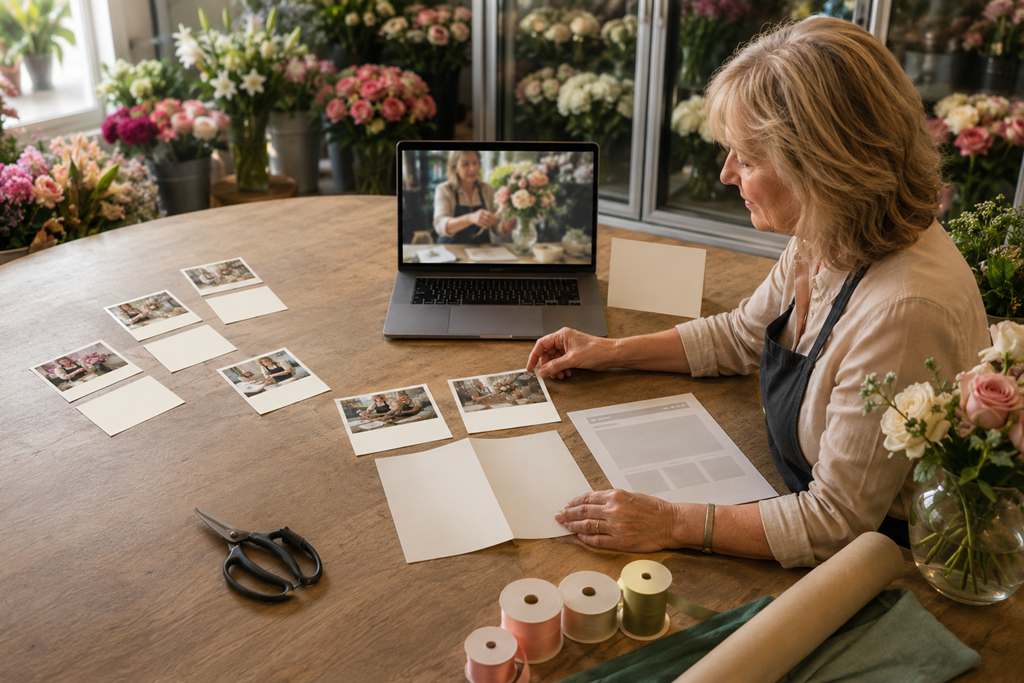
One helpful business video can support far more than a single upload. When the video answers a real customer question or explains a useful part of your service, you can reuse the same core idea across several pieces of content during the week without recording something new every day or turning your business into a full-time publishing operation.
For a Sacramento-area service business with limited time or staff, that can make content creation much more manageable. Instead of asking, “What should we create next?” every time you need something to publish, you can start with one useful video and look for several practical ways to reuse what is already there.
The goal is not to copy the exact same post onto every channel. It is to identify the most useful information inside the video and adapt it into formats that make sense in different places.
Start With A Video That Answers Something Useful
Some videos are easier to repurpose than others.
A general promotional video may contain useful footage, but a video built around a clear customer question, service explanation, or common concern usually gives you more material to work with.
For example, a residential contractor might record a short video explaining what homeowners should prepare before an initial project discussion. A dental practice might explain what a new patient can expect when scheduling a first appointment. An auto-service business might answer a common question about what information customers should have available when requesting service.
Each of those videos contains one focused idea that can be expressed in several ways.
Before thinking about channels, ask:
- What question does this video answer?
- What is the most useful point in the video?
- Is there one part that could stand on its own?
- Could the explanation also make sense as a short written answer?
- Is there a visual moment that helps reinforce the subject?
If the answers are clear, the video already contains the beginnings of several other marketing assets.
Think Of The Video As The Source, Not The Finished Job
A useful shift is to stop treating the completed video as one isolated piece of content.
Treat it as the source material.
The full video may be the main asset, but the ideas, explanations, examples, visuals, and short statements within it can support additional content.
One source video could reasonably become:
- the complete video on a website or video channel
- a shorter excerpt focused on one useful point
- a written answer to the question addressed in the video
- a short email or customer-information message based on the same explanation
- a simple social post that introduces the question and points people toward the fuller explanation
These pieces do not need to be published every day, and a business does not need to use every possible format. The point is to create several useful options from work that has already been completed.
For a small business, having five available pieces of content is often more useful than feeling obligated to publish five times.
A Week Of Content Does Not Mean Seven New Ideas
The phrase “a week of content” can sound like a requirement to post something different every day. That is usually unnecessary for a small local service business.
A more practical approach is to spread one topic across a few appropriate places.
Suppose an HVAC company has a helpful video answering a common homeowner question about what information to provide when requesting an appointment.
The business might use the full video first. Later in the week, it could share a short portion addressing one part of the question. The website could contain a brief written version of the answer. An email to existing customers might reference the same useful explanation. Another short post could introduce the topic for people who have not seen the video.
The subject stays consistent, but the format changes.
That consistency can also make content planning easier. Instead of moving rapidly from one unrelated topic to another, the business spends a short period reinforcing one useful subject.
Pull Out One Idea At A Time
A common repurposing mistake is trying to compress the entire original video into every new piece.
That usually creates content that feels crowded or repetitive.
Instead, look for smaller units inside the source video.
A three-minute educational video might contain:
- the main customer question
- one misconception
- one preparation tip
- one explanation of the process
- one reminder about what customers should expect next
Any one of those points might be enough for a separate piece of content.
For example, a local remodeling company could have a video explaining how homeowners can prepare for an initial project conversation. One short reuse piece might focus only on gathering inspiration photos. Another might explain why measurements or property information can be useful. A written website answer could summarize the overall preparation process.
The business is not inventing three unrelated topics. It is simply separating one useful explanation into smaller pieces.
Change The Format Without Changing The Meaning
Repurposing should make information easier to use, not distort the original message.
A short clip may need less context than the full video. A written version may need a sentence of explanation before the main point. A social post may need to focus on one question rather than the entire subject.
But the meaning should remain consistent.
This is particularly important when the content involves legal, medical, financial, or other professional services. Shortening an explanation should not remove important context or turn a cautious statement into a promise.
The same principle applies to ordinary service businesses. If the original video says that project conditions vary, a shorter piece should not imply that every customer can expect the same situation.
Good repurposing simplifies the format while preserving the substance.
Use Different Pieces For Different Jobs
Not every reused piece needs to serve the same purpose.
The full video might be useful for a prospective customer who wants a fuller explanation. A short clip might introduce the subject. A written FAQ might help someone who prefers to scan information quickly. An email could remind an existing customer about something relevant before an appointment or project.
Thinking about the job of each piece helps prevent unnecessary duplication.
A Sacramento-area business could ask:
Where would the complete explanation be most helpful?
That may be the website, a video channel, or a service-information page.
Which part can stand alone?
That may become a short clip or brief post.
What should also exist in writing?
That may become a frequently asked question, short article, email, or customer-information section.
What could be saved for later use?
A useful clip, photograph, explanation, or written answer does not have to be published immediately. It can become part of a small content library.
This turns repurposing into asset building rather than constant posting.
Keep The Workflow Small Enough To Repeat
Repurposing becomes less useful if the process creates more work than recording the original video.
A small business does not need an elaborate production system.
A simple workflow might be:
- Keep the completed source video.
- Identify two or three useful points within it.
- Choose one short video excerpt if a clear standalone section exists.
- Turn the main explanation into a short written version.
- Decide where each piece is genuinely useful.
- Save anything you are not ready to publish.
That may be enough.
You do not need to create every possible variation, maintain a complicated publishing calendar, or be active on every platform.
The best repurposing system is one the business can realistically repeat the next time it creates a useful video.
Avoid Repurposing Just To Fill Space
Creating more pieces from one video is useful only when those pieces still help the audience.
If five versions all say exactly the same thing in nearly identical ways, the business has technically created more content without creating much additional value.
A better question is:
Does this version make the information useful in a different context?
A written FAQ helps someone who does not want to watch a video. A short clip helps someone who only needs one part of the explanation. A customer email may put the information in front of someone at the point when it becomes relevant.
Those are meaningful changes in use.
Simply reposting the same asset repeatedly is different from thoughtfully repurposing it.
Build A Small Library Instead Of Chasing Constant Output
One of the strongest reasons for repurposing is that useful content can accumulate.
A local business that creates one helpful video and extracts a few reusable pieces from it begins building a small library of explanations, clips, written answers, and customer-information assets.
The next useful video adds to that library.
Over time, the business may have answers covering common questions, service processes, customer expectations, preparation topics, and other subjects that regularly come up before someone makes contact.
That library can be more practical than constantly trying to invent something new.
It also gives the business options. When a familiar customer question comes up again, there may already be a useful piece of content available rather than another need to start from scratch.
The Goal Is More Use From One Good Explanation
Repurposing one video into a week of business content is not about producing more material for the sake of volume. It is about getting more practical use from a helpful explanation you have already taken the time to create.
Choose a focused video, identify the strongest points inside it, adapt those points into a few useful formats, and place them where they make sense. You may end up with several pieces of content without needing several unrelated ideas or several new recording sessions.
For a busy Sacramento-area service business, that can make content creation feel less like an ongoing demand and more like building a reusable collection of helpful marketing assets.
Related resource: If you want a professionally created source video that can become part of your own repurposing workflow, the Sacramento Local Pros Video Package offers customized business-focused video assets that can be reused across appropriate marketing channels.