Rhinoplasty can change certain visible features of the nose, but it cannot change every part of a person’s face, guarantee a perfect result, or create the exact same nose seen in someone else’s photo. For Sacramento-area residents considering a consultation, one of the most useful things to understand early is the difference between what surgery may be able to adjust and what depends on anatomy, healing, facial balance, skin, and personal expectations.
This matters because many people start thinking about rhinoplasty with a mix of real concerns and uncertain expectations. Someone may feel bothered by the bridge of the nose, the tip, the width, the profile, or the way the nose looks in photos. At the same time, it can be hard to know whether the concern is something rhinoplasty can reasonably address or whether it is tied to a broader wish to feel different in every picture, angle, or setting.
A good consultation is not only about asking what can be changed. It is also about understanding what may not change the way a person imagines.
Rhinoplasty Is About Structure, Not Reinventing The Face
Rhinoplasty is often discussed as a cosmetic procedure, but the nose does not exist by itself. It sits within the larger balance of the face. A change that looks subtle from the front may look more noticeable from the side. A change that seems simple in a reference photo may not fit the person’s natural features.
That is why a realistic conversation usually focuses on proportion, shape, support, and balance rather than copying a specific look. A surgeon may be able to discuss whether certain features can be refined, softened, narrowed, straightened, or brought into better proportion. But the result still has to work with the person’s existing facial structure.
This is an important reframe: rhinoplasty is not usually about creating an entirely new appearance. It is about discussing whether the nose can be changed in a way that still looks natural for the individual.
Some Concerns Are Easier To Explain Than Others
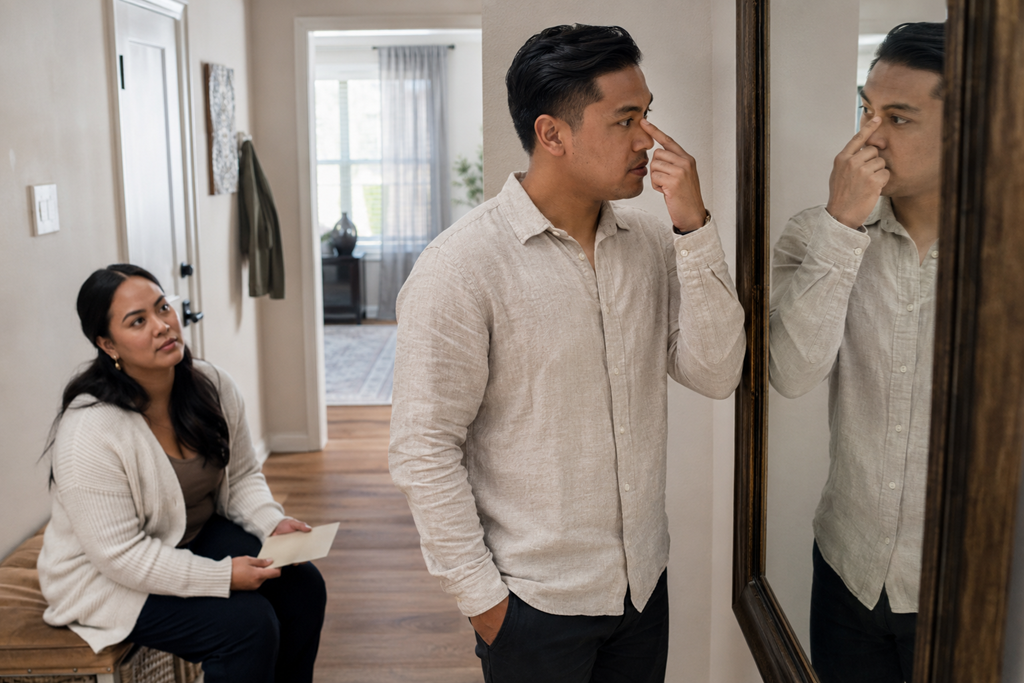
People often know they are unhappy with something, but they may not know how to describe it clearly. They might say, “I do not like my nose,” when what they really mean is that the bridge feels too prominent in profile, the tip feels less defined, the nostrils feel too visible from certain angles, or the nose looks different in photos than it does in the mirror.
The more specific the concern, the easier it may be to discuss during a consultation. That does not mean the concern will always be correctable in the way the person hopes. It simply gives the provider a clearer starting point.
Instead of trying to diagnose the issue personally, it can help to notice patterns. Is the concern mostly from the side? Mostly in photos? Mostly when smiling? Mostly about symmetry? Mostly about size? Those observations can make the conversation more useful without turning it into self-criticism.
Photos Can Help, But They Can Also Mislead
Reference photos can be useful when they show a general direction, such as a softer profile or a more balanced tip. But photos can also create confusion. Lighting, camera angle, makeup, facial expression, ethnicity, bone structure, and editing can all affect how a nose appears.
A photo of someone else’s nose does not automatically translate to another person’s face. Even a nose that looks appealing in one image may not fit another person’s proportions or anatomy.
For that reason, reference photos are usually better used as conversation tools, not exact instructions. They can help explain taste, concerns, or preferences. They should not become a promise of a matching outcome.
Skin, Healing, And Anatomy Affect What Is Realistic
One reason rhinoplasty expectations can be difficult is that not every detail is controlled by the planned change itself. Skin thickness, cartilage strength, nasal structure, prior injury, previous procedures, breathing concerns, and the way a person heals can all affect what may be realistic.
This does not mean someone should feel discouraged before speaking with a qualified provider. It means the consultation should include more than appearance goals. It should include a discussion of what the provider sees, what may limit certain changes, what risks or tradeoffs may exist, and what kind of result may be reasonable for that person.
For medical and surgical decisions, personal advice should come from a qualified provider who can evaluate the individual directly.
Rhinoplasty May Not Change How A Person Feels In Every Situation
It is common for people to hope that changing the nose will change how they feel in photos, social situations, or daily life. Sometimes appearance concerns do affect confidence. But no procedure can guarantee that a person will like every angle, every photo, or every reaction afterward.
This is one of the most important parts of realistic expectation-setting. Rhinoplasty may change certain physical features, but it cannot control lighting, camera distortion, aging, facial expressions, other people’s opinions, or deeper self-image concerns.
That does not make the concern invalid. It simply means the decision should be made with care, not from pressure, comparison, or the hope that one change will solve every discomfort.
A Helpful Consultation Should Clarify Possibilities And Limits
When meeting with a rhinoplasty provider, Sacramento-area patients can use the consultation to understand both the possible benefits and the boundaries of the procedure. A thoughtful conversation should make the person feel better informed, even if they are still deciding.
Useful questions may include:
What parts of my concern are realistic to discuss surgically?
What factors in my anatomy may affect the result?
How should I think about reference photos?
What changes would be subtle versus more noticeable?
What risks, healing factors, or limitations should I understand?
How do you explain what may not be possible in my case?
These questions are not about pushing for a yes or no answer. They are about learning whether the provider communicates clearly, avoids overpromising, and helps the patient understand the decision in practical terms.
The Biggest Misunderstanding Is Expecting Certainty Too Early
Many people want a clear answer before the consultation: Can my nose look exactly this way? Will rhinoplasty fix what bothers me? Is my concern reasonable? Those are understandable questions, but they often require an in-person evaluation and a careful discussion.
The mistake is not having goals. The mistake is treating early expectations as fixed outcomes before a qualified provider has explained what may be possible.
A better approach is to bring concerns, examples, questions, and an open mind. The consultation can then become a place to compare hopes with reality, not a place where the patient has to already know the answer.
A Clearer Way To Think About The Decision
Rhinoplasty can be worth discussing when a person has specific concerns and wants a professional explanation of what may or may not be realistic. It is less helpful to approach it as a way to become a different person, copy someone else’s face, or guarantee comfort in every photo.
Before scheduling or committing, the key is to understand the difference between a physical change, a realistic outcome, and an emotional expectation. That distinction can help Sacramento residents ask better questions, recognize clear communication, and make a more informed decision about whether rhinoplasty is something they want to continue exploring.