Video can make a service comparison easier to understand when the two options are shown side by side and explained around the customer’s actual decision. The goal is not to prove that one option is universally better. It is to help a prospect see how the options differ, what situations each may fit, and what questions should be considered before choosing.
For a Sacramento-area service business, this type of video can be especially useful when customers regularly ask some version of the same question: “Which option should I choose?” Instead of answering from scratch every time, the business can create one clear educational video that introduces the differences without trying to make the decision for the viewer.
The strongest comparison videos are usually simple. They focus on the few differences that actually matter to customers and explain those differences in everyday language.
Start With The Decision The Customer Is Actually Trying To Make
A comparison video should be organized around the customer’s decision rather than around everything the business knows about the two services.
Suppose a company offers two common service approaches. The business may be able to describe dozens of technical differences, but the customer may primarily want to understand things such as:
- what each option is designed to accomplish
- how the service experience differs
- what kinds of situations may make one option more appropriate
- what preparation or ongoing involvement may be required
- what factors could affect the final recommendation
Those are usually more useful starting points than a long list of features.
A Sacramento-area homeowner comparing two types of service, for example, may not need a detailed technical lesson. The homeowner may simply need enough information to understand why the company offers both choices and why different properties or priorities can lead to different recommendations.
That is the decision the video should help clarify.
Compare The Same Things On Both Sides
One reason service comparisons become confusing is that businesses sometimes explain the two options differently.
Option A might receive a detailed explanation of its process, benefits, limitations, and ideal situations, while Option B gets only a quick description. Even when this is unintentional, the comparison can feel unbalanced.
A clearer approach is to use the same basic questions for both options.
For example:
What is it?
Give a short plain-language description of each service.
When might it make sense?
Describe the general situations in which each option may be considered.
What is different about the process?
Explain the customer-facing differences without turning the video into technical training.
What should the customer think about before choosing?
Identify the practical considerations that may influence the decision.
Using the same comparison points makes it easier for viewers to follow the explanation and notice meaningful differences.
Show Differences That Are Easier To Understand Visually
Video becomes particularly useful when customers can see something that would otherwise take several paragraphs to explain.
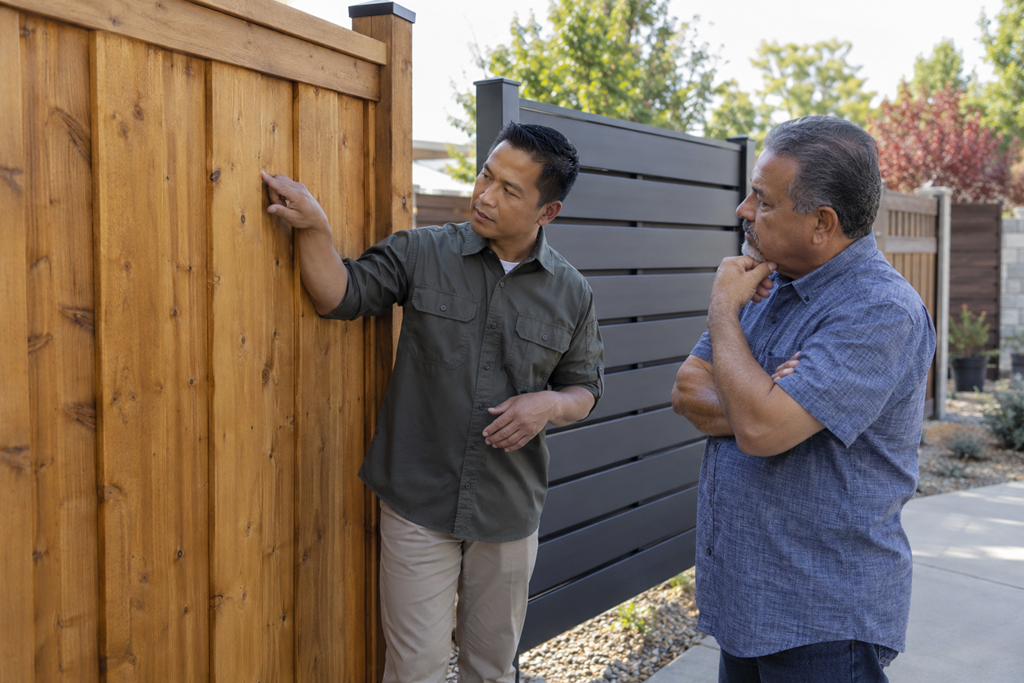
A fence contractor, for example, could show two installed fence styles while explaining practical differences customers commonly ask about.
A landscaping company might show two finished yard approaches and explain why property conditions, maintenance preferences, appearance, and project goals can affect the choice.
A water-heater company could show the physical difference between two common system types while keeping the discussion focused on general customer considerations rather than technical installation instructions.
The visuals do not need to be elaborate. In many cases, the most useful footage is simply a clear view of the two real options while a knowledgeable professional explains what the viewer should notice.
This is often more helpful than placing the professional in front of a blank wall and describing everything verbally.
Avoid Turning The Comparison Into A Contest
A service comparison does not always need a winner.
If a business presents one option as obviously superior from the beginning, viewers may reasonably wonder why the second option is offered at all.
A more useful comparison acknowledges that different customers, properties, circumstances, or priorities may lead to different choices.
Instead of saying:
“Option A is the better choice.”
A business might explain:
“Option A may make more sense when these conditions are present, while Option B may be worth considering when these other priorities matter more.”
That difference in wording keeps the video educational.
It also gives the business room to explain situations where an individual recommendation depends on information that cannot be determined from a general video.
Keep Technical Detail In Its Proper Place
Service professionals often know far more about a subject than the typical customer needs to know before making an inquiry.
That expertise is valuable, but a comparison video can become difficult to follow when every technical difference receives equal attention.
Ask a simpler question:
Does the viewer need this information to understand the choice?
If the answer is no, the detail may belong in another video.
For example, a homeowner comparing two service approaches may need to understand differences in scope, preparation, appearance, convenience, or ongoing considerations. The homeowner probably does not need a detailed explanation of every tool, material specification, installation technique, or internal business procedure.
Keeping the first comparison focused also creates opportunities for additional educational videos later.
Use Real Examples Without Pretending Every Situation Is The Same
Real service environments can make a comparison much easier to understand.
A company might show two completed projects, two physical product configurations, two service setups, or two common property situations.
The important part is explaining that the examples illustrate the difference rather than establishing a universal rule.
A service business could say that one example shows a situation where a particular option is commonly considered, while another demonstrates circumstances that may lead to a different conversation.
This gives prospects something concrete to look at without suggesting that every customer's situation will produce the same recommendation.
Give Each Video One Clear Comparison
Businesses sometimes make comparison videos harder than necessary by trying to cover every available choice at once.
If customers frequently compare two particular options, start there.
A video called “Option A vs. Option B” is usually easier to understand than a video attempting to compare six service packages, four materials, three project types, and every possible exception.
Additional comparisons can become separate videos.
That approach can gradually create a useful library of answers around the decisions customers repeatedly face without requiring the business to produce large amounts of content at once.
Use The Questions Your Staff Already Hear
Businesses do not necessarily need a brainstorming session to determine what belongs in a comparison video.
The subject may already appear in everyday conversations.
Listen for questions such as:
- “What is the difference between these two?”
- “Why would I choose this one instead?”
- “Which option is usually used in this situation?”
- “Does everyone need the more extensive service?”
- “What should I consider before deciding?”
Those questions reveal where prospects are uncertain.
For a small Sacramento service business with limited marketing time, answering a question that already comes up repeatedly can be more practical than trying to invent a completely new video topic.
A Clear Comparison Should Help The Customer Ask Better Questions
The purpose of a comparison video is not necessarily to make the entire service decision before the customer contacts the business.
A good video can accomplish something more realistic: help the prospect understand the basic choice well enough to have a more informed conversation.
If the viewer finishes the video understanding what separates the two options, why both exist, and which factors may affect the recommendation, the video has done useful work.
That same video can also become a reusable educational asset on a service page, in a frequently asked questions section, during customer follow-up, or anywhere prospects commonly encounter the same decision.
For a local service business, that can be a practical way to turn one frequently repeated explanation into information customers can access before or after contacting the company.
Related resource: If you would rather have professionally created educational video assets for your business, the Sacramento Local Pros Video Package includes an educational content video that can be used to explain a useful customer topic such as a common service comparison.