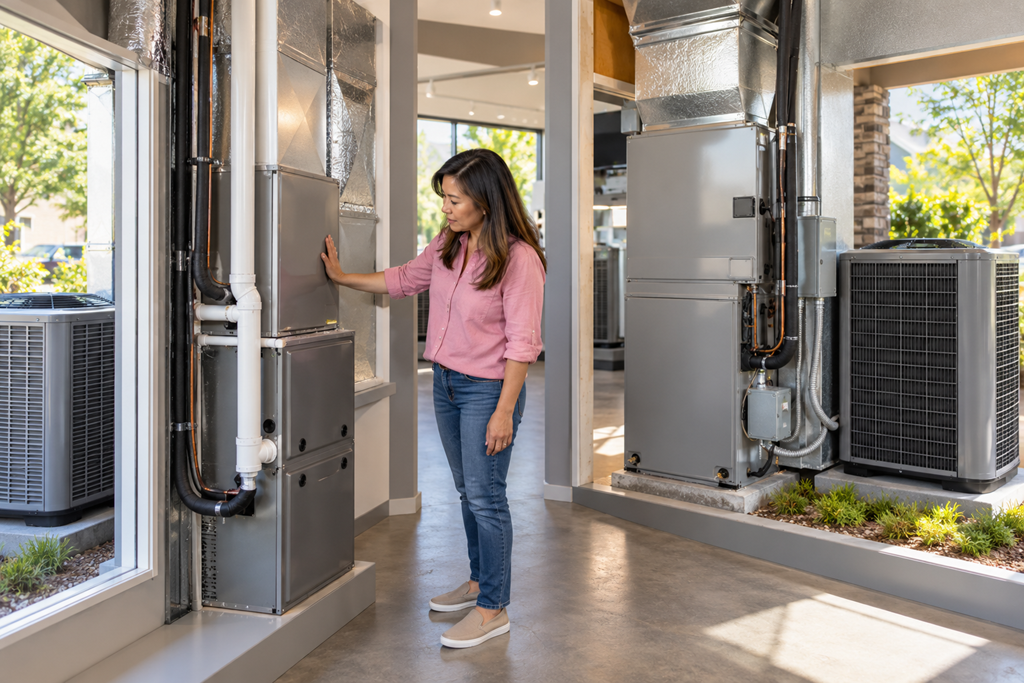
Replacing an HVAC system can be a significant expense for Sacramento-area homeowners, but the cost is not determined by the price of the heating and cooling equipment alone. The size and type of system, the condition of existing ductwork, installation requirements, and the work needed to make everything operate together can all affect the final estimate. Understanding these differences helps homeowners recognize why replacement quotes may vary, even when contractors appear to be proposing similar equipment.
Two homes with similar square footage may require different HVAC replacement work. Even within the same home, two contractors might recommend different approaches based on how they evaluate the existing system, the home's heating and cooling needs, and the components that can reasonably remain in place.
The most useful starting point is understanding what an HVAC replacement estimate actually includes.
The size and type of HVAC system
One of the primary cost factors is the equipment selected for the home.
Residential HVAC systems come in different configurations, capacities, and efficiency levels. Depending on the home's existing setup, replacement options might include a conventional air conditioner paired with a furnace, a heat pump system, or another suitable heating and cooling arrangement.
These differences affect equipment costs and may also change what is required during installation.
System capacity affects equipment selection
A larger home does not automatically need the largest available HVAC system. Appropriate capacity depends on several characteristics, including the home's layout, insulation, windows, air leakage, and heating and cooling demands.
For Sacramento-area homes, cooling performance during hot weather is an important consideration. However, selecting equipment based only on square footage or the size of the old system may overlook changes to the property or existing comfort problems.
An HVAC contractor may evaluate the home's heating and cooling requirements before recommending equipment capacity.
A system that is unnecessarily large is not automatically a better investment. Likewise, choosing smaller equipment simply to reduce the purchase price may create performance concerns if the equipment is not appropriately matched to the home.
Equipment efficiency can change the initial price
Higher-efficiency equipment may cost more initially than a comparable lower-efficiency option.
The difference can involve the equipment itself and, in some cases, additional installation or compatibility requirements.
Higher efficiency can reduce energy consumption under suitable operating conditions, but the actual financial benefit depends on how the system is used, the home, utility rates, and other factors.
The important distinction is between the upfront replacement cost and the potential operating costs after installation.
A more expensive system is not necessarily the best choice for every home, just as the lowest-priced system is not necessarily the most economical over its useful life.
Whether the existing ductwork can remain
Ductwork is one of the less visible factors that can make HVAC replacement estimates substantially different.
A homeowner might expect the project to involve removing an old furnace and air conditioner and installing new equipment in their place.
That may be reasonably straightforward when the existing duct system is suitable for the replacement equipment. However, some homes require additional work to address duct size, airflow restrictions, leakage, damaged sections, or other conditions.
For example, one estimate might include connecting new equipment to the existing ductwork, while another includes modifications to improve airflow or accommodate the proposed system.
These are not necessarily equivalent projects.
Duct-related costs can depend on:
- Whether existing ducts are properly sized for the proposed equipment.
- Whether accessible duct sections need repair, sealing, or replacement.
- How easily technicians can reach ductwork in an attic, crawl space, or other confined location.
- Whether return-air arrangements or transitions need modification.
The age of the home alone does not establish whether the ducts need replacing. Their actual condition and compatibility matter more.
If ductwork changes are included in an estimate, homeowners benefit from understanding which existing conditions prompted that recommendation.
Installation complexity and equipment location
Even when two homes need similar HVAC equipment, the installation work may differ.
A system located in an accessible garage or utility area can present different installation challenges from equipment installed in a cramped attic or other difficult-to-reach location.
The amount of work required to remove old equipment, move new components into position, connect systems, and complete the installation can influence labor costs.
Access can change the scope of work
Consider an HVAC unit installed in a restricted attic space.
Technicians may need additional time or specialized handling to remove and replace the equipment safely. In certain circumstances, access improvements or modifications may be needed.
An installation involving easily accessible equipment may require less labor.
This does not mean an attic installation will always cost more. The important point is that physical access and installation conditions influence the work involved.
Existing connections may need modification
A replacement system must be compatible with the home's relevant electrical, refrigerant, condensate drainage, ventilation, and other applicable connections.
Some equipment can be installed using much of the existing infrastructure. Other replacements require modifications because of differences between the old and new systems or conditions identified during evaluation.
Depending on the equipment and installation, these changes might involve electrical connections, refrigerant piping, drain arrangements, or venting components.
Such work should be assessed and performed by appropriately qualified professionals.
A quote that includes necessary modifications may appear higher than one that assumes existing connections can be reused without additional work.
The difference between replacing components and changing the entire system
Not every HVAC replacement involves exactly the same components.
One homeowner may be replacing an entire heating and cooling system. Another may need only certain equipment replaced, provided the remaining components are suitable and compatible.
For example, replacing an outdoor air-conditioning unit may not be equivalent to replacing the outdoor unit along with its matching indoor coil and other required components.
Similarly, changing from a furnace-and-air-conditioner arrangement to a heat pump configuration can involve a different equipment package and installation scope.
This distinction matters because homeowners sometimes compare the total prices of proposals without recognizing that the proposed systems are not identical.
A lower estimate might cover fewer components. A higher estimate might include a more extensive replacement.
Neither difference automatically establishes which recommendation is appropriate.
The useful question is whether the proposed components work together as a suitable system and which existing equipment will remain.
Home conditions that can influence replacement costs
Some costs relate less to the new HVAC equipment and more to the home where it will be installed.
Sacramento-area properties vary in age, construction, insulation, layout, and previous improvements. Those characteristics can affect both equipment recommendations and installation requirements.
Insulation, windows, and air leakage
A home with substantial heat gain, inadequate insulation, or considerable air leakage may have different cooling requirements than a similarly sized home with better thermal performance.
These factors can influence the equipment capacity recommended after an appropriate evaluation.
They do not necessarily mean the homeowner must complete insulation or window improvements as part of the HVAC replacement.
However, understanding the home's condition can help avoid equipment decisions based on incomplete assumptions.
Previous alterations and aging components
Homes that have undergone additions, remodeling, or changes to their heating and cooling arrangements may present additional considerations.
Existing equipment connections, duct configurations, or equipment locations may no longer suit the home's current needs.
Older components also need to be evaluated based on their condition rather than assumed suitable simply because they have continued operating.
In some cases, these conditions lead to additional recommended work. In others, the existing infrastructure may remain usable.
A contractor's explanation should connect any proposed modifications to identifiable conditions in the home.
Why HVAC replacement estimates can be so different
Two replacement estimates can vary because contractors propose different equipment, include different work, or make different assumptions about existing components.
This is why the final price alone tells only part of the story.
Imagine receiving two estimates for the same Sacramento home.
The first proposes a replacement system using the existing ductwork and connections, with no significant modifications anticipated.
The second proposes a different system configuration and includes adjustments to ductwork and electrical connections.
Even if both systems are intended to heat and cool the same house, the project scopes are different.
Alternatively, two proposals might specify similar equipment but differ in labor, included services, or the installation work described.
The meaningful comparison is not simply which total is lower. It is what work and equipment each total actually covers.
When reviewing estimates, a few targeted questions can help:
- Which equipment and components are included in the quoted price?
- What existing parts of the HVAC system will remain?
- Does the estimate include any ductwork or connection modifications, and why?
- What additional work, if any, might be required after installation begins?
- Which installation, testing, and completion services are included?
These questions are not intended to turn a homeowner into an HVAC technician. They help establish whether the proposed prices cover comparable work.
A clearly itemized explanation can make a price difference easier to understand, even when the exact costs of individual components vary between providers.
Understanding the cost before making a replacement decision
The cost of replacing an HVAC system in Sacramento depends on more than equipment size or the brand selected. Equipment configuration, efficiency, existing ductwork, installation access, connection requirements, and the home's physical characteristics can all contribute to the total.
The most important distinction is between the cost of the new equipment and the cost of the complete replacement project.
Before deciding between estimates, homeowners should understand what each contractor plans to install, what existing components can remain, and what additional work is included.
That understanding makes it easier to recognize meaningful differences between HVAC replacement proposals without assuming that every quoted price represents the same project.