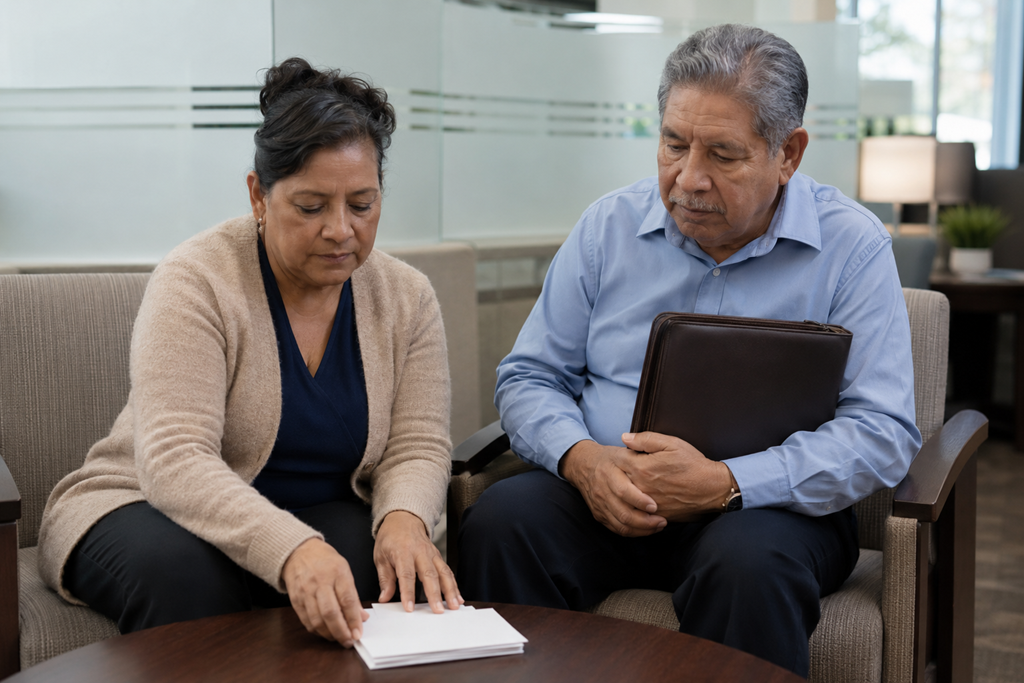
Before discussing a mesothelioma claim, families should try to organize the basic facts that may help a qualified legal professional understand the situation: the diagnosis, possible asbestos exposure history, past jobs, military or trade work, home renovation history, product memories, medical records, and the questions the family wants answered.
This does not mean the family needs to solve the case before the consultation. It means they can make the first conversation more useful by gathering what they already know and noting what they are unsure about.
For Sacramento families, this kind of preparation can be especially helpful when emotions, medical appointments, financial concerns, and family responsibilities are all happening at once. A conversation with a mesothelioma lawyer is easier to follow when the most important details are not scattered across memory, paperwork, and different relatives.
Families Often Feel Pressure To Have Every Answer
A mesothelioma diagnosis can leave families trying to piece together events from many years of work, home life, and medical history. That can feel frustrating because asbestos exposure is not always obvious at the time it happens.
Someone may remember job sites, uniforms, dusty materials, shipyards, construction work, automotive work, industrial settings, home remodeling, or a family member’s work clothes without knowing whether asbestos was involved. Others may only remember fragments: a company name, a type of work, a building, a product, a coworker, or a repeated task.
That is normal. Families do not need a perfect timeline before speaking with a lawyer. They only need a starting point.
The Most Useful Preparation Is Often Simple And Practical
A helpful first step is to separate what the family knows from what the family is still trying to remember.
Known details might include the person’s diagnosis, treating providers, past employers, military service, trade work, union involvement, job duties, addresses where the person lived, or home renovation projects. Unclear details might include exact product names, exact job dates, or whether a specific material contained asbestos.
A mesothelioma lawyer can explain what details may matter for the specific situation. The family’s role before the discussion is usually to make the conversation less scattered by bringing together the pieces they already have.
Work History Can Matter Even When It Feels Ordinary
Many families focus only on the most obvious jobs, such as construction, industrial, mechanical, shipyard, or manufacturing work. Those may be important, but they are not the only details worth mentioning.
A person’s regular duties can matter too. For example, it may help to describe whether the person handled insulation, repaired equipment, worked around boilers or pipes, cleaned dusty work areas, removed old materials, worked near maintenance crews, or brought dusty clothing home.
Families should not try to decide on their own which details are legally important. A detail that seems ordinary to the family may help a qualified attorney ask better follow-up questions.
Home And Family Exposure Questions Can Be Easy To Miss
Not every exposure question is limited to the person’s own workplace. Some families may need to discuss whether asbestos could have been connected to household repairs, older building materials, vehicle work, or dust carried home on another person’s clothing.
This is one reason family members can be helpful in the preparation process. One person may remember the job title. Another may remember the laundry routine. Someone else may remember a home project, garage work, or a relative’s employer.
The goal is not to accuse anyone or make assumptions. The goal is to give the legal professional a fuller picture so they can ask more informed questions.
Medical Records Help Anchor The Conversation
Families should also think about what medical information is already available. This may include the diagnosis, pathology reports, imaging summaries, treatment plans, hospital records, or names of treating physicians.
The legal consultation is not a substitute for medical advice. Medical questions should be discussed with qualified medical providers. But basic medical records can help a legal professional understand the diagnosis and what documents may be needed later.
If records are not fully organized yet, families can still begin the conversation. It is enough to know what exists, where it may be located, and who may have access to it.
A Short Question List Can Keep The Discussion Focused
A mesothelioma claim discussion can involve unfamiliar terms and emotional decisions. Writing down a few questions beforehand can help the family stay focused.
Useful questions may include:
- What information is most important to gather first?
- Which work history details should we try to reconstruct?
- What medical records may be useful?
- How does your office communicate with families during the process?
- What should we avoid assuming before more information is reviewed?
- What costs, responsibilities, or expectations should we understand before moving forward?
These questions are not a script. They are a way to slow the conversation down enough for the family to understand what is being discussed.
Families Should Be Careful With Guarantees Or Pressure
One important part of preparation is knowing what clear communication should feel like.
A qualified legal professional should be able to explain the process in understandable language, answer questions, and avoid promising a specific outcome before the facts are reviewed. Families should be cautious if a conversation feels rushed, vague, overly aggressive, or focused more on pressure than explanation.
This does not mean every answer will be available immediately. Some questions require document review, investigation, or follow-up. But the family should still feel that the next steps are being explained clearly.
It Helps To Choose One Family Point Person
When several relatives are involved, conversations can become confusing. One family member may have medical paperwork, another may know work history, and another may be handling phone calls.
Choosing one main point person can help keep communication organized. That person does not need to make every decision alone. They simply help collect notes, track questions, and keep the family from repeating or losing important information.
For Sacramento families comparing local legal professionals, this can also make consultations easier to compare. Families can pay attention to how clearly each office explains the process, what information they request, and whether they give the family enough room to ask questions.
Preparation Is Not The Same As Having Proof
A common misunderstanding is that families must already have proof of asbestos exposure before speaking with a mesothelioma lawyer. In many cases, the first conversation is about identifying possible paths to investigate, not proving everything immediately.
It is acceptable to say, “We are not sure,” “We only remember part of this,” or “We need help understanding what might matter.”
Those honest gaps can be useful. They help the legal professional understand where more review may be needed.
A Clearer First Conversation Starts With Organized Basics
Before discussing a mesothelioma claim, families can prepare by gathering medical information, writing down possible exposure memories, listing past jobs and home projects, noting family observations, and preparing a few questions about the process.
This article is educational only and is not legal advice. A qualified mesothelioma lawyer can explain how the facts, records, and options may apply to a specific situation.
The main goal is not to arrive with every answer. It is to walk into the conversation with enough organization to ask better questions, understand the responses, and make a more informed decision about what to do next.