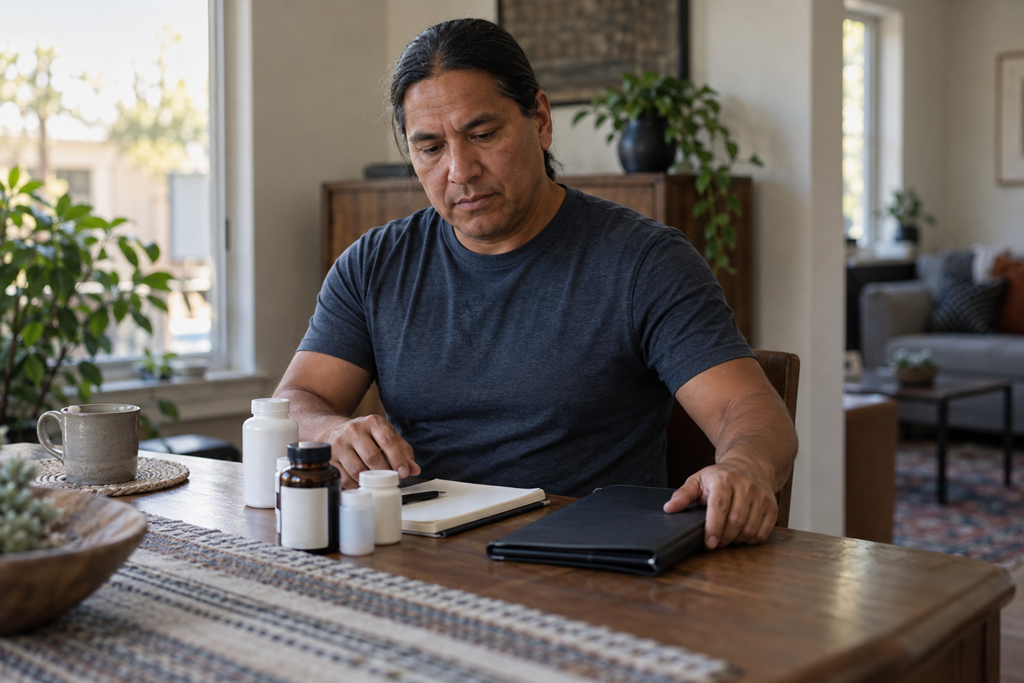
Before meeting with a gynecomastia surgeon, prepare a short, accurate picture of what concerns you, how long you have noticed it, any relevant medical history or medications, and the questions you want answered. You do not need to arrive knowing which procedure you want. The consultation is meant to help you understand what the surgeon sees, what options may be appropriate to discuss, and whether you feel comfortable with the provider's approach.
For many patients, that distinction makes the appointment easier to approach. You are not expected to diagnose the cause of a chest concern, determine your own candidacy, or select a surgical technique before you walk through the door. Your role is to give the surgeon useful information and explain what you would like to understand or change.
For Sacramento-area patients comparing gynecomastia surgeons, a little preparation can also make it easier to notice differences in how providers evaluate concerns, explain options, answer questions, and set expectations.
Be Ready To Describe What Is Actually Bothering You
One of the most useful things you can bring to the consultation is a clear description of your concern in your own words.
That might include when you first noticed a change in your chest, whether its appearance has remained fairly consistent or changed over time, and what specifically has led you to consider speaking with a surgeon.
You might be concerned about chest contour under certain clothing, asymmetry, a persistent appearance that bothers you, or another issue you want professionally evaluated. If discomfort, tenderness, a recent change, or another physical concern is part of the reason for your appointment, mention that too rather than assuming it is unimportant.
You do not need to translate your experience into medical terminology. A qualified provider can ask follow-up questions and determine what information is relevant to an evaluation.
Bring An Accurate Health And Medication History
A surgical consultation is not only a conversation about appearance. Your health history may help the surgeon understand what should be discussed before making any recommendations.
Be prepared to provide an accurate list of medications, supplements, previous surgeries, significant medical conditions, allergies, and other health information the office requests.
If another healthcare provider has previously evaluated your chest concern or you have relevant medical records or test results, ask the surgeon's office beforehand whether those records would be useful to bring.
The goal is not to assemble an enormous medical file. It is to avoid relying on memory for information that may matter during the conversation.
Think About Your Goal Without Choosing The Procedure Yourself
Patients sometimes feel that they should research gynecomastia surgery extensively and arrive already knowing what operation they want.
That is not necessary.
It is usually more useful to describe the result or improvement you hope to discuss. For example, you may want to understand whether a particular chest contour concern can be addressed, how noticeable scarring could be, or what kind of change might realistically be possible in your situation.
The surgeon can then explain what they observe and what approaches, if any, may be worth considering.
This also gives you a better opportunity to evaluate the consultation itself. A thoughtful discussion should help you understand the reasoning behind recommendations rather than simply give you a procedure name.
Write Down The Questions You Do Not Want To Forget
It is easy for a consultation to cover more ground than expected.
Writing down a short set of questions beforehand can keep the conversation centered on the information that matters most to you.
Useful questions may include:
- What do you evaluate when determining whether someone may be an appropriate candidate?
- What treatment approaches might be discussed for a concern like mine?
- What factors could affect the amount or type of correction that may be possible?
- Where could scars be located, and how do you discuss scar expectations with patients?
- What risks and limitations should I understand?
- What does the typical recovery process involve for the approach you are discussing?
- What follow-up care is normally included?
- Who would perform the surgery and provide follow-up care?
- What costs would be included in the written estimate?
- What should I understand before deciding whether to move forward?
These questions are not a substitute for individualized medical guidance. They are simply a way to make sure the consultation gives you enough information to evaluate your options.
Relevant Photos Or Records May Help Explain A Change Over Time
Not every patient will need photographs or older records.
However, if your concern has changed noticeably over time and you already have personal photographs that clearly show that change, they may provide useful context during the conversation. You can ask the office whether bringing them would be helpful.
The same principle applies to prior evaluations or records. Bring information because it contributes to an accurate discussion, not because you feel obligated to arrive with an exhaustive file.
Prepare To Discuss Expectations, Not Just Appearance
A useful consultation should help establish what surgery can and cannot reasonably be expected to accomplish.
Think about what would make an outcome meaningful to you and what concerns you have about tradeoffs such as scars, recovery, activity restrictions, possible revision, or other limitations the surgeon explains.
This is also the time to listen carefully to how the provider discusses uncertainty.
Cosmetic surgery cannot be reduced to choosing an ideal photograph and asking a surgeon to reproduce it exactly. Individual anatomy, health considerations, surgical approach, healing, and other factors can influence what may be appropriate and what outcome may be possible.
A surgeon should be able to discuss those factors without promising a guaranteed result.
Do Not Hide Information Because It Feels Unrelated Or Embarrassing
Some patients may be tempted to leave out medications, supplements, substance use, previous procedures, health conditions, or other information because they do not immediately see how it connects to a cosmetic concern.
Accurate disclosure matters more than trying to decide for yourself which details are relevant.
The same applies to the reason you are seeking surgery. If a particular situation, clothing choice, activity, or long-standing concern is influencing your decision, you can explain that plainly.
A consultation is more useful when the surgeon is working from an accurate picture rather than a carefully edited one.
Use The Appointment To Evaluate The Surgeon Too
Preparation is not only about helping the surgeon evaluate you.
It also helps you evaluate the surgeon.
Notice whether your questions receive understandable answers. Pay attention to whether risks, limitations, recovery considerations, alternatives, and expectations are discussed along with potential benefits.
You can also ask about the surgeon's training and experience with gynecomastia procedures, where surgery would take place, who would be involved in your care, and how questions or concerns are handled after a procedure.
If you are meeting with more than one Sacramento-area provider, using a similar set of questions at each consultation can make meaningful differences easier to recognize.
You Do Not Have To Make A Decision During The Consultation
A consultation can provide useful information without requiring an immediate commitment.
You may leave with additional questions. You may want to review the surgeon's explanation, written cost information, proposed approach, recovery expectations, or your own comfort level before deciding what to do next.
That is part of the decision process.
Being prepared does not mean arriving ready to schedule surgery. It means arriving ready to have a productive conversation and leaving with enough information to decide whether you want to continue exploring the option.
For personal questions about diagnosis, candidacy, risks, treatment choices, or expected results, discuss your individual situation with a qualified medical professional.
A Small Amount Of Preparation Can Make The Consultation More Useful
Before meeting with a gynecomastia surgeon, focus on the information only you can provide: what concerns you, how the issue has developed, your relevant health history, your goals, and the questions you want answered.
You do not need to arrive with a diagnosis or a preferred operation.
That preparation can help you spend less of the appointment trying to remember important details and more of it understanding the surgeon's evaluation, expectations, and approach so you can make a more informed decision about whether the provider and proposed path feel appropriate for you.