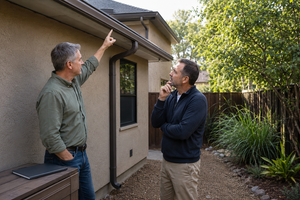
Before hiring a contractor for a business property, ask questions that clarify exactly what work is being proposed, who will be responsible for it, how the project may affect normal operations, and what could change after work begins. The goal is not to interrogate the contractor or predict every possible problem. It is to make sure you understand the scope, schedule, access needs, responsibilities, and decision points well enough to compare providers and avoid committing to an arrangement that still feels vague.
For a Sacramento small business owner, hiring a contractor can involve more than deciding whether the proposed work seems reasonable. The property may also be a workplace, customer-facing location, storage area, production space, or source of daily revenue. A project that sounds straightforward during an initial conversation can become harder to evaluate when questions about business hours, employee access, cleanup, scheduling, or additional work have not been discussed.
You do not need to know how to perform the work yourself. What matters is knowing what to clarify before you agree to have someone perform it.
Start With What the Contractor Is Actually Proposing
One of the most useful questions is also one of the simplest: What exactly is included in the proposed work?
A contractor may understand the project clearly while describing it in terms that seem broader or less specific to the business owner. That can create different expectations even when neither side intends to be unclear.
Ask the contractor to explain what areas of the property are included, what result the proposed work is intended to accomplish, and what is outside the current scope.
This becomes especially important when you are comparing contractors. Two proposals that appear to address the same problem may not actually include the same work.
For example, one contractor may be discussing only the visibly affected area while another is accounting for related preparation, restoration, cleanup, or coordination. Understanding those differences can be more useful than looking at the final quoted amount alone.
Ask How the Project Could Affect Normal Business Operations
A contractor working on a business property is entering a space that may still need to serve employees, customers, vendors, equipment, or inventory.
That makes disruption an important part of the hiring conversation.
Ask which areas may need to be unavailable while the work is happening and whether noise, dust, equipment placement, deliveries, temporary barriers, utility interruptions, or restricted access could affect normal operations.
You may also want to understand whether the contractor expects the work to happen during normal business hours or whether other scheduling arrangements are possible.
The point is not to eliminate every inconvenience. Some projects naturally create disruption. The useful distinction is whether you understand that disruption before the project begins.
A contractor who explains likely impacts clearly gives you information you can use to decide how the work fits into the realities of running your business.
Clarify Who Will Actually Be Doing the Work
The person who provides the estimate or discusses the project may not be the only person who appears at the property.
Ask who is expected to perform or supervise the work and whether other crews, specialists, or subcontractors could be involved.
You can also ask who your primary point of contact will be if questions arise once work begins.
That matters because communication can become confusing when the business owner assumes one person is responsible while the contractor's team operates differently.
For credentials, insurance, permits, inspections, or other documentation that may apply to the project, ask the contractor what applies to the work and how relevant information can be verified. Requirements can depend on the project and circumstances, so obtain qualified professional guidance when you need advice about your specific property or obligations.
Understand What the Contractor Needs From Your Business
Contractors may need more than physical access to the work area.
Depending on the project, they may need access to utility areas, gates, parking spaces, storage rooms, equipment locations, or parts of the building that are normally restricted.
Ask what access will be required, who needs it, and when.
If employees, customers, tenants, vendors, sensitive equipment, inventory, or confidential business areas are nearby, understanding those access expectations before work begins can help you determine what arrangements you need to make.
If you lease the property rather than own it, it can also be useful to determine whether another party needs to be involved before you authorize work. Review your particular situation with the appropriate property, legal, or other qualified professional when needed.
Ask What Could Change After Work Begins
Not every condition can be fully understood before a contractor starts a project.
That does not automatically mean the original proposal was inadequate. Some conditions are simply difficult to see until an area is opened, removed, accessed, or examined more closely.
The useful question is how those discoveries will be handled.
Ask the contractor what kinds of conditions could reasonably change the scope, schedule, or cost and how you would be informed before additional work moves forward.
You can also ask whether the contractor sees any uncertainty in the project now.
A clear explanation such as “this is what we can determine at this stage, and this is what we may not know until later” can be more informative than a proposal that sounds completely certain without explaining its assumptions.
Make Sure the Schedule Means What You Think It Means
A date can sound definite without answering every scheduling question.
If a contractor says work can begin on a certain day, clarify whether that is a firm start date, an estimated window, or a target that depends on materials, inspections, previous projects, access, or other conditions.
Ask how long the contractor currently expects the work to take and what could extend that timeline.
For a business property, it can also help to ask what happens at the end of each workday. Will the work area remain inaccessible? Will equipment or materials stay onsite? Are there portions of the business that can continue operating normally?
You are not looking for a guarantee that nothing will change. You are trying to understand the contractor's current plan and how changes would be communicated.
A Few Questions Can Reveal a Lot Before You Hire
You do not need an enormous contractor questionnaire. A short group of questions tied directly to your property and business operations can uncover much of what you need to understand.
Useful questions may include:
- What exactly is included in the proposed work?
- What is specifically not included?
- Which parts of the property will be affected?
- How might the work interfere with customers, employees, equipment, or normal business hours?
- Who will perform and supervise the project?
- What access will your crew need?
- What conditions could change the scope, schedule, or cost?
- How will you communicate with me if something unexpected is discovered?
- What will the work area be like at the end of each day?
- What should I have clarified or prepared before the project starts?
The contractor's answers are useful not only because of the information they provide, but also because they show you how the contractor communicates about expectations and uncertainty.
Pay Attention to Explanations, Not Just Answers
A contractor does not need to make every project sound simple.
In fact, a thoughtful explanation of limitations or possible complications may be more useful than an answer that suggests nothing could possibly change.
Listen for whether the contractor distinguishes between what is known, what is estimated, and what may depend on conditions discovered later.
Notice whether questions about operational disruption are treated as legitimate concerns rather than inconveniences.
And when comparing providers, consider whether you understand each contractor's proposal well enough to explain the meaningful differences yourself.
If two proposals cannot be compared because one is much less clear, asking follow-up questions before choosing may be more useful than trying to decide from price alone.
The Best Time to Resolve Vagueness Is Before the Work Starts
Hiring a contractor for a business property does not require understanding every construction detail. It requires understanding the agreement well enough to know what you are authorizing and how the project may intersect with the operation of your business.
Before committing, make sure you can describe the proposed scope, likely disruption, access needs, responsibilities, schedule, and process for handling changes.
You may not eliminate every surprise, but you can make the hiring decision with a much clearer picture of what working with that contractor is likely to involve.