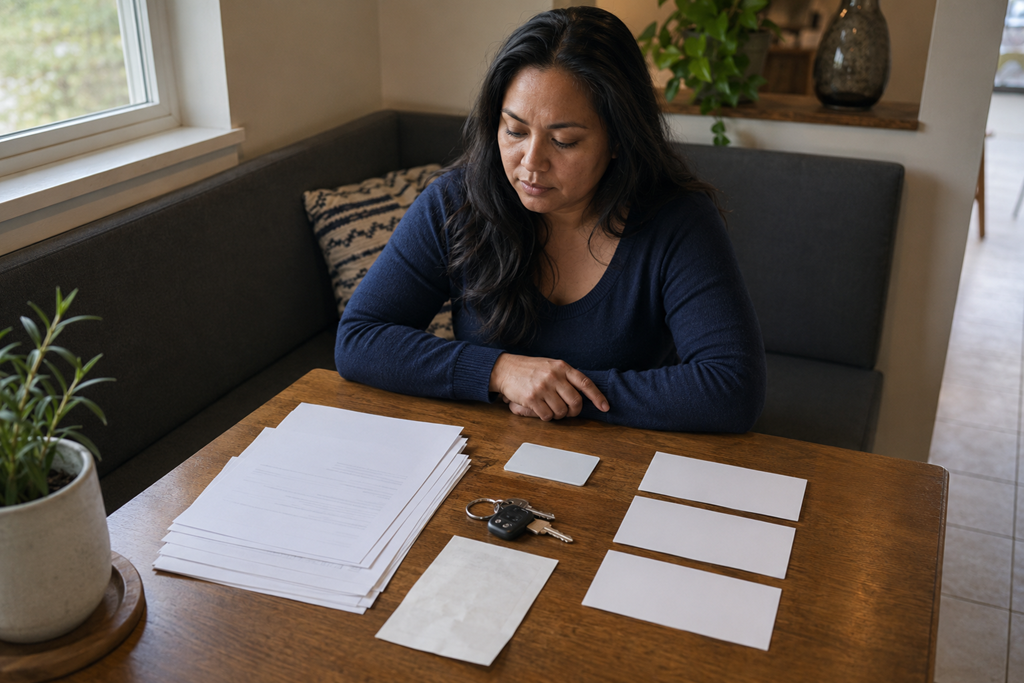
Before discussing a DUI charge with a lawyer, focus on collecting the information you received, separating what you clearly remember from what you are unsure about, and identifying the questions that matter most to your situation.
You do not need to understand every legal term or arrive with a polished explanation. The purpose of an initial discussion is to help the lawyer understand what happened, identify which issues may require attention, and explain what the next stages could involve.
For many people, the period after a DUI arrest feels disorganized. There may be unfamiliar paperwork, concerns about driving, uncertainty about court, and questions about work or family responsibilities. Preparing a few basic details can make the conversation more focused without requiring you to figure out the case on your own.
The First Conversation Is About Building an Accurate Picture
A DUI charge alone does not explain every important detail.
A lawyer may ask about where the stop occurred, what the officer said, whether any tests were requested, what paperwork you received, and what happened before and after the arrest. These questions are not necessarily an indication of whether the case is strong or weak. They are part of understanding the sequence of events.
Try to describe what you remember in ordinary language. There is no need to use legal terminology or make the story sound more certain than it is.
It can be useful to distinguish between:
- What you clearly remember
- What you only partly remember
- What someone else told you
- What you are assuming based on the paperwork
- What you do not yet know
Saying “I am not sure” is often more useful than filling in a gap with a guess.
Bring the Paperwork You Actually Received
The documents given to you may contain details that are difficult to remember during a stressful conversation.
Bring or make accessible any paperwork connected to the arrest, vehicle, court appearance, release, or driving privilege. Depending on the situation, this might include:
- A citation or notice to appear
- Temporary driver’s-license paperwork
- A suspension or revocation notice
- Release or bail documents
- Vehicle towing or storage paperwork
- Any test-related documents you were given
- Information about an upcoming court appearance
Do not worry if you do not have every possible record. Lawyers regularly speak with people before all reports, recordings, or test results are available.
The goal is simply to avoid leaving important papers scattered in a vehicle, bag, email account, or drawer where they may be overlooked.
A DUI Matter May Involve More Than One Process
One point that is easy to misunderstand is that a DUI-related matter may involve both a criminal court case and a separate administrative issue involving driving privileges.
These processes may have different paperwork, decision-makers, procedures, and deadlines. The California DMV explains that an Administrative Per Se action can affect a person’s driving privilege following a DUI arrest and that a driver may have the right to request an administrative hearing.
This is one reason it is helpful to show a lawyer every document you received rather than bringing only the court citation.
A useful question is:
“Are there separate court and driver’s-license matters I should understand?”
That question does not assume what will happen. It helps establish which processes may apply and whether any time-sensitive decisions need to be discussed.
Explain the Practical Effects on Your Daily Life
A lawyer needs the facts of the case, but practical concerns can also shape the questions you need answered.
Consider whether driving affects:
- Your employment or ability to reach work
- Commercial or employer-provided driving responsibilities
- School or job training
- Medical appointments
- Childcare or caregiving duties
- Transportation for family members
- The operation of a small business
These details do not determine the legal outcome. They help the lawyer understand which consequences are especially important for you and which questions should be addressed clearly.
For example, someone who works from home may have different immediate concerns than a delivery driver, contractor, caregiver, or parent who regularly transports children.
You do not need to present an argument about why you need to drive. Simply explain how transportation fits into your normal responsibilities.
Ask About the Evaluation Process Instead of Requesting a Prediction
It is understandable to want an immediate answer about whether a charge will be dismissed, reduced, or resolved in a particular way.
However, a useful legal consultation usually begins with evaluation rather than prediction. The lawyer may need additional reports, recordings, test information, witness accounts, or procedural details before offering a meaningful assessment.
Consider asking:
- What information would you need to evaluate the situation?
- Which parts of the available information appear most important?
- What records may become available later?
- What processes could apply to the court case and driving privilege?
- What can reasonably be assessed now, and what remains unknown?
- What are the likely next stages?
- Who would handle the case and communicate with me?
A careful explanation may be more valuable than a confident answer offered before the facts have been reviewed.
The Consultation Is Also a Chance To Evaluate the Lawyer
The lawyer is evaluating the matter, but you are also deciding whether the professional relationship feels workable.
Pay attention to whether the lawyer:
- Explains unfamiliar terms in understandable language
- Answers questions directly
- Distinguishes known facts from possibilities
- Avoids promising a specific outcome
- Explains who will work on the case
- Describes how updates and questions will be handled
- Clearly discusses fees and additional costs
The State Bar of California recommends asking about the steps involved, the expected timeline, fees, billing, and whether the lawyer has the experience and skill needed for the matter. It also advises consumers to consider whether they understand the lawyer’s explanation and feel comfortable working with that lawyer.
A consultation should leave you with a better understanding of the process, even when the final outcome remains uncertain.
Understand What the Fee Covers
A quoted legal fee may not mean the same thing at every office.
Ask what services are included and whether the fee covers only an initial stage or the matter through a later resolution. It may also be helpful to ask about payment timing, additional expenses, and what circumstances could change the total cost.
Useful questions include:
- Is the fee flat, hourly, or structured another way?
- Which stages of representation are included?
- Are administrative driving matters included?
- Could expert reviews, investigation, testing, or other services cost extra?
- What happens if the case proceeds further than expected?
- Will the agreement be provided in writing?
The State Bar advises consumers to understand fees and billing and to obtain a written agreement when one is required or appropriate.
The lowest initial quote is not automatically the best value, and the highest quote does not automatically mean the strongest representation. What matters is understanding what is included, who will perform the work, and how clearly the lawyer communicates.
Avoid Editing the Story To Make It Sound Better
People sometimes leave out uncomfortable details because they are embarrassed or worried that the information will make the situation look worse.
That can make it harder for a lawyer to identify important issues.
Describe events as accurately as you can, including details you believe may be unhelpful. At the same time, do not speculate about facts you cannot confirm.
A useful approach is:
“This is what I remember, this is what the paperwork appears to say, and this is what I am uncertain about.”
That gives the lawyer a clearer foundation for asking follow-up questions.
Verify Who You Are Considering Hiring
Before committing to representation, confirm that the lawyer is licensed and review the professional information available through the State Bar of California.
The State Bar’s attorney search provides information about a lawyer’s license status and disciplinary or administrative history.
This basic verification is especially important when a lawyer was found through an advertisement, unsolicited communication, referral website, or unfamiliar online listing.
It does not tell you whether a particular lawyer is right for your situation, but it helps confirm that you are communicating with the person and law office you intended to contact.
Preparation Does Not Mean Solving the Case Yourself
You are not expected to identify legal defenses, interpret test results, challenge procedures, or decide what outcome should be pursued before speaking with a lawyer.
Your role before the consultation is much simpler:
Gather the documents you received, describe what you remember honestly, identify the practical concerns affecting your life, and ask how the lawyer would approach evaluating the matter.
For Sacramento-area residents, a focused consultation can make an unfamiliar legal situation easier to understand. The goal is not to obtain a guarantee during the first conversation. It is to leave knowing which processes may apply, what information is still needed, what the representation would include, and what decisions may come next.
Because legal rights and deadlines depend on the specific circumstances, speak with a qualified California lawyer about your individual situation. This article is educational and is not legal advice.