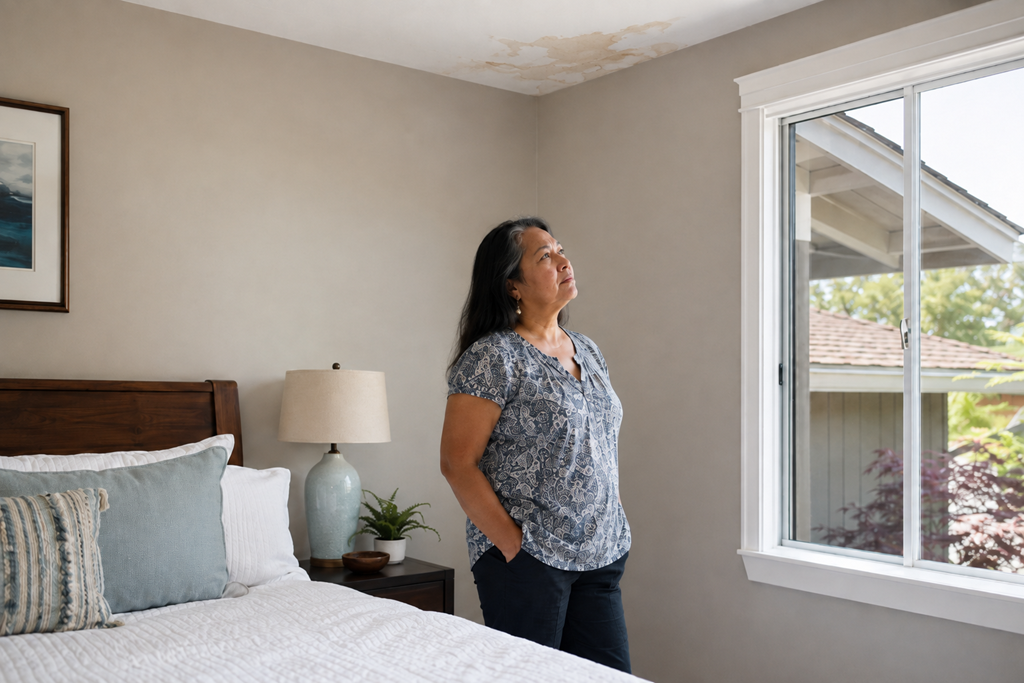
Delaying a roof repair can allow a small exterior problem to become an interior one because water does not always stay near the place where it first gets through the roof. Moisture can travel along roof decking, framing, insulation, or other materials before it becomes visible as a ceiling stain, damp drywall, peeling paint, or another sign inside the home.
That is one reason a roof concern can be easy to underestimate. What looks minor from the outside may not produce an obvious indoor symptom right away. A homeowner may notice a damaged shingle, an aging roof transition, a problem near flashing, or another concern and decide to watch it for a while because nothing appears to be happening inside.
The difficulty is that the absence of visible interior damage does not necessarily mean moisture has stayed out.
Interior Damage May Appear Away From the Roof Problem
One of the more confusing parts of a roof leak is that the place where water enters and the place where it becomes noticeable inside the home may not be the same.
Once moisture gets beneath the roof covering, it can follow nearby materials before reaching an interior surface. A ceiling stain in one location may therefore be connected to a roof problem several feet away rather than directly above it.
For homeowners, this matters because it can make the problem seem smaller or more isolated than it actually is.
Someone might see a faint ceiling mark and assume the ceiling itself is the primary problem. Another homeowner may see a questionable roof area but assume it cannot be causing trouble because the room directly underneath still looks normal.
Both situations can make it harder to understand the actual scope without a professional evaluation.
Waiting for a Ceiling Stain Can Give a False Sense of Security
Visible interior damage is often what finally makes a roofing problem feel real.
Before that point, postponing a repair may seem reasonable, particularly when the roof concern appears small or the weather has been dry. If there is no dripping water, damaged ceiling, or obvious disruption inside the home, waiting can feel like a low-risk decision.
But visible interior symptoms are not an ideal measuring point for deciding whether a roof concern matters.
By the time a homeowner notices discoloration, peeling paint, damp drywall, or another indoor sign, moisture may already have moved through materials that were not visible from the living space.
This does not mean every minor roof issue will lead to extensive interior damage. It does mean that homeowners should be cautious about using “nothing has happened inside yet” as the main reason for postponing an evaluation or recommended repair.
A Small Exterior Repair and Interior Restoration Are Different Problems
Another useful way to think about timing is to consider how the scope can change.
When a roofing concern is limited to the exterior, the discussion may center on identifying the affected roof area and determining what repair is appropriate.
Once moisture begins affecting interior materials, the situation can involve more than the roof itself.
Ceiling finishes, drywall, insulation, paint, or other nearby materials may also need to be evaluated depending on what happened and how long moisture was present.
That can turn one service decision into several related decisions.
The important point is not that a delayed repair will automatically become a large project. It is that waiting can introduce additional uncertainty about what else may have been affected.
Dry Periods Can Make Postponing the Decision Feel Easasier
Roof problems can be especially easy to put off when there is no immediate sign of water entering the home.
For Sacramento-area homeowners, the practical question is less about reacting to every roof imperfection and more about understanding whether a known concern is something that can reasonably be monitored or something a qualified roofing professional believes should be addressed.
A dry stretch does not necessarily answer that question.
If a roof concern has already been identified, it can be more useful to understand the condition itself, what could happen if it remains unresolved, and what signs would indicate that the scope is changing.
That provides a better basis for deciding than simply waiting for the next visible symptom.
Interior Signs Can Help, but They Do Not Tell the Whole Story
Homeowners often focus on obvious warning signs such as ceiling discoloration or peeling paint because those are easy to see.
Those observations are useful information to share with a roofing professional, but they are only part of the picture.
A professional evaluation may need to consider the roof area where moisture could be entering as well as the interior locations where evidence has appeared. The goal is to understand whether the two are connected and whether the visible symptom represents the full scope of the issue.
This is also why simply repairing an interior stain without understanding where the moisture came from can leave the underlying question unresolved.
The visible mark and the source of the moisture are two different parts of the same problem.
What to Clarify Before Deciding to Wait
If a roofing professional identifies a repair and you are considering postponing it, a few focused questions can make the decision easier to understand:
- What condition did you find, and what part of the roof is affected?
- Is there any reason to believe moisture has already moved beyond the visible roof area?
- What could reasonably change if the repair is postponed?
- Are there interior areas that should also be evaluated because of the roof condition?
- What signs should prompt another evaluation if I decide to monitor the issue?
The goal is not to pressure yourself into approving work immediately. It is to understand what waiting actually means in the context of the condition that was found.
A provider should be able to explain that in plain language without relying on fear or vague warnings.
The Better Question Is Not Simply Whether the Roof Can Wait
Homeowners sometimes frame the decision as a simple choice between repairing the roof now or putting the project off.
A more useful question is whether postponing the repair could allow the scope to change.
If a known roof problem remains limited to the exterior, the decision may stay relatively straightforward. If moisture begins reaching insulation, drywall, ceilings, paint, or other interior materials, the homeowner may eventually be dealing with both the original roof concern and additional interior evaluation or repair.
That distinction can help when comparing roofing recommendations.
Instead of focusing only on whether the problem looks urgent, ask what the contractor observed, what remains uncertain, and what consequences are reasonably associated with waiting.
A Small Problem Is Easier to Judge Before the Scope Changes
Not every roof concern requires the same response, and homeowners should not feel pressured by dramatic predictions about what might happen.
The practical reason to take a known roof problem seriously is simpler: moisture can move beyond the place where it enters, and interior evidence may not appear immediately.
Getting a clear explanation of the condition while the issue is still limited can make it easier to compare recommendations, understand the proposed scope, and decide whether repairing now or monitoring the situation makes sense for your property.
For Sacramento-area homeowners, that is a more useful approach than waiting for interior damage to become the proof that a roof problem needed attention.