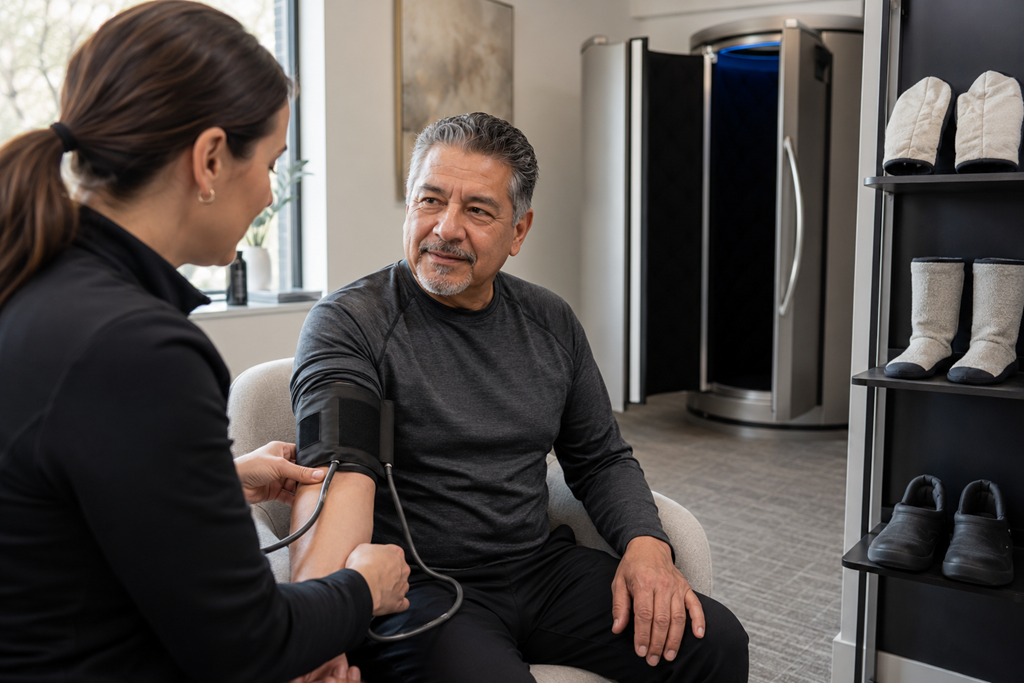
Cryotherapy is not automatically suitable for everyone. The intense cold used in whole-body or partial-body cryotherapy may interact with a person’s circulation, blood pressure, skin condition, nerve sensation, breathing, medications, pregnancy, cold tolerance, or other health factors.
The more useful question is not simply, “Am I generally healthy?” It is, “Is this specific type of cryotherapy appropriate for my health history and how I feel today?”
That distinction matters because cryotherapy is often presented as a short wellness appointment. The session itself may be brief, but deciding whether to enter the chamber should involve more than choosing an available time and signing a general waiver. The FDA notes that whole-body cryotherapy presents its own risks and that its healing benefits remain unconfirmed.
Cryotherapy Is Not One Standard Service
The word cryotherapy can describe several different uses of cold. It may refer to localized cold treatment, a partial-body cryosauna in which the head remains outside, or a fully enclosed whole-body chamber.
These services are not interchangeable. They may use different cooling methods, expose different areas of the body, and require different preparation and safety procedures. Research reviews have specifically cautioned against treating partial-body and whole-body systems as though they are the same technology.
Before scheduling with a Sacramento-area cryotherapy provider, ask exactly what type of equipment is being used and what parts of the body will be exposed. A provider should be able to explain the service in plain language without relying on vague claims about “freezing away” pain, inflammation, stress, or other concerns.
Your Health History Can Change the Decision
Extreme cold causes the body to respond quickly. That response may be more concerning for someone with certain cardiovascular, respiratory, neurological, circulatory, endocrine, immune, or skin-related conditions.
An expert consensus on whole-body cryostimulation identified numerous circumstances that may make treatment temporarily or permanently inappropriate. Examples included uncontrolled blood pressure, certain heart and circulation disorders, severe respiratory conditions, cold-related immune reactions, some forms of neuropathy, uncontrolled thyroid or diabetes-related complications, pregnancy, active infection, fever, significant skin problems, certain cancer treatments, severe cold intolerance, and an inability to communicate or follow safety instructions.
This does not mean a reader should use an online list to decide independently whether a condition is safe. It means that a health concern that seems unrelated to cold exposure may still be important enough to discuss with a qualified healthcare professional and the cryotherapy provider.
Temporary Issues May Matter Too
Candidacy is not always a permanent yes-or-no decision.
A person who might normally be considered for cryotherapy could have a temporary reason to postpone it. Feeling feverish, dizzy, unusually weak, dehydrated, unwell, or extremely sensitive to cold may change what is appropriate on the day of the appointment. Skin irritation, open areas, excessive moisture, recent illness, abnormal blood pressure, or a new medication may also deserve further review.
The expert consensus distinguishes between temporary and permanent contraindications, reinforcing that suitability can depend on a person’s present condition as well as long-term medical history.
A responsible provider should make it easy to disclose these changes. You should not feel that you have to proceed simply because the appointment is booked, a package has been purchased, or protective gear has already been prepared.
Feeling Fit Does Not Automatically Mean Cryotherapy Is a Fit
Cryotherapy is frequently associated with athletes, exercise recovery, and active lifestyles. That connection can create the impression that someone who exercises regularly or feels physically strong has little reason to be screened.
Fitness, however, does not reveal everything about blood pressure, circulation, nerve sensitivity, migraines, medications, cold reactions, or underlying health conditions.
Published safety reviews have found that reported adverse events are uncommon relative to the number of sessions performed, but they also emphasize that some incidents involved personal risk factors, unsuitable exposure conditions, or failures to follow established precautions. The available evidence is also limited by inconsistent monitoring and reporting of adverse effects.
The practical lesson is not that everyone should fear cryotherapy. It is that appearance, age, exercise habits, or past experience with cold showers and ice baths should not replace thoughtful screening.
Screening Should Come Before the Chamber
A cryotherapy appointment should begin with questions, not assumptions.
The provider should ask about relevant health conditions, medications, cold sensitivity, recent illness, skin concerns, previous reactions to cold, and anything else that could affect the session. The exact screening process may vary depending on the service and whether it is being offered in a wellness or clinical setting.
What matters is whether the questions are meaningful and whether someone is actually reviewing the answers.
A blank form alone does not create safety. The provider should be willing to explain why certain questions are being asked, what circumstances may require medical clearance, and when the session should be postponed or avoided.
Be cautious when a provider:
- describes the service as safe for virtually everyone
- rushes past questions about your medical history
- cannot explain who evaluates candidacy
- minimizes cold sensitivity or previous reactions
- promises treatment of a medical condition
- pressures you to purchase several sessions before screening
A careful provider may occasionally tell someone not to proceed. That is not necessarily poor customer service. It can be a sign that the provider understands the limits of the service.
Questions To Ask Before Scheduling
Sacramento residents comparing local cryotherapy providers may find these questions useful:
- What exact type of cryotherapy do you offer?
- What health conditions or medications could affect candidacy?
- Who reviews the screening information?
- When do you recommend medical clearance?
- How is the client monitored during the session?
- How can the client stop or exit immediately?
- What symptoms or sensations mean the session should end?
The answers should be specific to the equipment and process being used. A response such as “It is only a few minutes” does not adequately explain safety procedures.
Communication During the Session Matters
A client should understand what the cold may feel like, what protective clothing is required, how the provider will communicate during the exposure, and how to stop immediately.
Unexpected pain, burning, numbness, dizziness, breathing difficulty, confusion, or feeling suddenly unwell should not be dismissed as proof that the treatment is “working.” Cold-related injuries and other adverse reactions have been reported, which is why preparation, appropriate exposure, active monitoring, and the ability to stop are important parts of the process.
The client should never feel trapped inside the equipment or embarrassed about ending the session early.
A Slower Decision May Be the Better Decision
People sometimes approach cryotherapy after hearing a positive experience from a friend, trainer, coworker, or social media personality. That recommendation may explain why the service is interesting, but it does not determine whether the next person is a suitable candidate.
Personal health history matters more than someone else’s result.
A provider who takes time to ask questions, describes realistic limits, and recommends speaking with a healthcare professional when something is uncertain may offer a more responsible experience than one who moves directly into a sales presentation.
Suitability Should Be Clear Before You Commit
Not being a good fit for cryotherapy does not mean someone has failed a wellness test. It simply means the potential risks, personal health factors, or current circumstances may outweigh the reason for trying the service.
Before choosing a Sacramento-area cryotherapy provider, look for thoughtful screening, clear communication, realistic claims, appropriate monitoring, and an easy stopping process. Those details can help you decide whether the service deserves further discussion, should be postponed, or may not be appropriate for you.
This article is for general educational purposes and does not provide medical advice. Discuss personal health concerns, candidacy, risks, or treatment decisions with a qualified healthcare professional.