Awning installation usually moves through a series of connected stages: measuring the space, confirming the awning style and placement, preparing the mounting area, installing the structure, making final adjustments, and reviewing the finished result. For Sacramento-area homeowners, understanding that sequence can make the project easier to follow and help separate normal progress from questions worth raising with the installer.
An awning may look relatively simple once it is installed, but getting to that finished appearance involves more than choosing a size and attaching it to a wall. The installer needs to understand the available space, the intended coverage, the mounting location, and how the awning is expected to function in that particular setting.
Knowing what usually happens from the first measurements through the final walkthrough can help you follow the project without needing to understand the technical installation details yourself.
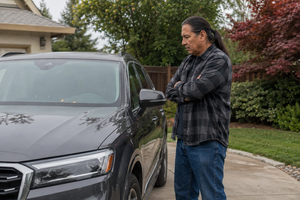
The First Measurements Help Define More Than Awning Size
Early measurements are meant to establish how an awning can realistically fit the property.
An installer may need to look at the width of the intended area, available mounting space, doors or windows nearby, the height and projection of the awning, and other physical features that could affect placement. The exact considerations depend on the awning and the property.
This is also where your goals matter.
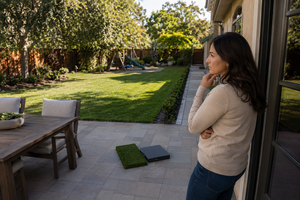
Two homeowners with similar patios may want very different results. One may primarily want shade over a seating area, while another may be trying to reduce direct sun near a particular door or window. A measurement that technically fits does not automatically mean the proposed placement fits the homeowner's priorities.
That is why the measurement stage is also a useful time to make sure the installer understands what area you expect the awning to cover and how you expect to use the space beneath it.
Placement Usually Becomes More Concrete Before Installation Starts
There is often a difference between imagining where an awning will go and seeing how that location relates to the actual property.
Once measurements have been taken, the installer can usually explain the proposed location more specifically. This gives you an opportunity to clarify anything that still seems uncertain before the project reaches the installation stage.
For example, you may want to understand how the awning will relate to nearby windows, doors, exterior lighting, walkways, patio furniture, or other features.
For Sacramento-area properties where shade from strong sun exposure is an important goal, it can be especially useful to make sure the proposed coverage matches the area you actually want to use more comfortably.
The important point is not to redesign the installation yourself. It is to make sure you and the provider appear to be picturing the same finished result.
Some Projects Have a Gap Between Measuring and Installation
Homeowners sometimes expect the installation to happen immediately after measurements are taken.
That may happen with some projects, but it is not universal.
Depending on the awning being installed, there may be a period between the initial visit and installation while the appropriate awning, components, or project-specific materials are prepared or obtained. A custom configuration may naturally involve different preparation than a straightforward installation using an already available product.
This gap does not necessarily mean that nothing is happening.
What matters is whether the provider clearly explains what comes next and what needs to happen before an installation date can be established.
If the schedule feels vague, it is reasonable to ask what stage the project is currently in rather than assuming that the project has stalled.
Installation Day Is When the Plan Becomes Physical
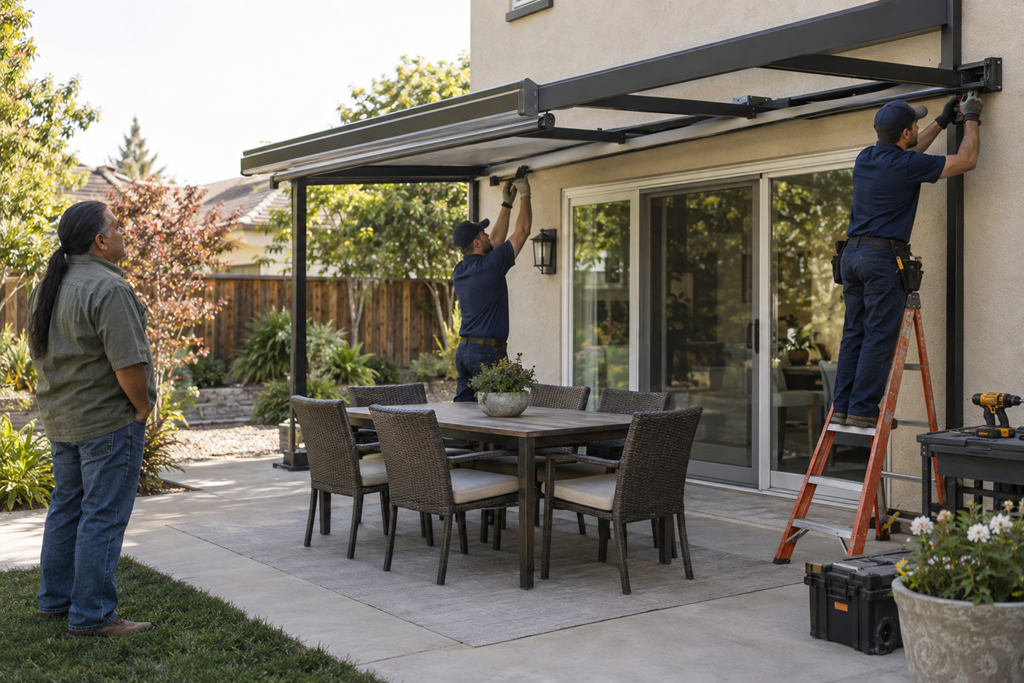
Once installation begins, the decisions made during measurement and planning start becoming visible on the property.
The installer prepares the agreed mounting area and installs the awning system according to the requirements of the product and the property. Homeowners generally do not need to understand the technical mounting process, and attempting to participate in installation work can create unnecessary safety concerns.
Instead, this is a useful time to observe whether the project appears consistent with what was previously discussed.
The awning's location, general dimensions, relationship to nearby property features, and intended coverage should begin to make sense in the actual space.
It can also be normal for the project to look unfinished during this stage. Components may be temporarily staged, the awning may not yet be fully adjusted, and the work area may remain organized for installation until the provider reaches the final checks.
A partially completed project should not be judged as though it were the finished result.
Final Adjustments Can Be an Important Part of Completion
An awning being physically attached does not always mean the installation is completely finished.
The provider may still need to make appropriate adjustments, confirm operation when applicable, review the installation area, and complete other final checks associated with the system.
This stage is one reason it helps to distinguish between “installed” and “completed.”
A homeowner seeing the awning in place for the first time may immediately notice questions about coverage, appearance, clearance, or operation. Those observations can be useful during the final review.
Rather than assuming something is wrong—or assuming it cannot be changed—ask the installer whether what you are noticing is part of the normal final-adjustment process.
The Walkthrough Connects the Finished Awning Back to the Original Plan
The end of the project is a good time to compare the result with what you understood during the measurement and planning stages.
You are not inspecting the installation as a technical expert. You are simply confirming that you understand the finished project.
Look at the awning in the context of the space it was meant to serve. Does the location make sense based on what was discussed? Do you understand how the system is intended to be used? Are there operating, care, or maintenance questions you still need the provider to explain?
If the awning has movable or adjustable features, the provider can explain their proper use rather than leaving you to figure them out afterward.
This final conversation can prevent small uncertainties from becoming larger frustrations once the installer has left.
A Few Questions Can Make the Process Easier To Follow
You do not need a long technical checklist. A few practical questions can help you understand how a particular provider handles the project:
- What will you confirm during the measurement visit?
- When will the final placement and dimensions be established?
- What happens between measurement and installation?
- What should I expect the installation area to look like while work is underway?
- What will you review with me before the project is considered complete?
- Who should I contact if I notice a question after installation?
Clear answers can also help when you are comparing Sacramento-area awning installers. Two providers may offer similar-looking products while communicating the planning, installation, and completion process very differently.
Do Not Treat the Initial Measurement as a Minor Formality
One common misunderstanding is viewing the measurement appointment as little more than someone confirming a width.
In practice, this is where many expectations begin taking shape.
If there is confusion about the intended location, coverage, surrounding features, or how the homeowner plans to use the space, carrying that confusion into installation day can make the project more difficult to evaluate.
Another mistake is waiting until the awning is completely installed to raise a question that was already noticeable during planning.
You do not need to challenge every small detail. But when something about the proposed placement or finished expectation does not match what you thought you were purchasing, asking for clarification earlier is usually easier than silently hoping the finished project will resolve the uncertainty.
Clear Communication Should Continue Through Completion
A well-explained awning project should become progressively easier to understand.
At the beginning, you are discussing measurements and goals. Before installation, the proposed configuration should become more specific. During installation, you can see the plan taking physical form. At completion, the provider should be able to explain the finished system and address reasonable questions about its use.
That progression matters because an awning is not just a product delivered to the property. It becomes part of the exterior space you will see and use after the installer leaves.
Understanding the basic path from measurement to completion gives you useful reference points throughout the project. You can ask better questions, recognize when something simply represents an unfinished stage, and identify unclear expectations before they become harder to resolve.
For Sacramento-area homeowners comparing awning installers, that makes the provider's communication and process worth considering alongside the awning itself.