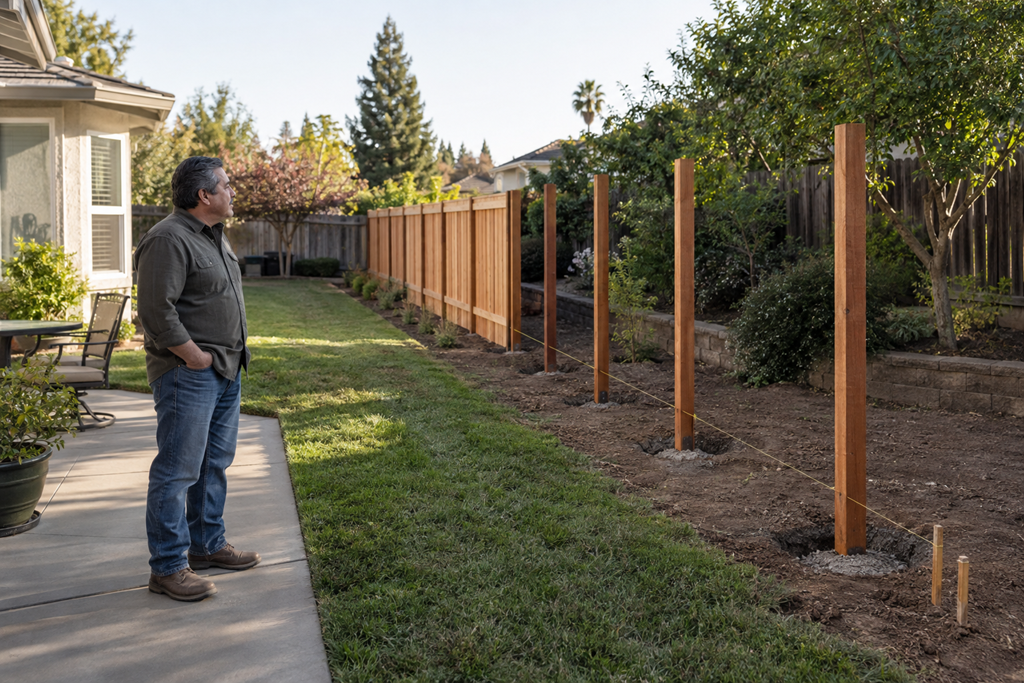
Fence installation usually moves through a series of visible stages rather than happening all at once: confirming the planned fence line, reviewing access and gate locations, preparing the work area, setting the main structure, adding the fence sections and hardware, and finishing with cleanup and a final walkthrough. The exact sequence can vary with the property, fence material, and project scope, but understanding those stages makes it easier to follow what is happening and ask useful questions before work begins.
For Sacramento-area homeowners, the process can sometimes feel slower at the beginning than expected because the first decisions are not always the most visually dramatic. A crew may spend time confirming where the fence will run, how gates will function, where materials can be staged, and how the new fence will meet existing structures before much of the finished fence is visible.
That early work matters. Small questions about layout, access, corners, gates, grade changes, or connections to existing fencing can affect how the completed project functions.
The Fence Line Is Usually Settled Before the Finished Fence Takes Shape
One of the first important parts of a fence project is confirming the intended layout.
This is more than simply deciding that a fence belongs along one side of the yard. The layout may need to account for corners, gate openings, changes in direction, existing fence sections, buildings, landscaping, walkways, and other property features.
A contractor may use stakes, string lines, markings, measurements, or other layout references to make the proposed fence location easier to see before major installation work begins.
This is a useful time for the homeowner to make sure the physical layout matches what they understood from the estimate or proposal.
If a fence location depends on an exact property boundary, do not assume that an installation crew is automatically determining a legal boundary simply because it is laying out the fence. Ask how boundary-related questions are expected to be handled and who is responsible for confirming them when that matters to the project.
The important distinction is that fence layout and legal property-line determination are not necessarily the same thing.
Gate Placement And Access Can Affect More Than Appearance
Gate locations deserve particular attention during layout because they affect how people actually move through the property.
A gate that looks reasonable on a drawing may feel different once its location is marked in the yard.
Consider how the opening relates to normal walking routes, driveways, patios, trash-bin access, side yards, garden areas, equipment storage, or other places that need regular access.
Project access matters too.
Fence materials and equipment need a practical route into the work area. Landscaping, narrow side yards, outdoor furniture, stored items, vehicles, or other obstacles can influence how the crew stages the project.
That does not necessarily mean something is wrong with the property. It simply means the installation process may need to reflect the space available.
Before work starts, it can help to understand what area needs to remain clear and where materials are expected to be placed.
Preparation May Happen Before Much New Fencing Is Visible
Depending on the project, preparation can include removing an existing fence, clearing the immediate work corridor, confirming underground-service considerations, organizing materials, and establishing the planned line.
Not every project needs all of those things, and the order can vary.
For example, an existing fence may need to come out before portions of the new layout can be fully established. In another yard, much of the new fence line may be clearly marked before removal begins.
This is one reason fence installation is better understood as a sequence of connected stages rather than a single uninterrupted construction activity.
A day when relatively little finished fencing appears may still involve important preparation for what comes next.
The Main Structure Usually Comes Before The Finished Look
Once the layout and site preparation are settled, the structural portion of the fence begins to take shape.
The exact method depends on the fence material and project design, but homeowners will commonly see the primary support elements established before the completed fence sections appear.
That means a fence project can temporarily look incomplete even when it is progressing normally.
You might see the planned line first, then the main supports, then rails, panels, pickets, mesh, or other fence components afterward.
Some installation methods can also create natural pauses between stages. That does not automatically mean the project has stalled.
Rather than judging progress only by how many finished feet of fence are visible, it can be more useful to understand what stage the crew is working through and what needs to happen before the next one begins.
Corners, Slopes, And Existing Structures Can Change The Rhythm Of The Project
Straight, open fence runs are only one part of many installations.
A real property may include grade changes, corners, narrow passages, existing fencing, retaining features, landscaping, utility areas, sheds, walls, or other conditions that the fence must work around or meet appropriately.
These areas can require more attention than a long uninterrupted section.
A sloped yard, for example, may change how the finished fence follows the property. A connection to an existing fence can require a different transition than a completely new standalone run.
These conditions do not automatically indicate a problem. They are simply reasons two fence installations with similar overall lengths may not unfold in exactly the same way.
The useful question is whether the contractor has identified those transitions clearly before the project reaches them.
Gates And Hardware Are Often A Separate Part Of The Finish
Even after much of the fence is standing, the project may not be functionally complete.
Gates, latches, hinges, and other hardware can require their own installation and adjustment.
This stage is worth paying attention to because the fence is not only a visual boundary. The parts people interact with regularly need to function as expected.
During the final portion of the project, look at how gates open and close, how they relate to nearby walkways or ground surfaces, and whether the finished configuration matches what was discussed.
If there are multiple gates or different access points, confirm which hardware or features apply to each one rather than assuming they are all configured identically.
Cleanup And The Final Walkthrough Are Part Of Completion
Completion should mean more than the last fence section being installed.
The work area may still need to be cleared, leftover project debris addressed, equipment removed, and the finished fence reviewed.
A final walkthrough gives the homeowner and provider an opportunity to look at the project as a whole rather than focusing only on individual construction stages.
This can include reviewing the fence line, gates, transitions, areas where the new fence meets existing structures, and any project-specific details that were part of the agreed scope.
It is also a good time to raise questions while the completed work is directly in front of you.
The goal is not to perform your own technical inspection. It is simply to understand what was completed and make sure the finished project matches the scope you expected.
The Sequence Can Change Without Meaning The Project Is Off Track
Homeowners sometimes expect fence installation to follow one rigid order from beginning to end.
In practice, the sequence can shift.
Material type, existing fence removal, site access, ground conditions, property layout, gates, landscaping, transitions, and the way the contractor organizes the work can all influence what happens first and what happens later.
Weather can also affect outdoor project scheduling or the order in which certain work is practical.
What matters most is not whether every project follows an identical sequence. It is whether you understand the plan for your project and whether changes are communicated clearly.
An unexplained change can feel very different from a change that the contractor discusses before proceeding.
A Few Questions Can Make The Process Easier To Follow
You do not need to understand fence construction in technical detail to have a useful conversation before installation.
A few practical questions can help:
- How will the proposed fence line and gate locations be confirmed before installation begins?
- Is any existing fencing being removed as part of the scope?
- What areas need to remain clear for crew and material access?
- Where are materials expected to be staged?
- Are there corners, slopes, transitions, or existing structures that may affect the sequence?
- At what point are gates and hardware typically installed?
- What should I expect during the final walkthrough and cleanup?
- If the installation plan needs to change after work begins, how will that be discussed with me?
Clear answers can make the project easier to understand without requiring the homeowner to manage the construction process.
Understanding The Stages Makes The Finished Project Easier To Evaluate
Fence installation usually makes more sense when you stop viewing it as one construction event and start viewing it as several connected stages.
The layout establishes where the fence and gates are intended to go. Preparation makes the area workable. The main structure creates the fence line. Fence sections and hardware bring the project toward its finished form. Cleanup and the final walkthrough close out the work.
The exact order may vary, but the basic principle is useful: important decisions happen before the fence looks finished.
Knowing that can help Sacramento-area homeowners ask better questions, notice when something needs clarification, and follow the project without feeling that every pause or unfinished section automatically signals a problem.