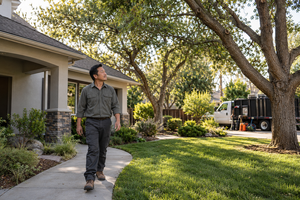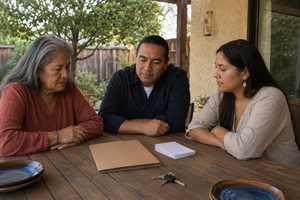
Event and community photos can keep working long after the event itself is over. Instead of treating them as one-time social posts, a local business can reuse selected images to explain what happened, highlight useful takeaways, answer follow-up questions, show community involvement, and create simple content that gives customers more context about the business.
For a small Sacramento-area business, this can be especially useful because the photos already exist. The business does not need to organize another photo shoot or invent an entirely new content idea. It simply needs to look at the event from a different angle: What could someone who was not there still learn from what happened?
The Photo Is Only The Starting Point
A common approach to event photography is to post several pictures immediately after an event with a short message thanking everyone who attended.
There is nothing wrong with that. The problem is that the usefulness of the photographs often ends there.
A photograph from a community workshop, open house, local fundraiser, business association event, educational presentation, neighborhood gathering, or customer-appreciation event may contain more than a record of attendance. It may also capture a question being discussed, a service option being demonstrated, a preparation step, a business environment, a recurring customer concern, or an aspect of the company that prospective customers rarely see.
Those details can become the basis for follow-up content.
The goal is not to stretch every photograph into another promotion. It is to identify the photographs that help the business explain something useful.
Look For The Story Behind The Picture
Before deciding where to repost an image, ask what the photograph actually represents.
Suppose a Sacramento home-service company participates in a neighborhood event. One photograph may show the booth. Another may show several physical materials the company brought to help residents understand different service options. A third may capture the general setup the company uses when explaining how its process works.
Those photographs could support very different follow-up topics.
A picture of the booth might help explain why the business participates in local events. A picture of the materials might introduce an article answering a common customer question. A picture showing part of the service explanation might become the visual starting point for a short educational post.
The useful question is not simply, “Where else can we post this photo?”
It is, “What does this photo give us an opportunity to explain?”
That small change keeps repurposed content from feeling repetitive.
One Event Can Produce Several Different Follow-Up Angles
A business does not need dozens of photographs to get additional value from an event. A few strong images can support several types of follow-up content when each piece has a different purpose.
For example, event or community photographs may support:
- a short recap explaining why the business participated and what the event was about
- an educational post expanding on a question that came up repeatedly
- a behind-the-scenes explanation of how the business prepared for the event
- a website article giving more context to a service or topic shown in one of the photographs
- an email highlighting one useful lesson or observation from the event
- a community-focused post showing an ongoing local connection rather than simply announcing attendance
The same photograph does not need to appear in all of those places.
Choose the image that best supports the point being made, and give each piece of content a reason to exist.
Pay Attention To Questions People Asked During The Event
Events can reveal useful content topics because people often ask questions naturally when they encounter a business in person.
A business owner may hear several versions of the same question during a community presentation, home show, educational seminar, resource fair, or open house. That is useful information.
If a photograph captures the environment in which that question came up, the business may be able to use the image later when answering the question online.
For example, a professional practice that participates in a community resource event may notice that visitors repeatedly ask what happens during an initial appointment. A follow-up article could answer that general question, while an appropriate photograph from the event provides context about the business's community involvement.
A contractor might notice that homeowners repeatedly ask about the difference between two broad project approaches. An event photograph showing physical samples could become a natural visual for a later educational explanation.
The photograph and the follow-up topic are connected because they came from the same real customer-information moment.
Follow-Up Content Does Not Have To Be About The Event
This is where event-photo repurposing becomes more useful.
The follow-up content does not always need to say, “Here are more pictures from our event.”
Instead, the event can serve as the source of the idea.
Imagine that a moving company participates in a community donation drive. The initial post might simply show the business taking part. Later, one of those photographs could accompany a useful article about preparing items for donation before a move, deciding what should be separated before moving day, or organizing belongings before requesting an estimate.
The later content is not merely another event recap.
The event helped reveal a practical topic that customers may find useful.
That approach is generally more valuable than repeatedly publishing the same photographs with slightly different captions.
Photos Can Give Existing Website Content A More Local Context
Event photography can also strengthen content a business already has.
A Sacramento-area service provider may already have an FAQ page, service explanation, educational article, or customer-preparation guide. A relevant community photograph may give that content a more authentic local connection when the photograph genuinely relates to the subject.
For example, a photograph from an educational workshop might fit naturally into an article that expands on one of the questions discussed there.
A photograph from a community event might also support an About page or community-involvement section when it shows something meaningful about how the business participates locally.
The photograph should add context rather than act as decoration.
If the picture has little connection to what the page is explaining, it is usually better to choose a different image.
Avoid Turning Every Event Into Self-Promotion
Community involvement can become less convincing when every photograph is immediately turned into a promotional message.
Sometimes the most useful follow-up content is simply educational.
A business that attended a local event does not always need to remind the reader how experienced it is, ask for an estimate, or encourage an appointment. It can instead answer a question, explain something people seemed confused about, or share a useful observation from the event.
That can make the content feel more natural because the photograph provides context while the information provides the value.
For Sacramento-area businesses trying to build a manageable library of useful content, that distinction matters. The business can remain visible without making every appearance feel like an advertisement.
Be Selective Instead Of Repurposing Every Photograph
Not every event photograph deserves another use.
Some images work well as memories but communicate very little to someone who was not present. Others may be poorly framed, contain distracting background activity, depend on signs that are difficult to read, or show people who should not be featured in additional marketing.
Look for photographs that can stand on their own and still make sense when separated from the original event.
Strong candidates often show a recognizable business activity, physical service option, educational moment, community setting, useful demonstration environment, or other detail that gives the business something specific to discuss.
A smaller group of purposeful photographs is usually more useful than repeatedly publishing an entire event gallery.
Check Permission And Context Before Reusing People’s Images
A photograph that was appropriate to capture at an event is not automatically appropriate for every future marketing use.
Before republishing photographs that clearly identify attendees, customers, children, employees, community partners, or other participants, the business should confirm that it has the appropriate rights and permissions for the intended use.
Context matters as well.
A photograph should not be reused in a way that suggests someone is a customer, endorses the business, received a particular service, or experienced a particular result when that is not actually established.
Businesses in legal, medical, financial, wellness, senior-care, and other sensitive service categories should be especially careful about what a photograph might imply.
When there is doubt, an image showing the event environment, business setup, physical materials, or the business's own team may be a better choice.
Build A Small Reuse Habit After Each Event
Repurposing works best when it becomes a simple review step rather than another large marketing project.
After an event, select the strongest photographs and briefly ask what each one could help explain.
One image may remain an event recap. Another might suggest a customer question worth answering. Another could fit an existing website article. A fourth may be useful several months later when the business discusses a related service topic.
There is no requirement to publish everything immediately.
In fact, saving a few strong photographs for future educational content can help a small business create useful material without constantly starting from scratch.
Useful Event Photos Can Outlast The Event
The value of an event photograph does not have to disappear when the chairs are packed away or the booth comes down.
For a local business, the strongest photographs can become starting points for additional explanations, customer questions, educational articles, emails, community updates, and other practical marketing assets.
The key is to move beyond simply reposting the picture.
Look at what happened around the photograph, what people wanted to know, and what the business could explain more clearly afterward. That is often where the most useful follow-up content begins.