For many Sacramento-area homeowners, professional pool maintenance is often scheduled weekly, especially when the service provider is handling most of the routine cleaning, water testing, and equipment checks. But there is no single schedule that fits every pool. The right frequency depends on how heavily the pool is used, how much debris reaches the water, what the homeowner handles between visits, and how consistently the pool stays clean and balanced.
That distinction matters because it is easy to think of pool maintenance as something that should happen according to one fixed calendar. In practice, one homeowner may need a professional to handle nearly everything, while another may take care of several routine tasks between professional visits. The two pools may need very different service schedules even if they are similar in size.
Weekly Service Is Common, But It Is Not a Universal Rule
Routine pool care involves recurring attention rather than occasional cleaning alone. Water conditions, debris, circulation, and the general condition of the pool can change between visits. Weekly professional service is therefore a common arrangement for homeowners who want most routine care handled by a provider.
That does not mean every pool automatically needs a professional standing beside it every seven days.
A homeowner who regularly handles some basic upkeep may be able to discuss a different service interval with a pool professional. Conversely, a pool that receives frequent use, collects substantial debris, or requires more attention between visits may not be a good candidate for stretching the schedule simply to reduce the number of service appointments.
The useful question is not just, “How many days should there be between visits?”
It is, “What needs to happen between visits, and who is responsible for doing it?”
The Pool’s Actual Conditions Matter More Than the Calendar
Two pools on the same street can create very different maintenance workloads.
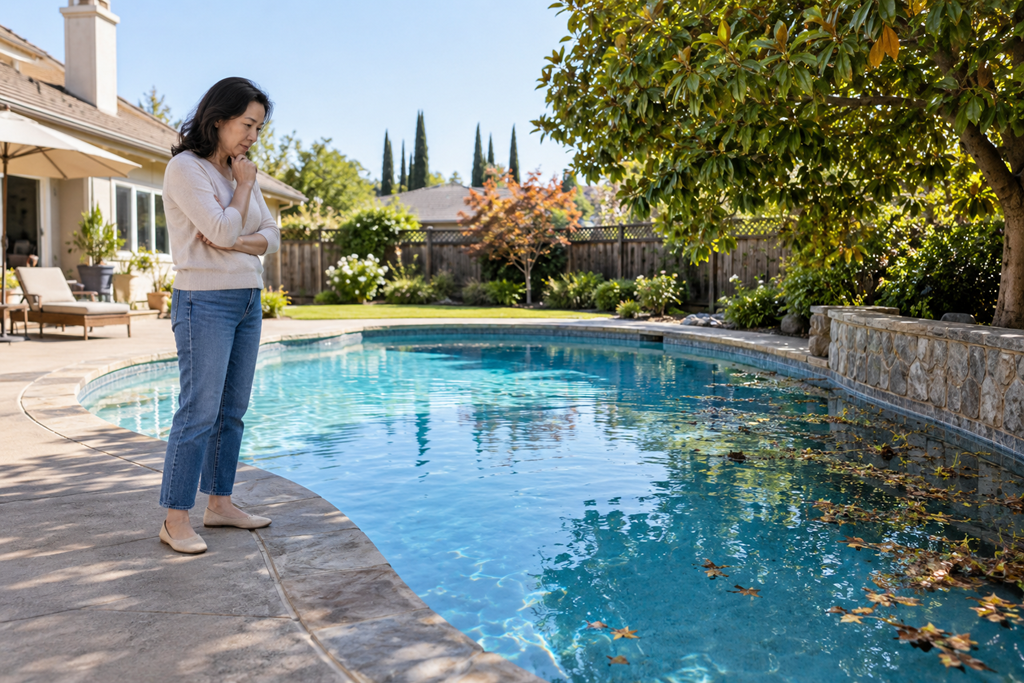
One may sit in an open backyard with relatively little material falling into the water. Another may be surrounded by mature landscaping that regularly sends leaves, blossoms, dust, or other debris toward the pool.
Usage can differ just as much. A pool used occasionally by two adults creates a different maintenance pattern from one regularly used by a larger household or guests.
Sacramento-area homeowners may also notice that the pool does not behave exactly the same throughout the year. Periods of strong sun, heat, wind, falling vegetation, seasonal rain, or heavier recreational use can change what the pool needs between professional visits.
This is why a service schedule that works well during one period may sometimes need to be reconsidered during another.
What You Handle Between Visits Changes the Equation
Professional maintenance frequency also depends on how hands-on you want to be.
Some homeowners hire a pool service specifically because they do not want routine pool maintenance becoming another household responsibility. For them, a frequent professional schedule may make sense because the provider is expected to handle most of the recurring work.
Other homeowners are comfortable monitoring the pool and taking care of certain routine tasks themselves between visits. In those situations, professional maintenance may serve more as periodic support rather than the entire maintenance system.
Neither arrangement is automatically better.
The important part is making sure the responsibilities are understood.
If you are comparing Sacramento-area pool services, ask what the provider assumes you will do between appointments. A lower-frequency service plan can sound straightforward until you discover that it depends on the homeowner performing several recurring tasks.
Heavy Use And Debris Can Change How Often Attention Is Needed
A pool that looks good shortly after service can still change quickly.
A busy weekend, a windy period, falling leaves, or other environmental conditions can increase the amount of attention needed before the next regularly scheduled visit. Guidance for residential pool care commonly treats cleaning and water-condition monitoring as recurring activities, with frequency influenced by usage and environmental conditions.
This does not necessarily mean you need to permanently increase professional service whenever something changes.
It does mean that the regular schedule should leave a realistic plan for what happens between appointments.
For example, if a provider visits every other week, it is worth understanding how the pool will be monitored during the days in between. If no one is expected to pay attention to it until the next visit, that is a different service arrangement from one in which the homeowner is actively handling interim upkeep.
Not Every Maintenance Task Follows The Same Schedule
Another source of confusion is treating every type of pool maintenance as if it happens during every regular visit.
Routine cleaning and water monitoring are different from filter cleaning, equipment servicing, repairs, or other less-frequent maintenance.
Filter maintenance is a good example. Manufacturer guidance notes that filter-cleaning frequency can depend on factors such as debris, pool season, filter type, and changes in filter pressure rather than one universal calendar interval.
So a company offering weekly pool service does not necessarily perform every possible maintenance task every week.
When comparing providers, it helps to separate three questions:
- How often will someone visit?
- What routine work is included during those visits?
- Which maintenance items are handled only when conditions indicate they are needed?
That distinction can prevent misunderstandings later.
A Longer Service Interval Usually Means More Has To Happen Between Visits
Homeowners sometimes compare weekly, biweekly, or other service schedules as though the only difference is price or convenience.
The bigger difference may be responsibility.
If professional visits become less frequent, something still has to account for the pool's ongoing condition between those visits. Depending on the arrangement, that may be the homeowner, automated equipment, periodic monitoring, or some combination of those things.
This is why choosing the least frequent available plan without understanding the assumptions behind it can create confusion.
A better comparison looks at what each schedule expects from you.
If one company recommends weekly service and another suggests a longer interval, that does not automatically mean one is overservicing the pool or the other is offering better value. They may be describing different scopes of service.
Ask What Would Make The Schedule Change
When speaking with a Sacramento-area pool maintenance provider, a few simple questions can make the proposed frequency much easier to understand:
- Why are you recommending this visit schedule for my pool?
- What do you expect me to handle between visits?
- What routine maintenance is included each time?
- What conditions might make the pool need more frequent attention?
- Are filter cleaning and equipment maintenance included in the regular schedule or handled separately?
The answers should help you understand the reasoning behind the schedule rather than simply giving you a number of visits per month.
A provider should also be able to explain the boundaries of the service clearly enough that you know what is—and is not—being handled.
The Best Schedule Is The One That Matches The Actual Pool
There is no single professional maintenance frequency that automatically fits every residential pool.
Weekly service is a common starting point when a professional is responsible for most routine care, while other schedules may make sense when the homeowner handles part of the ongoing maintenance and the pool's conditions support that arrangement. The pool's use, surroundings, equipment, seasonal conditions, and division of responsibilities all matter.
Before choosing a service plan, focus less on finding a supposedly perfect number of visits and more on understanding what will happen during—and between—those visits.
That makes it easier to compare local pool service providers on the actual level of support they are offering and choose a maintenance schedule that fits both the pool and the way you want to care for it.