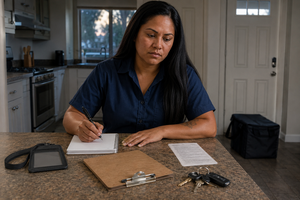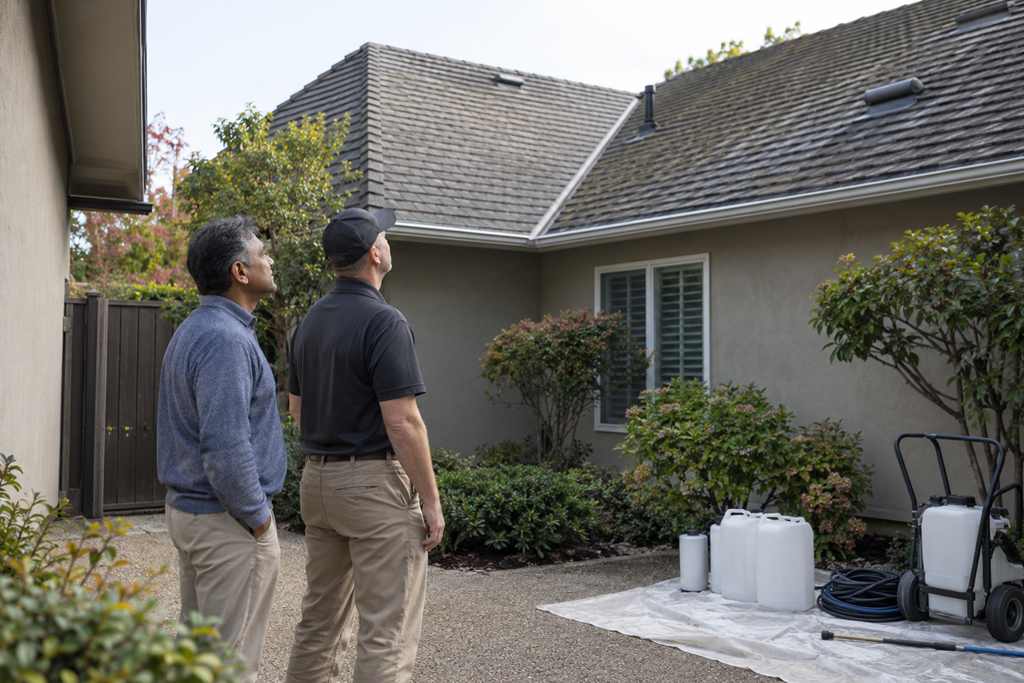
Roof treatment usually begins with an assessment of the roof’s condition, material, visible buildup, and any areas that may need extra attention before work starts. From there, the provider clarifies the scope, prepares the surrounding property, completes the agreed cleaning or treatment work, and finishes with a final review so the homeowner understands what was done and what to expect afterward.
For homeowners, the important point is that roof treatment is usually more than a single application or one isolated task. The provider first needs to understand what is on the roof, what condition the surface is in, and what the proposed service is intended to accomplish. That assessment helps define the work that follows.
The Assessment Helps Define The Actual Scope
A roof may look fairly uniform from the ground, but different areas can be exposed to different amounts of shade, moisture, debris, nearby vegetation, or sun. Visible staining or buildup may also vary from one roof section to another.
An assessment gives the provider an opportunity to look at those conditions before finalizing the service approach.
For a Sacramento-area homeowner, this is also a useful time to understand exactly what the provider means by “roof treatment.” That term can describe different services depending on the company, roof material, surface condition, and reason for the appointment.
The assessment should therefore lead to a clearer explanation of what is being addressed rather than simply confirming that someone will “treat the roof.”
Cleaning And Treatment May Not Mean The Same Thing
One of the easiest parts of the process to misunderstand is the relationship between roof cleaning and roof treatment.
Some services may focus primarily on removing visible buildup. Others may include a separate treatment as part of the agreed scope. In some cases, cleaning and treatment may occur as separate phases rather than as one indistinguishable task.
That distinction matters when comparing local providers.
If one proposal includes cleaning only and another includes cleaning plus an additional treatment, the services may not actually be equivalent even if the descriptions initially sound similar.
Homeowners can ask the provider to explain what each part of the proposed service is intended to accomplish and which portions are included in the estimate.
Preparation Happens Before The Main Work
Once the scope is understood, the provider generally needs to prepare the work area before beginning the agreed service.
From a homeowner’s perspective, preparation may be visible around the property rather than only on the roof itself. Equipment may be positioned, access areas may be kept clear, and nearby property features may be considered before the main work begins.
The exact preparation varies with the property and service.
Homeowners do not need to manage the technical details themselves, but it is reasonable to ask whether anything around the house should be moved, protected, or made accessible before the appointment.
A provider who communicates these expectations beforehand can make the day of service easier to understand.
The Main Service May Happen In More Than One Phase
Once preparation is complete, the agreed roof cleaning or treatment work can begin.
This is another reason the original assessment and written scope matter. What appears to the homeowner to be one roof-service appointment may actually involve several distinct phases.
For example, a provider may need to address surface buildup before completing another portion of the treatment. Different roof areas may also receive attention at different points in the service based on the agreed scope.
The homeowner does not need to supervise each phase. What matters is knowing generally what the provider plans to do and being able to recognize when the work being performed differs substantially from what was originally discussed.
A service that appears slower or more segmented than expected is not automatically a problem. The better question is whether the provider can clearly explain where the project stands and what remains to be completed.
Completion Is More Than The Moment The Roof Work Stops
The end of the main roof work is not necessarily the end of the service experience.
Equipment still needs to be removed or packed, surrounding areas should be left orderly, and the homeowner may benefit from a final review of what was completed.
This is also an appropriate time to clarify what the roof should reasonably look like immediately afterward.
A roof treatment does not necessarily mean every surface will suddenly appear dramatically different. Depending on what was being addressed and the service performed, some changes may be subtle.
That is why expectations are easier to manage when appearance and purpose have already been discussed before the work begins.
A Final Review Can Resolve Small Questions Before They Become Confusing
A brief completion conversation gives the homeowner an opportunity to confirm that the agreed scope was addressed.
It can also clarify whether there is anything the homeowner should simply observe afterward or whether the provider expects any normal changes in appearance over time.
The goal is not to turn the final review into another technical inspection by the homeowner. It is simply an opportunity to understand what happened during the appointment.
This can be especially useful when portions of the roof are difficult to see clearly from the ground.
Clear communication at completion helps connect the original assessment with the work that was actually performed.
Questions Worth Clarifying Before Scheduling
Before agreeing to a roof treatment service, homeowners may want to ask:
- What does “roof treatment” include in this proposal?
- Is cleaning a separate part of the service?
- What roof conditions are you evaluating before the work begins?
- Is there anything around the property that needs to be prepared beforehand?
- How will I know when the agreed work is complete?
- What should I reasonably expect the roof to look like immediately afterward?
These questions are not about telling the provider how to perform the work. They help establish shared expectations before the appointment begins.
Different Roofs Can Lead To Different Service Experiences
It can be tempting to expect a roof treatment to follow exactly the same pattern from one house to another.
In practice, the existing roof condition, material, access, amount and location of buildup, surrounding property features, and the specific service being purchased can all affect how the appointment unfolds.
That does not mean the process should feel mysterious.
A homeowner should still be able to understand the basic progression: the roof is assessed, the scope is clarified, the property is prepared, the agreed service is completed, and the finished work is reviewed.
Understanding that progression makes it easier to compare Sacramento-area providers based on the substance of their proposals rather than assuming every service described as a roof treatment includes the same work.
The Main Thing To Take Away
Roof treatment is usually best understood as a short service process rather than a single moment when something is applied to the roof.
The assessment establishes what the provider is addressing. The scope explains what is included. Preparation sets up the service. The agreed cleaning or treatment work follows, and a final review helps the homeowner understand what was completed.
Before hiring a local provider, getting those stages clarified can make it much easier to compare estimates, recognize what you are paying for, and know what to expect from the beginning of the appointment through completion.