Short videos can help Sacramento service businesses explain services that are difficult to understand from a service name alone. The most useful videos do not try to teach every technical detail. Instead, they clarify what the service is for, what a customer can generally expect, and where individual circumstances may change the process.
This can be especially useful when customers repeatedly ask questions that reveal the same misunderstanding. A roofing company may find that homeowners are unclear about the difference between an assessment and an estimate. An appliance-repair company may need to explain why a diagnostic visit does not necessarily mean a repair will be completed immediately. A moving company may hear recurring questions about what happens during the estimate stage compared with moving day.
Those situations can become useful short-video topics because the business is addressing confusion that already exists rather than trying to invent something to talk about.
Start With the Misunderstanding, Not the Service Description
A common approach to service videos is to begin with a broad description of what the company does. That can work for an introduction video, but it is often too general when the goal is to clarify something customers routinely misunderstand.
Instead, identify the point where customers tend to become confused.
Listen for questions such as:
- Is this the same as another service you offer?
- What actually happens during this appointment?
- Does this visit include the work itself?
- Why do you need to see the property before providing certain information?
- What should I expect before, during, or after the service visit?
The wording will vary by business, but repeated questions can reveal where a short explanation may be useful.
A Sacramento-area service business does not need dozens of topics to begin. One recurring misunderstanding can be enough to create a useful video.
Explain Enough to Orient the Customer
When owners know their services well, it can be tempting to explain every detail. That often makes a short video harder to follow.
A simpler approach is to answer three things:
What is this service or stage for? Give the viewer enough context to understand its general purpose.
What can a customer generally expect? Explain the basic experience without turning the video into a detailed procedure.
What may depend on the individual situation? Make room for differences between properties, customers, projects, appointments, or professional recommendations.
For example, an appliance-repair company could explain that a diagnostic visit is intended to evaluate the problem and determine an appropriate next step. The video does not need to demonstrate how to diagnose an appliance or imply that every issue can be resolved during the same visit.
That keeps the video focused on customer understanding rather than technical instruction.
One Video Should Usually Resolve One Source of Confusion
A short video becomes less useful when it tries to answer several unrelated questions.
Suppose a moving company regularly hears questions about estimates, packing, scheduling, moving-day preparation, storage, and specialty items. Combining all of those subjects into one short video could make the explanation feel rushed.
A video titled around one narrow concern can be easier to understand.
The company might create one video explaining what customers can generally expect during an estimate process. A separate video could address how to prepare for the scheduled move. Another could explain how the company handles questions about items that may require additional planning.
This approach also creates a small library of reusable explanations over time without requiring the owner to become a constant content creator.
Use the Customer's Language Instead of Internal Terminology
Some service misunderstandings begin with terminology that makes perfect sense inside the business but means very little to a prospective customer.
An owner may distinguish between several appointment types, service levels, project stages, or professional processes every day. Customers may encounter those terms for the first time when visiting the website or contacting the company.
Before recording a video, consider how customers actually describe the confusion.
A physical-therapy practice, for example, might hear general questions about how an initial appointment differs from later appointments. A home-service business might hear customers use two different service names interchangeably even though the company treats them as separate types of visits.
The video can acknowledge the language customers use and then explain the distinction in plain terms.
That is often more useful than starting with an industry definition.
Show the Difference Without Turning the Video Into a Tutorial
Visuals can help when two services sound similar but involve different customer experiences.
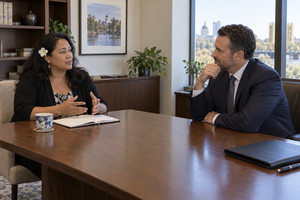
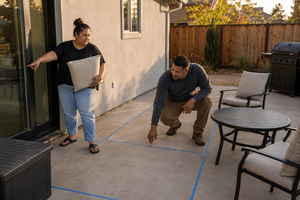
A roofing company might use neutral footage of an exterior property assessment while explaining the purpose of that stage. A moving company could show organized moving supplies and a prepared truck while describing what customers can expect on moving day. A professional practice could use its reception or consultation environment to help viewers understand the setting for an initial visit.
The goal is not to teach viewers how to perform the service themselves.
For technical, medical, legal, financial, or safety-sensitive services, keeping the explanation centered on the customer experience is especially important. The business can explain the general process while leaving individualized recommendations, professional judgments, and technical details to the appropriate conversation with the customer.
Avoid Promising That Every Customer Will Have the Same Experience
A short video is naturally simplified. The service itself may not be.
Property conditions, customer needs, appointment types, project scope, professional findings, and other circumstances can affect what happens next.
That makes wording important.
Statements such as “Here is what customers can generally expect” or “The exact next step will depend on the situation” leave room for normal variation. This is more accurate than presenting one example as though it applies to every customer.
The video can still be clear without being absolute.
Look for Confusion in the Questions Your Business Already Receives
Businesses do not necessarily need a formal content-research process to find these topics.
Useful ideas may already be appearing in:
- inquiry emails
- contact-form questions
- conversations at the front desk
- estimate or scheduling questions
- questions customers ask before an appointment
- recurring clarifications employees provide to prospective customers
The important distinction is between a frequently asked question and a frequently misunderstood service.
“Do you serve my area?” may deserve an answer, but it does not necessarily reveal confusion about the service itself.
“What is the difference between these two appointment types?” is more directly connected to the kind of explanatory video discussed here.
A Simple Test Before Recording the Video
Before turning a misunderstanding into a video, ask a few practical questions.
Can the issue be explained accurately in a short format? Is the information broadly useful rather than dependent on one customer's circumstances? Can the business explain the customer experience without giving unsafe, individualized, or overly technical guidance? Will the viewer understand something meaningful after watching?
If the answer is yes, the topic is probably suitable for a short educational video.
If the explanation requires extensive qualifications or highly individualized advice, another format may be more appropriate.
Build a Small Library Around the Questions That Matter Most
A business does not need to explain every service immediately.
Start with the misunderstandings that create the most repeated clarification.
One video might explain what happens before a service visit. Another might distinguish between two commonly confused services. A third might clarify what information the business needs before determining the appropriate next step.
Over time, those videos can become reusable marketing assets for a website, video channel, follow-up communication, or other appropriate places where prospective customers are trying to understand the business.
The value is not in producing the largest possible video library. It is in creating clear explanations for questions customers actually have.
Make Clarity the Goal
When customers misunderstand a service, more promotion is not necessarily the answer. Sometimes they simply need a clearer explanation.
A focused short video gives a Sacramento-area business a practical way to provide that explanation before or during the customer's decision process. Choose one real point of confusion, explain the general customer experience in plain language, and leave room for the circumstances that require an individual conversation.
Related resource: If you would rather have a professionally created educational video as part of your marketing assets, the Sacramento Local Pros Video Package includes an educational content video that can be built around a useful customer question or service explanation.