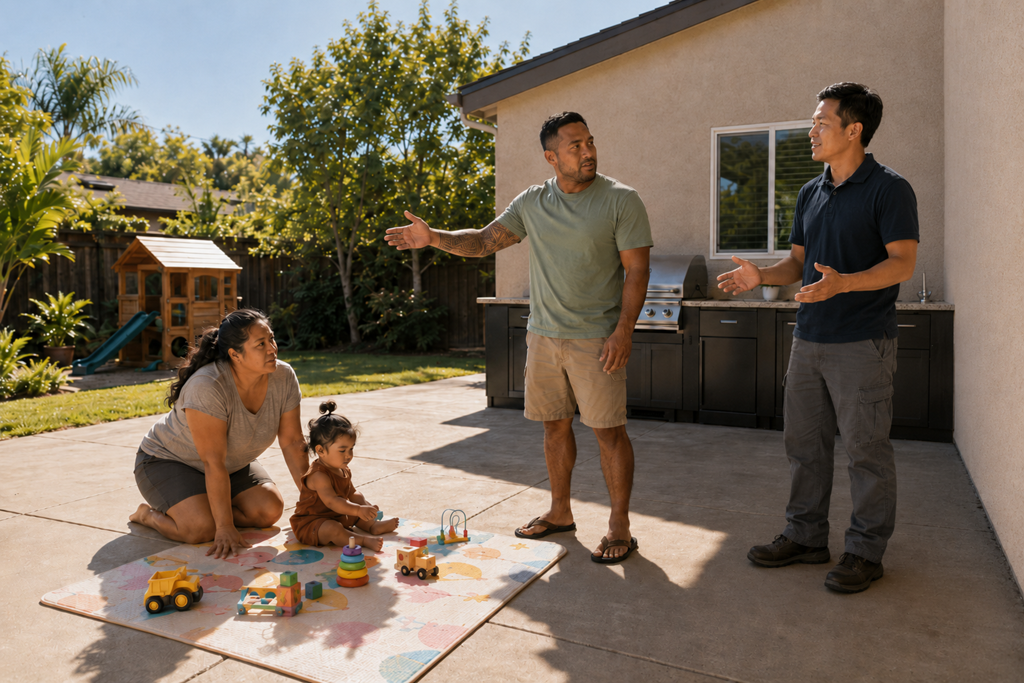
An awning can make an outdoor area more usable by placing shade where people actually sit, walk, cook, enter the home, or spend time during the hottest and brightest parts of the day. The key decision is not simply whether an awning will fit on a wall. It is whether its location, projection, and coverage will improve the way that specific space is used.
Many homeowners begin thinking about an awning after noticing that a patio, doorway, or seating area becomes uncomfortable at certain times. The furniture may be in good condition, the space may look inviting, and the yard may have plenty of room, yet direct sun keeps people from staying outside for long.
That experience is easy to misread as a general need for “more shade.” In reality, the most useful solution usually comes from identifying exactly where the discomfort occurs, when it happens, and what people want to do in that area.
Start With the Activity, Not the Empty Wall
A broad, open exterior wall may look like the obvious place for an awning. However, the most visually balanced installation position is not always the position that creates the most useful shade.
A patio dining table may sit several feet to one side of the wall’s center. An outdoor sofa may be placed near a garden edge. A grill or preparation counter may occupy only one end of the patio. If an awning is centered without considering those activities, its shadow may cover an attractive but lightly used section of concrete.
Before focusing on awning styles or colors, it helps to define the job the shade is supposed to perform. A homeowner may want to:
- keep afternoon sun off a dining table
- make a patio seating area comfortable for longer periods
- reduce direct exposure near an exterior door
- create a sheltered place to remove shoes or set down groceries
- shade an outdoor cooking or serving area
- make a children’s play space easier to use
These are different goals. Each one can point toward a different location, width, projection, or awning type.
Useful Shade Has to Reach the Right Place
An awning does not simply create a block of shade directly beneath the fabric. The shaded area changes with the sun’s position, the direction the wall faces, the awning’s height, and how far it projects from the building.
This is why an awning that appears large enough on paper may not shade the intended furniture during the hours that matter most. It may provide generous coverage in the morning but allow lower afternoon sunlight to reach beneath it. In another location, the house may already shade the patio early in the day, making additional morning coverage less important.
Sacramento-area homeowners often think about awnings because of heat and sustained sun exposure. The practical question is not whether the patio receives sunlight at all. It is whether the proposed awning will improve conditions during the periods when the space would otherwise go unused.
Observing the area at more than one time of day can make this easier to understand. Photos of the existing shadow pattern can also help an awning professional see where the current coverage stops and which areas remain exposed.
Different Outdoor Areas Need Different Kinds of Help
Awnings can support outdoor use in several ways, but the best result depends on the setting.
Patio dining and seating areas
For a table or conversation area, the shade should reach the occupied part of the patio rather than merely cover the wall behind it. Furniture dimensions, walking space, and the number of people who normally use the area can affect how much coverage feels practical.
A narrow band of shade may protect one chair while leaving the remaining seats exposed. A wider or deeper awning may improve the whole arrangement, but only if the mounting location and surrounding structure can support it.
Exterior doors and small landings
An awning over a doorway can make the transition between indoors and outdoors more comfortable. It may provide shade while someone unlocks the door, waits for a family member, removes muddy shoes, or carries items inside.
For this type of area, the goal is usually concentrated coverage rather than shading a large patio. Door swing, exterior lighting, nearby windows, drainage, and headroom can all influence the appropriate placement.
Outdoor cooking areas
A grill or preparation counter may become difficult to use when direct sun reaches the work surface or the person standing in front of it. Shade can make the area more comfortable, but the awning must also be evaluated in relation to heat-producing equipment, smoke, ventilation, and safe operating clearances.
This is an area where a qualified professional should review the actual layout rather than relying only on rough measurements or appearance.
Play and flexible-use spaces
Families sometimes want shade over a part of the patio that serves several purposes. It may hold a play mat in the morning, extra seating during gatherings, or a temporary work surface later in the day.
In a flexible space, it can be helpful to think about which activities happen most often and which ones are most affected by direct sun. Trying to cover every possible use can lead to a larger project without necessarily creating a better everyday result.
Awnings Can Improve More Than Temperature
Shade is usually the main reason homeowners consider an awning, but usability is broader than temperature alone.
Reducing harsh glare can make it easier to read, work on a laptop, prepare food, or see people seated across a table. Shade can also keep outdoor furniture surfaces from becoming uncomfortably hot during direct exposure.
A properly positioned awning may create a more comfortable transition near a glass door or help define an outdoor seating zone that previously felt too exposed. During light rain, certain awning designs may also provide limited shelter, although rain performance depends on the product, slope, installation, drainage, and manufacturer guidance.
The important point is that an awning should solve a recognizable everyday problem. A feature that looks attractive but does not improve how the area functions may offer less value than a modest installation placed around a specific activity.
More Coverage Is Not Automatically Better
It is natural to assume that the largest possible awning will create the most useful outdoor area. Larger coverage can be beneficial, but it may also affect cost, structural requirements, appearance, operation, and the amount of natural light reaching nearby windows or doors.
An oversized awning may shade areas that do not need protection while making an interior room darker than expected. It may also interfere visually or physically with exterior lights, rooflines, utility equipment, doors, windows, or architectural details.
A smaller awning can sometimes be more effective when it is aligned carefully with the main seating area, doorway, or work zone. The goal is not maximum fabric. The goal is useful coverage in the right place.
Fixed and Retractable Awnings Support Different Routines
A fixed awning provides consistent coverage. It may make sense where a doorway, window, or patio section benefits from dependable shade throughout the day.
A retractable awning gives the homeowner more control over when an area is covered. It can be extended when direct sun reaches a table or seating area and retracted when more daylight is preferred. However, retractable systems also involve operational limits, maintenance considerations, and weather-related use guidelines.
The better choice depends on how regularly the shade is needed and whether adjustability would genuinely improve the homeowner’s routine. A retractable awning may be appealing, but its flexibility matters most when the outdoor area is used under changing conditions.
The Existing Patio Layout May Need a Second Look
Sometimes the problem is not only the lack of an awning. The furniture arrangement itself may have developed around existing shade instead of around the best use of the space.
Chairs may have been pushed close to the house because that is the only shaded location. A dining table may sit awkwardly near a walkway to avoid afternoon exposure. A play area may be moved repeatedly throughout the day.
Planning an awning creates an opportunity to consider how the space could function after useful shade is added. The proposed coverage should account for normal walking routes, door access, seating clearance, and the way furniture is likely to be arranged once people are no longer avoiding the sunniest section.
Common Planning Assumptions Can Lead to Disappointing Coverage
One common assumption is that an awning should be centered on the wall. Another is that its stated projection describes exactly where the shade will end at every hour. Homeowners may also judge the area only during the consultation, even though the actual problem occurs several hours later.
It is also easy to choose a product based on an attractive showroom display without comparing that installation to the home’s wall direction, mounting height, patio depth, and furniture placement.
These misunderstandings are common because awning fabric is easy to visualize while moving sunlight is not. A useful discussion should connect the physical awning to the shadow it is expected to create.
Questions That Can Make an Awning Consultation More Productive
A few focused questions can help keep the conversation centered on everyday use:
- Which part of the patio will this awning shade during the hours I use it most?
- Will the coverage reach the table, seating area, doorway, or work zone?
- How could the mounting height affect the shade pattern?
- Would a fixed or retractable awning better match how this area is used?
- Are there doors, windows, lights, utilities, or drainage conditions that affect placement?
- What structural surface will support the awning?
- How should the awning be used during wind or rain?
A qualified awning professional should be able to explain the proposed placement in relation to the home and the intended activity, not only provide product dimensions.
A More Usable Outdoor Area Begins With a Specific Goal
An awning is most helpful when it makes a particular outdoor activity easier to enjoy. That may mean keeping a dining table shaded during late-afternoon meals, creating a more comfortable landing outside a door, or allowing a seating area to remain usable when direct sun would normally drive everyone indoors.
Before comparing awning options, Sacramento homeowners can benefit from watching how sunlight moves across the property and identifying the exact area that needs improvement. When the intended activity, shade pattern, and installation location are considered together, it becomes easier to discuss a practical solution with a local professional.