Sacramento heat and sun exposure can affect roofing materials by repeatedly heating the roof surface, exposing protective layers to ultraviolet light, and creating daily expansion-and-contraction cycles. The effects are usually gradual rather than dramatic: color changes, surface wear, brittle sealants, lifted edges, or faster aging in the most exposed areas may appear before a leak becomes obvious.
For homeowners, this can create an uncertain situation. One side of the roof may look lighter or more weathered than another. A few shingles may appear rough, or a tile roof may look faded even though it is still shedding water. The difficult part is determining whether the change is cosmetic, maintenance-related, or evidence that part of the roofing system needs closer evaluation.
A Roof Can Become Much Hotter Than the Surrounding Air
Sacramento’s warm, dry summers and abundant sunshine can leave roof surfaces exposed to direct solar energy for long periods. A roof’s temperature is influenced by its color, reflectivity, material, slope, shade, ventilation, and the construction beneath it—not simply by the outdoor air temperature.
Darker and less reflective surfaces generally absorb more solar energy, while reflective roofing products are designed to send more sunlight away from the surface. That does not automatically make one roof “good” and another “bad,” but it helps explain why two neighboring roofs can respond differently to the same weather.
The temperature also changes throughout the day. A surface may heat significantly during the afternoon and cool again overnight. Repeated temperature movement can place stress on seams, fasteners, flashing details, sealants, coatings, and other connections between roofing components.
Asphalt Shingles Depend on Their Protective Surface
Asphalt shingles contain mineral granules that provide color and help shield the asphalt layer from ultraviolet exposure. Some granule loss occurs naturally, especially when shingles are new or as they age, but noticeably bare areas or large amounts of granules collecting in gutters may deserve professional attention.
Heat and sunlight do not always produce one unmistakable sign. An exposed roof plane may gradually show:
- uneven fading or surface discoloration
- areas where the granule covering looks thinner
- edges that appear curled, lifted, or less flat
- fine cracking or a dry, weathered appearance
- greater wear around penetrations, valleys, and flashing details
These observations do not prove that heat is the only cause. Age, installation quality, attic conditions, storm damage, tree debris, foot traffic, drainage problems, and previous repairs may produce similar-looking changes.
That distinction matters before approving a repair or replacement. A useful evaluation should explain what is visible, what may be causing it, and whether the concern is isolated or spread throughout the roofing system.
Tile Roofs Can Hide the Most Important Layers
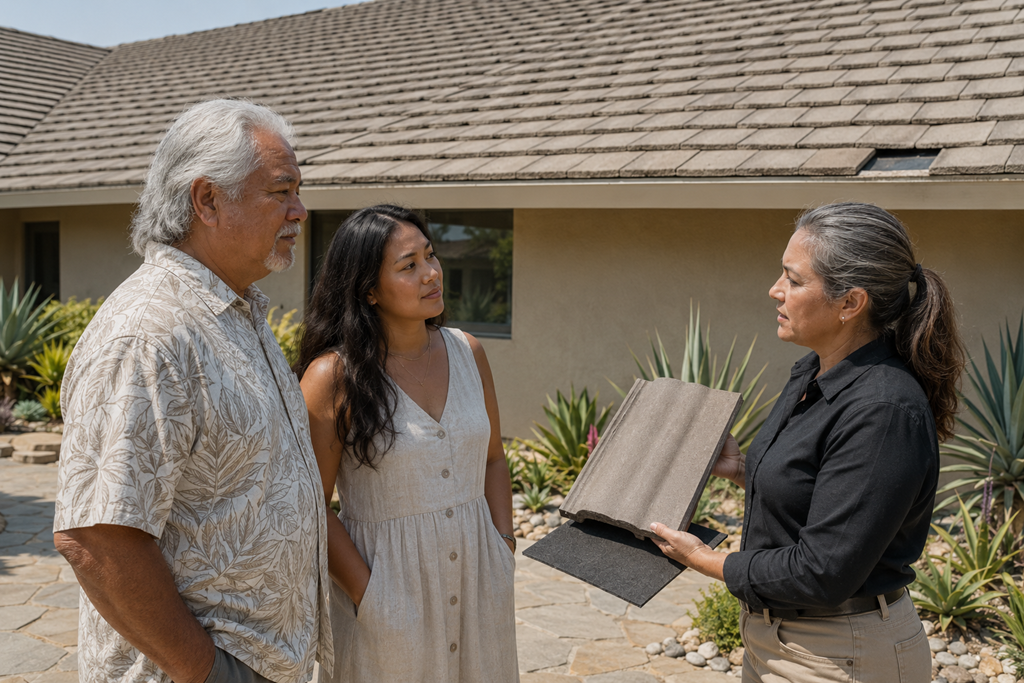
Concrete and clay tiles often handle direct sunlight differently from asphalt shingles. Surface color may soften or weather over time without meaning that the tile has lost its basic protective function. Concrete tile finishes can lighten or become chalky, while many clay tiles retain their color well because the color is part of the material rather than a separate surface coating.
The visible tile, however, is not the entire roof.
A tile roof also depends on its underlayment, flashings, vents, fasteners, valleys, and transition details. A broken or displaced tile can allow sunlight and weather to reach materials that were intended to remain covered. The Tile Roofing Industry Alliance specifically notes that broken tiles can expose underlayment to ultraviolet rays and that flashing details are critical to long-term roof performance.
This is why a faded tile surface and a cracked or missing tile should not automatically be treated as the same problem. One may be largely an appearance issue, while the other may expose a less visible protective layer.
Metal Roofing Is Designed With Movement in Mind
Metal expands as it heats and contracts as it cools. Properly designed metal roofing systems account for that movement through panel lengths, clips, seams, fasteners, and attachment methods.
Standing-seam systems, for example, commonly use fastening techniques that permit controlled thermal movement while securing the panels to the structure. When details restrict that movement or components are not compatible with the system, stress can concentrate around fasteners, seams, penetrations, or transitions.
A homeowner may notice sounds as the roof warms or cools, slight visual waviness, sealant deterioration, loose trim, or movement near an attachment. Some movement and sound can be normal, so these observations should be interpreted within the design of the particular system rather than treated as automatic evidence of failure.
A qualified roofing professional should be able to explain whether the system was built to accommodate thermal movement and whether any visible condition is cosmetic, expected, or repair-related.
Low-Slope Roofing Can Weather Around Details First
Low-slope roofs are common on additions, patios, garages, multifamily buildings, and some commercial properties. Their membranes and coatings may receive broad, uninterrupted sun exposure.
Many membrane systems use protective films, granules, or reflective surfaces to reduce ultraviolet exposure and solar heat absorption. Over time, wear may become more visible around seams, drains, edges, equipment curbs, skylights, and repaired areas. Certain modified-bitumen systems are specifically surfaced to improve ultraviolet resistance and remain flexible through expansion and contraction.
A light-colored roof that has become dirty is not necessarily damaged, and a darker patch is not automatically a leak. The important questions are whether the protective surface remains intact, whether seams and transitions are secure, and whether water is draining as intended.
Uneven Wear May Reveal More Than General Aging
Sun exposure is rarely identical across an entire roof.
A tree may shade one slope during the hottest part of the day. A two-story wall may protect one section while another receives uninterrupted afternoon sun. Solar panels, chimneys, dormers, and nearby buildings can create additional exposure patterns.
This means that one roof plane may look older than another even though both were installed at the same time. That unevenness does not automatically justify replacing the entire roof, but it can help a provider identify where closer inspection is appropriate.
When comparing estimates, listen for an explanation of the pattern. A provider should be able to discuss why one area appears different, whether the underlying materials are affected, and how the proposed work relates to the observed condition.
A vague statement that the roof is simply “sun damaged” leaves important questions unanswered.
Appearance Changes Are Not Always Performance Problems
It is easy to assume that fading, chalking, discoloration, or a rough surface means the roof is failing. Sometimes those changes are mainly cosmetic. In other situations, they may be an early sign that a protective surface is wearing away.
The difference usually cannot be determined from color alone.
A useful inspection considers several factors together:
- the roofing material and its approximate age
- whether wear is isolated or widespread
- the condition of seams, flashing, edges, and penetrations
- whether protective granules, coatings, or finishes remain intact
- evidence of movement, cracking, moisture entry, or previous repair
- ventilation and heat conditions beneath the roof covering
- manufacturer installation and maintenance requirements
This broader view helps prevent two opposite mistakes: dismissing a meaningful concern because there is no active leak, or approving a major project because the roof no longer looks new.
Ventilation and Installation Can Change the Outcome
Sunlight acts on the exterior surface, but roof performance also depends on what is happening beneath it.
Attic ventilation, insulation, roof-deck condition, underlayment selection, fastening methods, and installation details can influence how heat moves through the roof assembly. A material that performs well in one installation may develop problems sooner when the surrounding system does not support it properly.
This is one reason estimates based only on a quick exterior glance can feel incomplete. The visible material may be only part of the concern.
When access is appropriate and safe, a professional evaluation may also consider the underside of the roof deck, attic moisture patterns, airflow, insulation placement, and signs of past water entry. The goal is not to blame every roofing concern on ventilation, but to avoid evaluating the surface in isolation.
Questions To Ask During A Roofing Evaluation
A few focused questions can make a discussion about heat and sun exposure more useful:
- Is the visible change cosmetic, functional, or still uncertain?
- Why is one roof section aging differently from another?
- Which roofing layer or component is actually affected?
- Is the concern isolated enough for repair, or is it more widespread?
- Are ventilation, flashing, drainage, or installation details contributing?
- Can you show photographs of the specific areas behind your recommendation?
- Does the proposed material have reflectivity, ventilation, or installation requirements that matter for this property?
The strongest answers should connect visible evidence with the proposed work. Be cautious when an explanation relies only on age, color, or Sacramento heat without identifying the particular material or component involved.
Look For A Clear Explanation, Not Just A Verdict
Sacramento sun and heat can contribute to roofing wear, but they do not affect every material—or every section of the same roof—in an identical way. Asphalt shingles depend heavily on their granulated surface. Tile roofs rely on protected layers beneath the visible tiles. Metal systems must allow controlled thermal movement, and low-slope roofs depend on sound membranes, coatings, seams, and drainage details.
Before deciding to repair, replace, recoat, or wait, ask the roofing professional to explain what has changed, why it matters, and which part of the roofing system is involved. A material-specific explanation supported by photographs and clearly defined scope is more useful than a broad claim that the roof has simply been damaged by the sun.