Useful B-roll is not simply extra footage to fill gaps in a marketing video. For a service business, the most useful B-roll supports what the viewer is being told by showing the people, places, materials, steps, and finished details connected to the service. Planning those shots before recording can make the final video clearer, easier to edit, and more useful across multiple marketing channels.
For a Sacramento-area service business, that planning does not need to become another complicated marketing project. A short list of purposeful shots is often enough. The goal is to decide what viewers may need to see in order to better understand the main message of the video.
Useful B-Roll Starts With What The Video Is Trying To Explain
Before deciding what additional footage to record, identify the main point of the video.
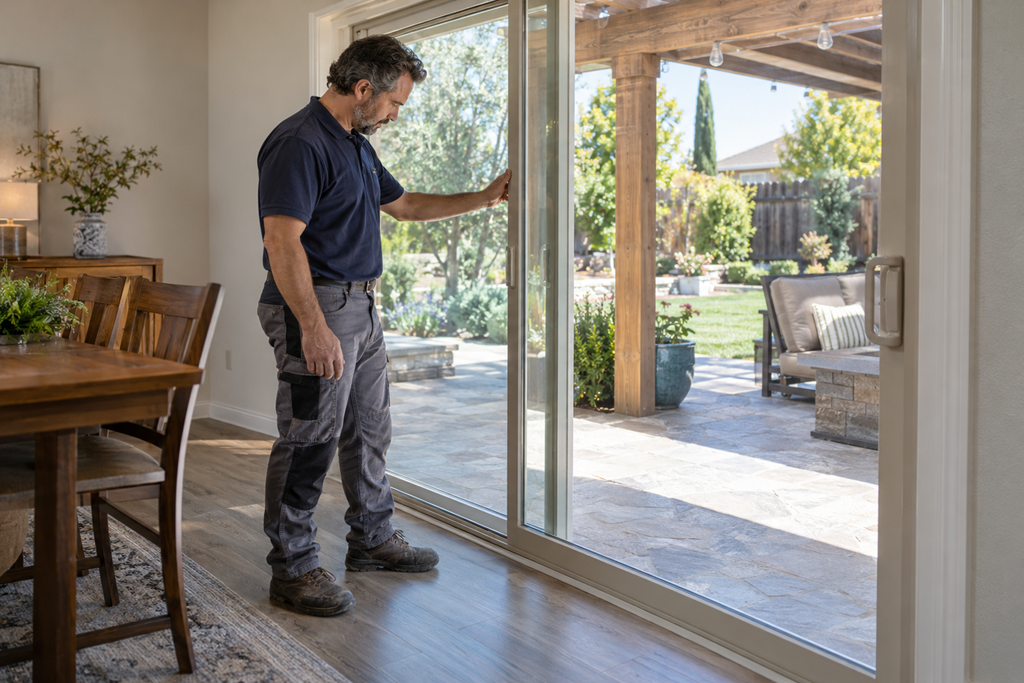
If a landscaping company is explaining what happens during an initial property evaluation, useful B-roll might show different areas of a yard that are normally discussed. If an appliance repair company is explaining what customers should expect during a service visit, useful footage might show the technician arriving at the appliance, preparing the work area, examining accessible components, and leaving the area orderly afterward.
Those shots have a reason to exist. They help illustrate information being discussed.
That is different from collecting random footage simply because it looks professional.
A useful question to ask before recording is:
What could the viewer understand more easily if they could see it instead of only hearing about it?
The answer can become the starting point for the B-roll plan.
Look For Visual Evidence Already Built Into The Service
Service businesses usually have more useful B-roll opportunities than they realize.
A contractor may have material options, completed details, preparation steps, work areas, equipment, or finished projects that customers regularly ask about. A professional practice may have a reception area, consultation space, process materials, or other physical parts of the customer experience that can be shown without revealing private information.
The best footage often comes from these normal business conditions rather than from creating artificial marketing scenes.
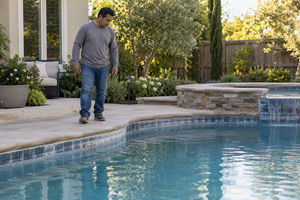
A pool service business, for example, might have useful shots of the overall backyard setting, the pool surface, equipment area, commonly inspected areas, service preparation, and the finished environment after a visit. The business does not need to stage an elaborate production to create visual variety.
It simply needs to recognize which parts of its normal work support the explanation being recorded.
A Few Different Views Can Make One Service Easier To Understand
One mistake is planning B-roll as a collection of unrelated close-ups.
A better approach is to think about the service from several viewing distances. That can give an editor more ways to support the spoken explanation while also helping the audience understand where each detail fits.
For many service businesses, a small B-roll plan might include:
- Context shots showing the overall property, room, office, service area, or completed project.
- Working-area shots showing where a normal part of the service takes place.
- Detail shots showing a material, component, feature, option, or physical condition being discussed.
- Process shots showing appropriate preparation, observation, communication, or normal service activity.
- Finished-condition shots showing what the area looks like after the relevant work or service stage is complete.
Not every video needs all five. The point is to avoid recording ten versions of essentially the same shot.
Plan Small Shot Sequences Instead Of Isolated Clips
It can also help to think in short visual sequences.
Suppose a fence company is creating a video about what homeowners should consider when discussing a replacement gate. Rather than recording one long shot of the gate, the business could plan a small sequence showing the overall fence line, the gate within that fence, the surrounding access area, and a closer view of the finished gate hardware.
The spoken video might explain only a few points, but the supporting footage gives the editor several relevant ways to illustrate them.
The same principle can work for an office-based business.
A family law firm creating a general video about what a new client can expect at an initial meeting might use exterior or entrance context, a reception area, the path into a private meeting room, and neutral office details. None of that footage needs to reveal client information or depict a legal outcome.
The B-roll simply helps the viewer picture the experience being described.
Record What Is Real Rather Than Inventing Activity For The Camera
B-roll becomes less useful when the desire for visual variety causes a business to stage activities that do not reflect normal operations.
A technician should not handle equipment unnecessarily just because movement looks interesting on camera. A healthcare professional does not need to stage a treatment interaction to make an educational video more visually engaging. A legal or financial office should not expose confidential documents simply to make the setting appear authentic.
Real environments usually provide enough visual material.
A completed project can be observed from different viewpoints. Materials can be shown where they are normally used. A professional can walk through an ordinary workspace. An employee can perform appropriate preparation or routine non-sensitive tasks.
The footage should support the business's explanation rather than create a misleading version of how the service works.
B-Roll Planning Can Also Prevent Missing The Important Shot
Without even a small plan, businesses sometimes finish recording the main video and later realize that the footage does not show the one detail repeatedly mentioned in the explanation.
For example, a professional might spend part of a video explaining the difference between two physical service options but never capture a clear view of either option. The editor may then have to reuse unrelated footage while that part of the explanation plays.
Planning B-roll before recording helps connect the spoken message with the available visuals.
A simple approach is to review the main talking points and write down one or two things that could visually support each important point. Those become the priority shots. Anything else can be treated as optional footage if time allows.
More Footage Is Not Automatically More Useful
A small service business does not need hours of B-roll for every marketing video.
Twenty similar clips of the same room may provide less editing flexibility than a smaller collection showing the environment, activity, relevant details, and final condition from clearly different perspectives.
This is especially important for businesses with limited time for content production. Recording everything that might possibly be useful can turn a manageable video session into an unnecessarily large project.
Instead, prioritize footage that has an identifiable job.
If no one can explain where a planned shot might support the video's message, it probably does not need to be a priority.
Watch For Privacy, Safety, And Customer Information
Useful footage also needs to be appropriate footage.
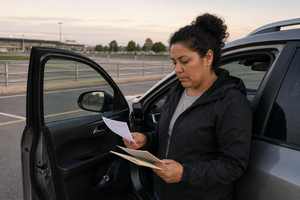
Before recording in homes, offices, vehicles, treatment areas, or other service environments, consider what may accidentally appear in the frame. Customer documents, computer screens, addresses, photographs, financial information, medical information, license plates, and other identifying details may require special care.
Businesses should also avoid staging unsafe work or interfering with normal service procedures simply to capture a more dramatic shot.
For many videos, the safest and clearest B-roll comes from ordinary environments, completed work, general service activity, neutral details, and controlled areas where the business can determine what appears on camera.
One Recording Session Can Create A Small Reusable Visual Library
Planning B-roll can have value beyond the video being recorded that day.
A useful establishing shot of the business environment, a clear view of a frequently discussed service feature, or a neutral clip of ordinary work may support another educational video later.
That does not mean every business needs to build a huge video library.
It means that when several useful shots can be captured naturally during the same recording session, saving well-chosen footage can give the business additional marketing assets without having to recreate every scene from scratch.
Over time, a Sacramento service business may develop a modest collection of relevant visuals tied to the questions and services it discusses most often.
A Short B-Roll Plan Is Usually Enough
Planning useful B-roll is less about becoming a filmmaker and more about deciding what viewers need to see.
Start with the message. Identify the parts of the service, environment, process, or finished result that make that message easier to understand. Capture a small variety of purposeful views, keep the footage realistic, and give priority to the shots that directly support what the business is explaining.
That approach can make a marketing video visually clearer without turning video production into a major ongoing project.
Related resource: If you want professional video assets without building the entire production process yourself, the Sacramento Local Pros Video Package is a related resource for Sacramento-area service businesses.