Choosing a patio cover is not only about creating more shade. The better question is how you want the patio to feel and function during the hours you actually use it. For Sacramento-area homeowners, that means thinking about where the sun reaches the space, how much light and airflow you want to keep, and whether the covered area supports the way you sit, eat, relax, entertain, or move between indoors and outdoors.
It is easy to focus first on appearance, size, or materials. Those choices matter, but they make more sense after you understand what you want the covered space to do for you.
A patio cover that looks attractive but shades the wrong part of the patio at the wrong time may not solve the problem that led you to consider the project in the first place. On the other hand, simply covering as much space as possible can create its own tradeoffs, including less natural light or an outdoor area that feels more enclosed than expected.
Start With The Hours You Actually Use The Patio
Sun exposure changes throughout the day, so a patio that feels comfortable in the morning may be much less inviting later.
Think about when you are most likely to use the space. A household that regularly eats outside in the early evening may have a different shade priority than someone who wants a comfortable place for morning coffee or weekend afternoons.
This is one reason it can be helpful to observe the patio at several different times before settling on a design. You do not need to perform a technical sun study yourself. Simply noticing where direct sunlight reaches the seating area, doorway, windows, and walking paths can give you useful information to discuss with a patio cover professional.
The goal is not necessarily to eliminate sunlight. It is to understand which sunlight is interfering with the way you want to use the space.
More Coverage Is Not Automatically More Comfortable
A common assumption is that a larger or more solid patio cover must create a better outdoor space because it provides more shade.
Sometimes that may be exactly what a homeowner wants. But comfort can also involve daylight, openness, airflow, and the visual connection between the patio and yard.
For example, a more solid covering may create a consistently shaded area, while an open or partially shaded design may allow more light through. Some homeowners may also want to discuss adjustable or flexible shade options with a provider.
There is no single amount of coverage that works for every patio.
A better comparison is whether each option creates the kind of environment you expect during normal use. That makes the conversation less about choosing the "most" shade and more about choosing useful shade.
Let Daily Activities Help Define The Covered Area
Before deciding how far a patio cover should extend, picture the activities that actually happen outside.
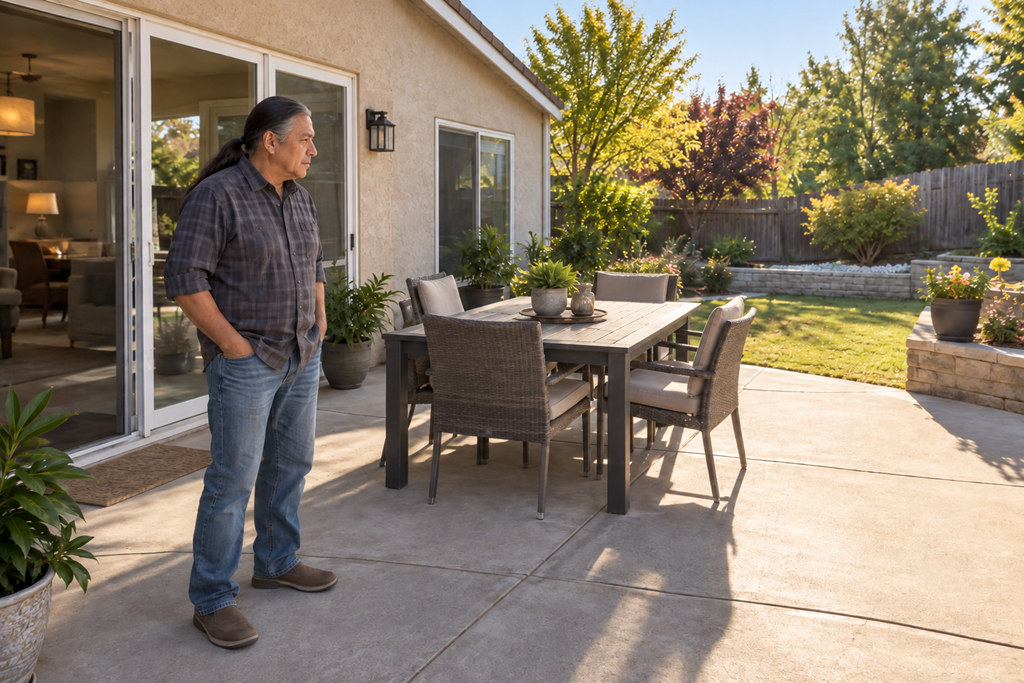
Where does the dining table normally sit? Where do people tend to gather? Is there a favorite chair that becomes uncomfortable when the afternoon sun reaches it? Do family members regularly move between the house and backyard through the patio? Does the patio need room for both shaded seating and a more open outdoor area?
Those ordinary habits can reveal more about an appropriate layout than looking at a patio cover in isolation.
Furniture placement matters too. A cover can technically shade part of a patio without fully shading the places where people spend the most time. Thinking about the relationship among the cover, furniture, doorway, and circulation space can help prevent that mismatch.
You are choosing an outdoor living condition, not simply adding a structure above a slab.
Consider What The Cover May Change Inside The House
The effect of a patio cover does not necessarily stop at the exterior wall.
A deeper or more solid cover near windows or glass doors may change how daylight enters adjoining indoor spaces. Depending on the home and the design, that may be welcome or it may make a room feel darker than the homeowner expected.
That is worth considering before the project is finalized, especially if the patio sits outside a kitchen, dining area, family room, or another space where natural light is important.
When comparing proposals, ask the provider to explain how the planned coverage relates to nearby doors and windows. The discussion does not have to become technical. You simply want to understand the likely relationship between outdoor shade and indoor light.
Think About Comfort Beyond Direct Sun
Shade may be the original reason you are considering a patio cover, but the experience of using the patio involves more than whether sunlight reaches your chair.
A cover can influence how open the area feels, how much sky remains visible, and how the patio relates to the rest of the backyard. Depending on the design, homeowners may also want to discuss airflow, seasonal rain protection, maintenance, and how water will be managed around the covered area.
These considerations are not reasons to make the project more complicated. They are ways to make sure the solution matches the reason you wanted the project in the first place.
A patio used for occasional gatherings may have different priorities from one that functions as an everyday extension of the living space.
Do Not Choose From Appearance Alone
Photos of finished patio covers can be useful for identifying styles you like, but they cannot tell you how that same design will function at your property.
The direction of the sun, placement of the house, patio depth, nearby windows, landscaping, existing furniture, and the way your household uses the yard can all affect the experience.
That is why copying a design solely because it looks appealing can lead to disappointment.
Use inspiration photos to communicate preferences, but bring the conversation back to your own patio. A qualified provider should be able to discuss how a proposed design relates to the actual space rather than simply showing you examples of previous projects.
Ask Questions That Connect The Design To Real Use
When comparing patio cover options or speaking with local providers, a few focused questions can help keep the discussion centered on everyday comfort:
- Where is the proposed cover expected to provide the most useful shade?
- How does the design account for the times of day when this patio gets the most direct sun?
- How might the cover affect daylight through nearby windows or doors?
- How does the planned coverage relate to our current seating, dining, and walking areas?
- What differences should we expect between the shade and openness created by the options we are considering?
- What ongoing maintenance or care should we understand before choosing a design?
You do not need to become a patio cover expert to ask useful questions. The purpose is to understand what you are buying well enough to compare options based on function rather than appearance alone.
Be Careful About Solving Only One Moment Of Discomfort
Homeowners sometimes begin considering a patio cover after one particularly hot or uncomfortable afternoon. That experience can identify a real problem, but it can also encourage a decision based on a single moment.
Try to think more broadly about normal use.
A patio cover may be with the home for years, so it helps to consider mornings, afternoons, evenings, different seasons, indoor light, furniture placement, gatherings, and everyday movement through the space.
That does not mean every possible situation needs a perfect solution. It simply means the design should support the way the patio is used most often.
Choose The Experience Before You Choose The Structure
The most useful way to think about a patio cover is to begin with the experience you want underneath it.
Decide which parts of the patio need dependable shade, when that shade matters most, how much openness you want to preserve, and what activities the covered area needs to support. Then compare patio cover options and local providers based on how clearly they address those priorities.
A good decision is not necessarily the biggest cover, the most elaborate design, or the option that creates the deepest shade. It is the one that makes sense for the way you expect to use your outdoor space.