When comparing solar screen options, price matters, but it should not be the only thing you compare. Two screens that look similar on a quote can differ in how much sunlight they block, how much they change the view from inside, how dark they make a room feel, how well the frame fits the window, and what kind of long-term appearance you can realistically expect. For Sacramento-area homeowners, the better comparison is usually about overall fit for the home, not simply which option has the lowest number attached to it.
It is easy to focus on price because it gives you a simple way to compare choices. One option costs less, another costs more, and the difference is immediately visible.
The harder part is figuring out what you are actually getting for those different prices.
A lower-cost solar screen may be perfectly suitable for your needs. A higher-cost option is not automatically better. The useful question is whether the differences between them matter for your particular windows, rooms, priorities, and expectations.
Similar-Looking Screens Can Create Different Everyday Experiences
Solar screens are often considered because certain windows receive enough sun to affect comfort, glare, or how a room feels during brighter parts of the day.
That makes performance important, but performance is not just a matter of choosing whichever screen appears to provide the most sun control.
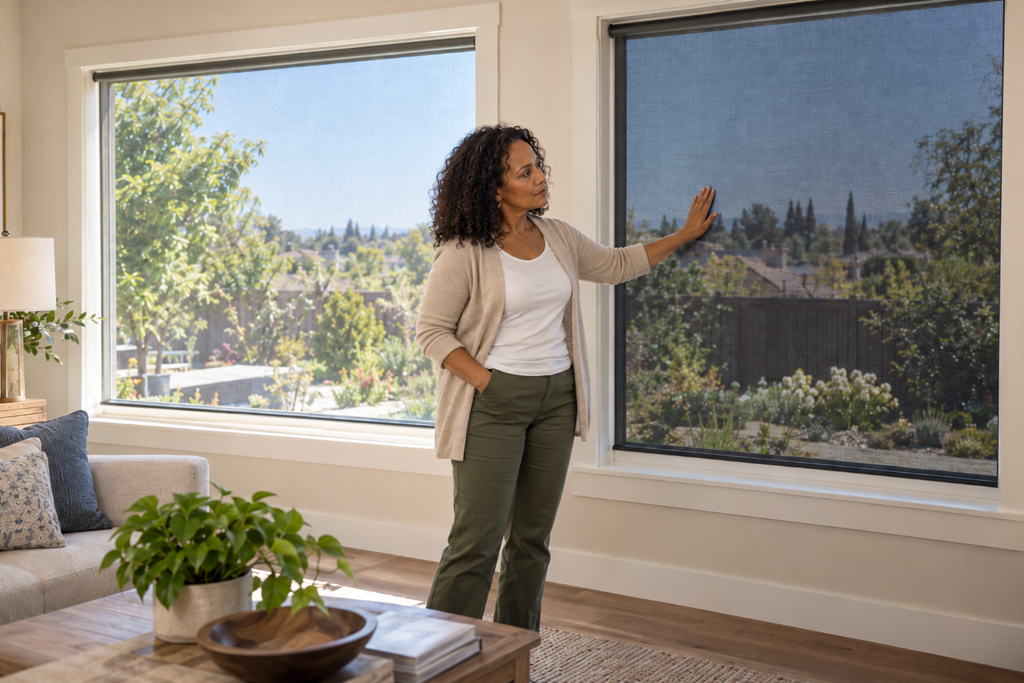
A screen that creates more shade may also change the amount of natural light entering the room or affect how clearly you can see outside. A lighter-feeling option may preserve more of the view but produce a different level of shading.
Neither tradeoff is automatically right or wrong.
The important part is understanding that you are comparing how the screen will affect the room after installation, not merely comparing two products on paper.
Think About the Room Before Comparing the Screens
One of the most useful ways to narrow your options is to consider what you are trying to improve.
A Sacramento-area homeowner dealing with strong afternoon sun in a frequently used family room may have different priorities than someone considering screens for a bedroom, home office, or a window that is rarely exposed to direct sunlight.
Ask yourself what you notice now.
Is glare the main frustration? Does the room feel excessively bright at certain times? Are you trying to reduce direct sun exposure while still preserving an outdoor view? Are you primarily concerned with how the screens will look from the street?
Those questions help turn the comparison from “Which screen is cheaper?” into “Which screen better matches what I want this particular space to feel like?”
That distinction can make quotes much easier to evaluate.
More Sun Control Is Not Automatically the Better Choice
It can be tempting to assume that a solar screen offering greater sun reduction must be the superior option.
But greater shading can involve tradeoffs.
Depending on the screen and the window, stronger solar control may make an interior space feel darker or change the view through the glass. Someone who values maximum shading may welcome that difference. Someone who wants to retain a brighter interior may not.
This is why comparing only one performance characteristic can be almost as limiting as comparing only price.
A useful provider should be able to explain what changes you can reasonably expect from the options being proposed, including the compromises that come with each choice.
Consider the View From Both Sides of the Window
Solar screens become part of the appearance of the home.
From inside, you may notice the screen's effect on visibility, daylight, and the appearance of the outdoor view.
From outside, the screen material and frame become part of the window and exterior facade.
That can matter when several windows are visible together.
For example, a screen that seems acceptable when viewed as a small sample can look different when installed across several prominent front-facing windows. Frame color, screen tone, and consistency between windows may all affect the finished appearance.
Looking at the decision from both inside and outside can help prevent an option from being judged only by a sample or a line on an estimate.
Frame Fit and Finished Appearance Deserve Attention Too
The screen material tends to receive most of the attention, but the surrounding frame and overall fit also matter.
When comparing proposals, ask what type of frame is being included, what colors or finishes are available, and how the provider evaluates the individual windows before the screens are made or installed.
This does not require becoming an expert in screen construction.
You simply want enough information to understand whether two quotes that appear to describe the same project actually include comparable products and installation expectations.
If one quote is noticeably cheaper, differences in materials, sizing, frame construction, scope, or included services may help explain why.
A Quote Should Make the Differences Easier to Understand
Price becomes much more useful when you know what the number represents.
If you receive multiple estimates, look for enough detail to understand whether the providers are proposing genuinely comparable solutions.
A vague total makes that difficult.
For example, one estimate may include a particular screen material, frame choice, measurement, installation, and treatment of several windows, while another may describe the project more generally.
That does not automatically make either quote better or worse. It does mean the totals should not be treated as interchangeable until you understand what each provider intends to deliver.
When something is unclear, asking for an explanation is reasonable.
The Lowest Price Can Still Be the Right Choice
Avoiding a price-only decision does not mean avoiding the least expensive option.
Sometimes the lower-priced choice may provide exactly the level of shading, visibility, appearance, and fit you want.
The problem comes from assuming that lowest price and best fit mean the same thing without examining the differences.
The same caution applies to the highest-priced option. A larger number does not automatically mean the screen is better suited to your home.
The goal is not to spend more.
It is to understand what you are paying for.
Useful Questions When Comparing Solar Screen Options
You do not need a long technical checklist. A few focused questions can reveal whether you are comparing similar options:
- What are the main differences between the screen materials you are recommending?
- How might each option affect sunlight, interior brightness, and visibility through the window?
- What frame material, finish, and color are included?
- Are the screens being sized specifically for these windows?
- What exactly is included in the quoted price?
- Are there meaningful differences in expected care, appearance, or durability that I should understand?
- If two options have noticeably different prices, what accounts for the difference?
Clear answers are often more useful than a long list of specifications without context.
Compare the Tradeoffs You Will Actually Notice
Solar screen decisions become easier when price is treated as one factor rather than the entire decision.
Think about the sunlight you are trying to manage, how much natural light you want to keep, what you want the view to feel like, how the screens will look from outside, and whether the quote clearly explains what is included.
For Sacramento-area homeowners comparing local solar screen installation options, the strongest choice is usually the one whose tradeoffs make sense for the home and can be clearly understood before committing to the project.