An awning makes the most sense where it solves a real, repeatable problem—not simply where there is open wall space. The best location usually brings together the area you actually use, the hours when sun or light rain interfere with that use, enough projection to create useful coverage, and a safe, practical mounting surface.
This decision can be harder than it first appears. A patio may look like the obvious location, but the afternoon sun might reach the seating area from the side rather than from above. An awning over a door may provide some protection near the entrance while leaving the nearby table, walkway, or windows fully exposed.
For Sacramento-area homeowners, the right placement often comes down to understanding how the property is used during the hottest or brightest parts of the day. The goal is not merely to attach an awning to the house. It is to place it where the coverage will be useful often enough to justify the project.
Start With the Problem the Awning Needs to Solve
Before focusing on the wall, roofline, fabric, or frame, identify the specific problem you want the awning to address.
You may be trying to:
- Shade an outdoor dining table during late afternoon
- Reduce direct sunlight through a large window
- Make a patio door more comfortable to use
- Protect a seating area from light seasonal rain
- Create a cooler transition between the house and yard
- Make an outdoor area usable for more of the day
These goals can point toward different locations.
An awning positioned primarily to shade a window may not extend far enough to cover people sitting several feet away. An awning designed around a patio table may need a different width, projection, or angle than one intended mainly to protect a doorway.
A useful starting question is: What would become easier or more comfortable if this particular area had dependable coverage?
That question keeps the project centered on everyday use rather than appearance alone.
Pay Attention to Where the Sun Actually Reaches
One of the most common misunderstandings is assuming that an awning will shade the area directly beneath it throughout the day.
Sunlight moves across a property at different angles. A location that is shaded in the morning may receive strong direct sun later in the day. A roof overhang that protects the wall may still allow sunlight to reach chairs, tables, flooring, or windows farther away.
This is why it helps to observe the proposed area during the hours when you expect to use it most.
If outdoor dinners are the priority, morning shade may not matter very much. If a home office window becomes uncomfortable before noon, the late-afternoon pattern may be less important. The most useful location is usually the one that responds to the actual time-and-use combination creating the problem.
The awning’s projection also matters. A wide awning does not automatically create deep shade. Width controls how much of the wall or patio is covered from side to side, while projection affects how far the coverage extends away from the structure.
A qualified awning professional should be able to explain where the shade is expected to fall rather than discussing dimensions in isolation.
Place Coverage Where People Spend Time
It is easy to focus on the most visually prominent part of a patio instead of the part people genuinely use.
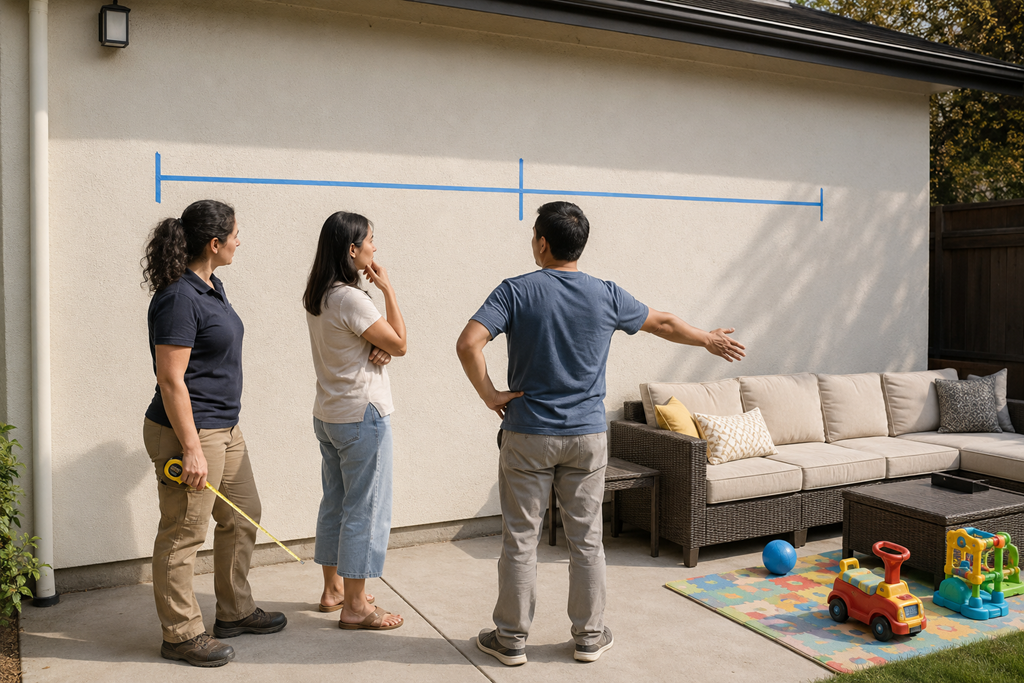
A large open wall may seem like an ideal installation area, but it may be several feet away from the seating arrangement. A centered awning may look balanced from the yard while placing half of its coverage over an empty section of concrete.
Consider the locations of:
- Dining chairs when people are seated
- Lounge furniture and reclined seating positions
- Frequently used doors
- Children’s play areas
- Pet resting areas
- Outdoor cooking and serving zones
- Walking paths between the house and yard
The most practical location may not be perfectly symmetrical. It may need to favor the side of the patio where people gather or where sunlight causes the most disruption.
This does not mean appearance is unimportant. It means visual balance should be considered alongside function rather than replacing it.
Check How the Awning Would Affect Movement
Useful shade should not make the surrounding space harder to navigate.
An awning’s posts, support arms, front edge, or extended fabric should not interfere with doors, windows, gates, steps, grills, or common walking routes. The location should also account for how furniture is moved during gatherings or seasonal changes.
For example, an awning that covers a dining area well may still be inconvenient if a support component narrows the route between the kitchen door and the table. A low front edge may create comfortable shade while making the patio feel visually compressed.
Retractable awnings can provide more flexibility, but they still need enough clearance to open and close without conflicting with nearby features.
A professional evaluation should consider the awning in both its operating and resting positions—not only how it looks in a product photograph.
The Best-Looking Wall May Not Be the Best Mounting Area
An attractive installation location still needs to support the awning safely.
Exterior walls may include stucco, siding, masonry, trim, windows, vents, gutters, lights, or other features that affect where an awning can reasonably be attached. The visible surface does not always reveal the structural conditions behind it.
This is one reason homeowners should avoid choosing a final location based only on photographs or rough measurements.
A qualified installer may need to evaluate:
- The condition and construction of the mounting area
- Available attachment points
- Clearance above doors and windows
- Roof edges, gutters, and drainage paths
- Exterior lights, vents, cameras, or other fixtures
- How the awning will handle expected exposure
- Whether the proposed position allows proper operation
If the preferred wall cannot support the intended design, the project may require a different location, a different awning style, or changes to the planned dimensions.
A good consultation should explain these limitations clearly rather than treating them as unexplained additions after the estimate is accepted.
Window Shade and Patio Shade Are Different Goals
Some homeowners want one awning to shade both the interior of the house and the outdoor living area.
That may be possible, but the two goals should be discussed separately.
An awning that blocks direct sunlight from a window may reduce glare or heat exposure inside while providing only limited shade farther out on the patio. Extending the awning deeper may improve outdoor coverage but reduce natural light inside more than expected.
Think about which result matters most:
- Protecting the window during certain hours
- Shading people seated outside
- Creating a covered transition near the door
- Balancing indoor light with outdoor comfort
The answer can influence the awning’s position, projection, angle, and operating style.
This is especially worth discussing when the proposed location includes large windows or glass doors. The most comfortable exterior arrangement may change how the adjoining room feels during the day.
Rain Coverage Should Be Discussed Separately
An awning chosen primarily for sun protection should not automatically be assumed to function like a permanent patio roof.
The awning’s design, pitch, materials, drainage behavior, and operating limitations can affect how it performs during rain. Water should not be allowed to collect where it can strain the fabric or frame, and runoff should not create a new problem near a doorway, walkway, or foundation area.
If light rain protection is part of the goal, say so during the consultation.
This helps the installer evaluate whether the proposed location and awning type match that expectation. It also gives you an opportunity to ask how the awning should be used during wind, heavier rain, or other weather conditions.
The location that creates the best shade is not always the location that manages water most effectively.
Avoid Choosing the Location From a Single Photograph
A photograph can help a provider understand the general space, but it cannot show every condition that affects placement.
It may not reveal:
- How the sunlight changes later in the day
- How far doors or windows open
- Where people normally sit
- Whether a walkway becomes crowded
- How high the mounting surface is
- What is located behind the exterior finish
- Where water currently drains
- Whether nearby trees or structures affect exposure
Photos are useful for beginning the conversation, but an in-person evaluation may be needed before the location, size, and mounting plan are finalized.
Be cautious when a recommendation is made without asking how the space is used or what problem the awning is supposed to solve. A provider should be able to connect the proposed placement to the result you described.
Questions to Ask During an Awning Consultation
A few focused questions can reveal whether the proposed location has been considered carefully:
- Where will the shade fall during the hours we use this area most?
- Will the coverage reach the chairs or table when people are seated?
- What property features limit the available mounting locations?
- How will the awning affect nearby doors, windows, lights, and walkways?
- What happens to rainwater at the front and sides of the awning?
- Will this location noticeably change the natural light inside?
- Are there reasons another location or awning style would work better?
The most helpful answers will refer to your property and intended use rather than relying only on standard product dimensions.
The Right Location Connects Coverage With Daily Use
An awning makes the most sense where useful coverage, safe attachment, comfortable movement, and everyday activity come together.
The largest wall or most symmetrical position is not automatically the best choice. A smaller awning placed over the area people actually use may provide more value than a larger installation that shades mostly empty space.
Before comparing awning estimates, make sure each provider is discussing the same location, coverage goal, projection, and mounting conditions. When those details are clear, it becomes easier to compare recommendations and understand why one proposed installation may differ from another.