Gutter guards can be worth installing when falling leaves, seed pods, roof grit, or other debris repeatedly fill your gutters and make routine cleaning difficult or risky. They are less likely to deliver good value when debris is minimal, the existing gutters already drain poorly, or the product is treated as a maintenance-free solution rather than a way to reduce buildup.
For many homeowners, the decision becomes confusing because gutter guards sound like a simple permanent fix. The real question is not whether guards work in every situation. It is whether the right system could meaningfully reduce the particular debris and maintenance problems affecting your home.
Start With the Problem You Want the Guards To Solve
Before comparing products or requesting estimates, identify what is actually happening in your gutters.
Some Sacramento-area homes sit beneath mature trees that regularly drop leaves, blossoms, needles, seed pods, or small twigs. Gutters on these properties may need attention more frequently than gutters on homes with little nearby vegetation.
Other homeowners are mainly concerned about climbing ladders, paying for repeated cleanings, or dealing with overflow when debris accumulates before seasonal rain. In these situations, reducing how quickly the gutters fill may have practical value even if occasional maintenance is still required.
Gutter guards may be less useful when the gutters remain relatively clear throughout the year. Installing a system to prevent a problem that rarely occurs can add expense without substantially changing the homeowner’s maintenance routine.
Gutter Guards Reduce Debris Rather Than Eliminate Maintenance
One of the most important expectations to clarify is that gutter guards do not normally create a completely maintenance-free roof drainage system.
Leaves and larger debris may be blocked from entering the gutter, but smaller particles can sometimes pass through openings or collect on top of the guard. Roof grit, dust, pollen, seed material, and decomposing organic matter may still require periodic attention.
The frequency and difficulty of that maintenance may be reduced, but the system should still be inspected occasionally. The guards themselves may also need cleaning so water can continue entering the gutter as intended.
A provider who describes gutter guards as a way to reduce buildup is setting a more realistic expectation than one who promises that the gutters will never need attention again.
Consider How Often Debris Creates a Real Disruption
Gutter guards tend to make more sense when debris buildup is a recurring problem rather than an occasional inconvenience.
Think about what has happened over several seasons:
- Do the gutters regularly fill before you expect them to?
- Has water overflowed during rain because the drainage path was blocked?
- Are repeated cleanings becoming costly, inconvenient, or difficult to schedule?
- Does nearby vegetation drop several different types of debris?
- Is reaching the gutters safely a concern?
A single clogged area does not necessarily mean the entire home needs gutter guards. The problem may be limited to one roof section beneath a tree, a valley where debris collects, or an area with an existing drainage issue.
A useful estimate should help distinguish between a whole-home debris problem and a localized trouble spot.
Difficult Access Can Change the Value Calculation
The amount of debris is only one part of the decision. The difficulty of reaching the gutters can also affect whether guards are worthwhile.
A homeowner with easily accessible, single-story gutters may view occasional cleaning as manageable. The same amount of debris can create a much larger burden on a tall home, a steep roofline, or a property with limited ladder access.
This does not automatically make gutter guards the right choice. It does mean that reducing cleaning frequency may provide more practical value where each maintenance visit is complicated or where the homeowner should not attempt to reach the gutters personally.
When comparing options, consider the ongoing effort the system could reduce—not only the installation itself.
Existing Gutter Problems Should Be Evaluated First
Gutter guards cannot correct every cause of overflowing water.
If gutters are loose, damaged, undersized, poorly positioned, or unable to drain properly, adding guards may leave the underlying problem unresolved. Water can still spill over the edge if the gutter does not slope or discharge as intended.
Downspout blockages and drainage problems at ground level may also continue after guards are installed.
This distinction matters because visible overflow is sometimes blamed entirely on leaves. A qualified professional should evaluate the condition and performance of the existing gutters before recommending a guard system.
If the gutters require repair or replacement, that work may need to be considered as part of the decision rather than treating guards as a separate shortcut.
The Type of Debris Matters
Different guard designs handle debris differently.
A system that performs well around broad leaves may respond differently to fine needles, blossoms, seed pods, or roof grit. A guard with larger openings may allow more small material through, while a finer surface may require more frequent cleaning on top.
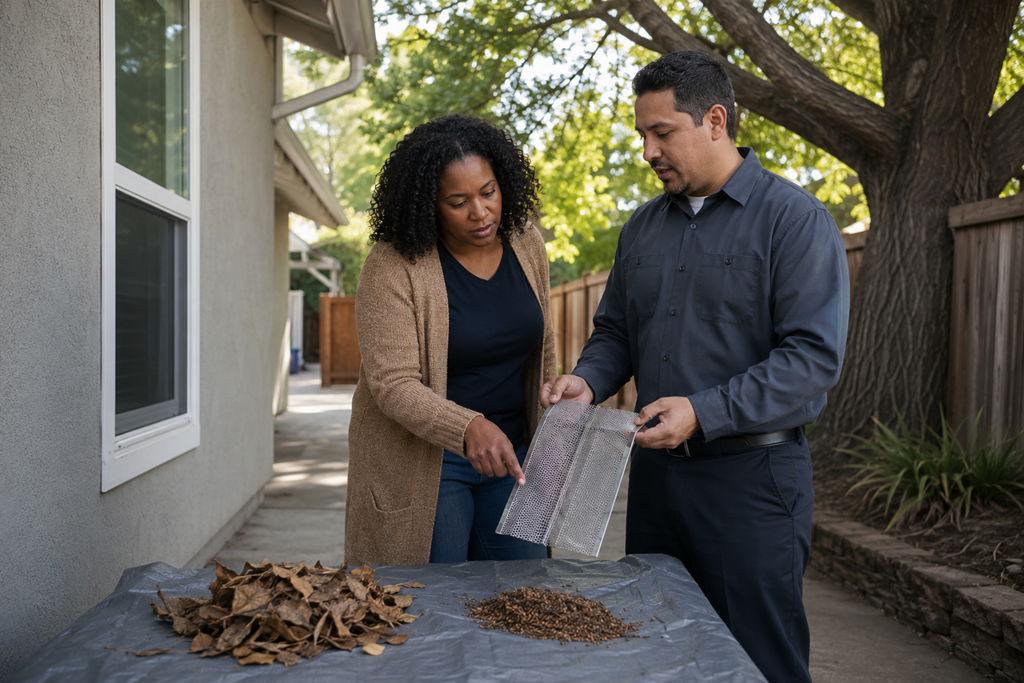
This is why product comparisons should be connected to the actual conditions around the property. A sample that looks sturdy on a sales table does not tell you how it will interact with the debris falling onto your roof.
Ask the provider to explain why the recommended design is appropriate for your roof, surrounding vegetation, gutter style, and expected maintenance.
The explanation should be specific enough to evaluate. “This is our most popular system” is less useful than a clear description of how the system is expected to handle the debris found around your home.
Think About the Entire Maintenance Arrangement
The value of gutter guards is not limited to whether they block leaves.
Before deciding, find out what happens after installation. Some systems may make the gutter more difficult to access if cleaning or repairs are eventually needed. Certain products may need to be removed or opened before roof-edge work can be completed.
It is also helpful to understand:
- Who inspects or cleans the system after installation
- Whether maintenance is included or separately charged
- How clogged areas are accessed
- Whether the guards can be removed without damaging the gutters
- How roof or gutter repairs may affect the product
- What the warranty covers and excludes
These details can reveal whether the system will genuinely simplify maintenance or simply change the type of maintenance required.
Be Cautious With Absolute Promises
Statements such as “you will never clean your gutters again” or “this system works perfectly with every kind of debris” should be treated cautiously.
No guard system changes the fact that the roof remains exposed to weather, dust, plant material, and other outdoor conditions. Performance also depends on the product, installation quality, roof design, gutter condition, surrounding trees, and ongoing care.
Another warning sign is pressure to make an immediate decision before the provider has closely examined the property. A recommendation should follow an evaluation of the roofline and debris conditions, not come from a standard sales script.
A reputable provider should be willing to discuss limitations, maintenance expectations, and situations in which gutter guards may not provide enough benefit to justify installation.
Questions To Ask Before Accepting an Estimate
A few focused questions can make estimates easier to evaluate:
- What specific debris problem is this system intended to reduce?
- Why is this guard design appropriate for my property?
- Will any gutter repairs be needed before installation?
- What maintenance will still be required?
- Can the gutters remain accessible for future cleaning or repairs?
- Are all roof sections being treated, or only the areas that need protection?
- What product, labor, and performance limitations are excluded from the warranty?
The provider’s answers should connect the recommendation to your property rather than relying mainly on broad claims about the product.
Decide Based on the Recurring Burden, Not the Sales Promise
Gutter guards are more likely to be worthwhile when debris repeatedly interferes with drainage, cleanings are frequent or difficult, and the proposed system is suited to the material falling around the home.
They may be harder to justify when the gutters rarely collect debris, existing drainage problems have not been diagnosed, or the installation is being presented as a permanent end to all maintenance.
For Sacramento-area homeowners, the most useful next step is usually to compare the expected reduction in maintenance with the cost, limitations, and care requirements of the proposed system. That approach makes it easier to decide whether gutter guards solve a meaningful problem on your property rather than simply adding another home feature.