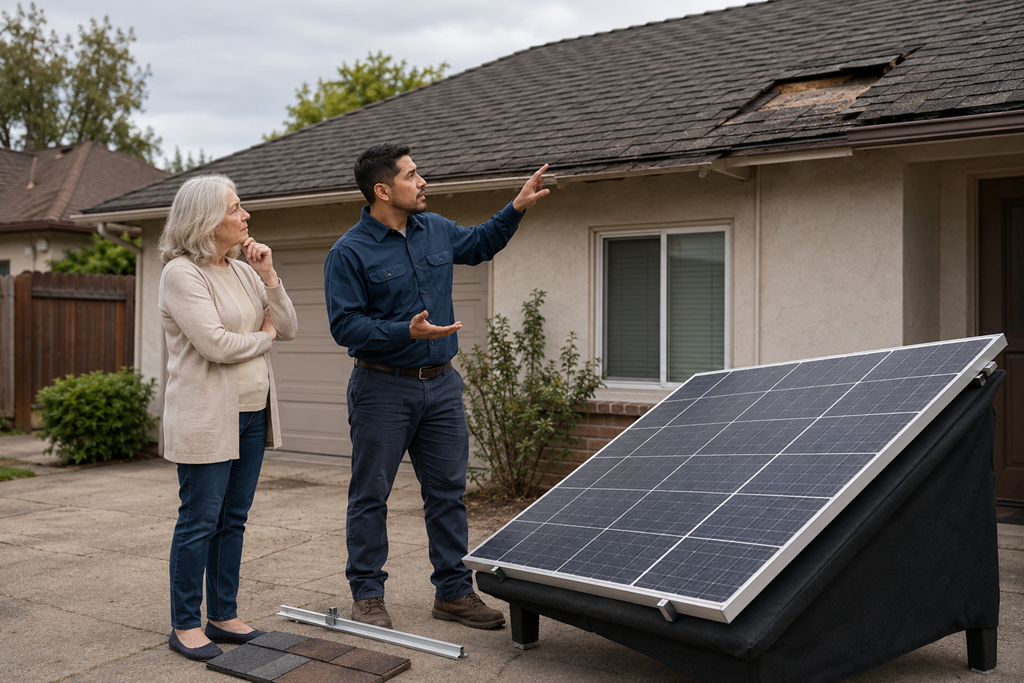
Solar installation makes sense when the system is likely to match your home’s usable roof space, electricity habits, ownership plans, and budget—not simply because your roof gets plenty of sun. The real decision is whether solar fits the way your household uses energy and whether the expected long-term value justifies the cost, commitments, and changes involved.
For many homeowners, the decision starts with a high electricity bill or a solar proposal that promises lower monthly costs. The uncertainty usually begins when the conversation expands to roof condition, equipment choices, financing terms, future utility use, and how long the homeowner expects to remain in the property.
Solar may be worth exploring, but a sunny roof alone does not determine whether it is a practical fit.
A Sunny Roof Is Only the Starting Point
Sun exposure matters because panels need adequate light to produce electricity. However, the amount of usable roof space can matter just as much as the amount of sunshine reaching the property.
A roof may receive strong sunlight while still having limited space because of:
- Multiple roof sections or steep angles
- Chimneys, vents, skylights, and other obstructions
- Shade from trees or nearby structures
- Areas that face different directions
- Roofing materials or conditions that complicate installation
Sacramento-area properties can differ significantly even when they are located on the same street. One home may have a broad, unobstructed roof plane, while another has mature trees, additions, or architectural features that reduce the practical installation area.
A professional site evaluation should explain where panels could be installed, what may limit production, and whether those limitations were included in the proposed system design.
Start With the Problem You Want Solar to Solve
Solar is easier to evaluate when you know what you expect it to accomplish.
Some homeowners want to reduce the amount of electricity they purchase from the utility. Others are interested in making household energy costs more predictable or preparing for increased electricity use from an electric vehicle, pool equipment, electric appliances, or home additions.
Another homeowner may be primarily concerned about backup power. That goal requires a different conversation because a typical grid-connected solar system does not automatically keep a home powered during an outage. Battery storage and compatible system equipment generally need to be evaluated separately.
A proposal can look attractive while still failing to address the homeowner’s real objective. Before comparing equipment or payment options, define the result you are trying to achieve.
Your Energy Pattern Matters More Than One Expensive Bill
One unusually high bill does not necessarily show how large a solar system should be.
A useful evaluation looks at electricity use across a longer period and considers why that use changes. Summer cooling, pool pumps, household occupancy, remote work, electric appliances, and charging an electric vehicle can all affect consumption.
Future plans matter as well. A system based only on current use may be less suitable if you expect to add an electric vehicle, replace gas appliances with electric models, build an addition, install a pool, or have more people living in the home.
The opposite can also happen. A large system may be difficult to justify if electricity use is expected to decline because household members are moving out, major equipment is being replaced with more efficient models, or the property will be used less often.
The goal is not to predict every future change perfectly. It is to make sure the proposal reflects a realistic picture of how the home is likely to use electricity.
Roof Condition Can Change the Timing of the Project
Solar panels may remain on a roof for many years, which makes the condition of the roofing underneath them an important part of the decision.
Installing panels on a roof that may need replacement relatively soon can create additional work later. Panels may have to be removed and reinstalled so roofing work can be completed. That possibility does not always mean solar should be rejected, but it should be discussed before the installation is approved.
Homeowners should understand whether the solar provider evaluated the roof or simply viewed it as an available mounting surface. A solar professional may identify visible concerns, but a roofing contractor may be needed when the roof’s remaining service life or condition is uncertain.
Coordinating roofing and solar plans can be more practical than treating them as unrelated projects.
The Length of Time You Expect to Own the Home Matters
Solar often involves a long-term value calculation. That makes your expected ownership period important.
A homeowner planning to remain in the property for many years may view the project differently from someone who expects to move in the near future. Selling a home with solar can involve questions about system ownership, outstanding loan balances, lease transfers, buyer qualifications, warranties, and equipment responsibilities.
Solar may contribute value for some buyers, but homeowners should not assume that every buyer will assign the same value to the system or willingly take over every type of agreement.
Before committing, understand what happens if the home is sold earlier than expected. The answer can vary depending on whether the system is purchased outright, financed, leased, or covered by another long-term arrangement.
The Payment Structure Can Change the Entire Decision
Two solar systems with similar equipment can have very different financial implications because of how they are paid for.
A cash purchase, solar loan, lease, and power purchase arrangement do not create the same responsibilities. The initial payment, total long-term cost, interest or financing charges, contract length, maintenance responsibility, transfer terms, and system ownership can all differ.
A low advertised monthly payment does not automatically mean the proposal offers the best value. It may be based on a longer repayment period, assumptions about future actions, or financing terms that are not obvious in the headline number.
Before comparing monthly payments, compare the complete obligation. Ask what you will pay over the full agreement, who owns the equipment, what happens if you sell the home, and whether the payment can change.
Be Careful When the Benefits Depend on Perfect Assumptions
Solar estimates rely on assumptions about system production, household consumption, equipment performance, shade, electricity costs, and how the homeowner will use the system.
Assumptions are not automatically a problem. They become a concern when they are presented as guaranteed results or when the provider cannot explain how the numbers were developed.
A proposal deserves closer review when:
- Expected savings are emphasized more than total project cost
- Production estimates are not connected to the actual roof design
- Shade, roof condition, or future energy changes are barely discussed
- Important financing terms are difficult to find
- The provider cannot explain what happens if production is lower than projected
- The homeowner is pressured to sign before reviewing the agreement
A reliable evaluation should make the tradeoffs understandable. It should not depend on the homeowner accepting the most optimistic version of every assumption.
Compare the Proposed System, Not Just the Number of Panels
Panel count can be easy to understand, but it does not tell the full story.
Different panels can have different power ratings, and system production can be affected by panel placement, shade, roof direction, inverter design, equipment compatibility, and local site conditions.
A larger number of panels does not automatically mean a better system. A smaller, well-positioned system may be more practical than a larger design placed across less productive roof areas.
When comparing proposals, look for an explanation of:
- Why the system was sized as proposed
- Which roof areas will be used
- How shade and obstructions were considered
- How much electricity the system is expected to produce
- Which equipment is included
- What warranties apply to the equipment and installation
- How performance concerns will be handled
The provider should be able to connect the design to your home rather than relying on a generic system package.
Questions That Can Reveal Whether the Fit Is Real
A few focused questions can make a solar consultation more useful:
- What household energy use was used to size the system?
- How were roof condition, shade, and usable space evaluated?
- What future energy changes should be considered?
- What is included in the total project cost?
- Who owns the system during and after the payment term?
- What happens if I sell the home?
- Which estimates are projections rather than guarantees?
- What work or equipment is not included in the proposal?
- Who handles service concerns after installation?
Clear answers do not guarantee that solar is the right choice, but vague or inconsistent answers can show that more review is needed.
When Solar May Be Worth Exploring Further
Solar may be a reasonable option when the home has usable sun exposure, the roof is in suitable condition, household electricity use is substantial enough to support the system, and the homeowner expects to stay long enough to benefit from the project.
It can also make sense when planned changes—such as adding an electric vehicle or converting more household equipment to electricity—are included in the system evaluation.
The project may deserve more caution when the roof needs major work, shade substantially limits production, energy use is low, the homeowner expects to move soon, or the proposal relies on financing terms that are not fully understood.
These conditions do not create an automatic yes-or-no answer. They help show which parts of the decision require closer attention.
Make the Decision From the Whole Picture
The most useful solar proposal is not necessarily the one with the lowest monthly payment, the most panels, or the largest projected savings. It is the one that clearly connects the system design, expected production, roof condition, household energy use, payment terms, and ownership plans.
Before hiring a Sacramento-area solar provider, compare more than the headline numbers. Ask each company to explain how its recommendation fits your specific property and what assumptions could affect the outcome.
Solar installation makes sense when the home, household, timing, and agreement work together. When one of those pieces remains unclear, taking more time to review the proposal can be more valuable than rushing toward a decision.