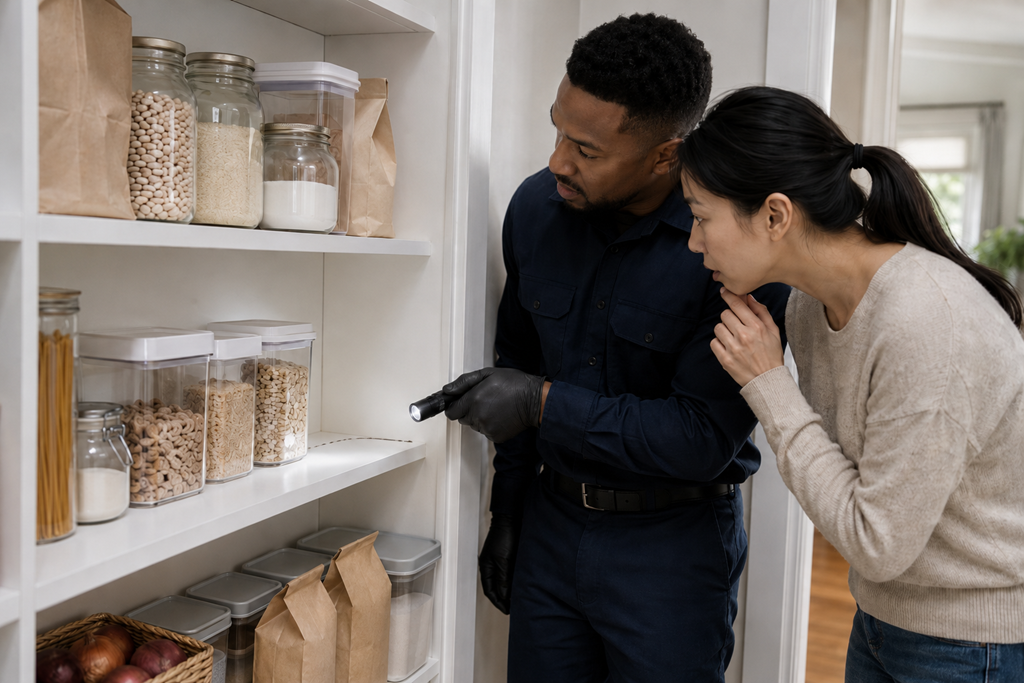
You probably need professional pest control when the problem is recurring, spreading, difficult to locate, or connected to a risk you cannot reasonably evaluate on your own. A single ant trail or occasional spider may not always require a service visit, but repeated sightings, droppings, damage, nesting activity, or pests returning after basic cleanup are stronger signs that an inspection is worth discussing.
The decision can feel surprisingly unclear in real life. You may notice something small, clean the area, and then wonder whether you solved the problem or only removed the most visible evidence. You may also worry about calling too soon for a harmless, isolated pest—or waiting too long while activity continues somewhere you cannot see.
The most useful distinction is not simply whether you have seen a pest. It is whether the evidence suggests a temporary visitor or an established problem.
One sighting does not always mean there is a larger problem
Pests occasionally enter otherwise well-maintained homes. An insect may come through an open door, arrive inside a package, or appear near a window without indicating widespread activity.
That is why one dramatic sighting can sometimes be less meaningful than several small signs appearing repeatedly. A single large spider in a garage may be unsettling, but ants returning to the same pantry shelf every few days may provide stronger evidence of an ongoing access point or nearby colony.
Before assuming that professional treatment is necessary, consider what happened around the sighting. Was a door open? Was the pest found near something recently brought inside? Have you seen the same type of activity before? Did the evidence disappear after ordinary cleaning, or did it return?
The goal is not to identify every pest yourself. It is to determine whether you are seeing an isolated event or a pattern that deserves closer evaluation.
Repeated evidence matters more than a single encounter
A recurring pattern is one of the clearest reasons to speak with a pest control professional.
That pattern may include pests returning to the same area, sightings in several rooms, new droppings after cleanup, continued scratching sounds, repeated nesting activity, damaged food packaging, gnaw marks, shed insect material, or unexplained damage to wood.
The evidence does not have to be dramatic. In many cases, the important clue is that something keeps coming back despite reasonable efforts to keep the area clean and remove obvious food or water sources.
This is a common point of confusion for homeowners and renters. Cleaning up visible evidence can make the area look normal again, but it does not necessarily reveal where the activity began. When the same signs reappear, the source may be somewhere less accessible, such as behind cabinetry, beneath an appliance, inside a wall void, near an attic opening, or along the exterior of the property.
Where the activity appears can change the decision
The location of a pest problem can matter as much as the number of pests you see.
An occasional insect near an exterior doorway may be different from recurring activity around stored food, sleeping areas, plumbing penetrations, electrical equipment, attic insulation, structural wood, or a frequently used entrance.
Professional evaluation may be more appropriate when the activity involves:
- Food preparation or pantry areas
- Rodents or unexplained droppings
- Biting or stinging pests
- Possible damage to wood or building materials
- Nests in difficult or unsafe locations
- Activity near children, pets, or sensitive occupants
- Areas that cannot be inspected without moving equipment or entering confined spaces
These situations do not automatically mean extensive treatment will be needed. They do mean that identifying the pest, its access point, and the extent of the activity may be more important than simply removing what is visible.
Sacramento conditions can shift where pests appear
Pest activity can change as conditions around a property change. Warm weather, dry stretches, irrigation, seasonal rain, vegetation, stored materials, attached garages, and small exterior gaps can all influence where insects or rodents seek food, water, or shelter.
For Sacramento-area residents, this can make a problem appear sudden even when the underlying access point has existed for some time. Ants may become noticeable near a sink or pantry. Rodent evidence may appear after stored items are moved. Wasps may repeatedly build near a protected roof edge or entryway.
The fact that activity changes with the weather does not necessarily mean it will resolve permanently when conditions shift again. Recurring seasonal activity may still justify an inspection, especially when it returns to the same part of the property.
Basic cleanup can help reveal the pattern
Ordinary housekeeping can sometimes help you determine whether the issue was temporary. Cleaning accessible crumbs or spills, placing food in secure containers, reducing clutter around the affected area, and noting where activity appears can make new evidence easier to recognize.
This is different from attempting a technical treatment or disturbing a nest, contaminated material, or inaccessible area.
If droppings, gnawing, insects, or other evidence reappears after the visible area has been cleaned, you have learned something useful: the activity may be continuing from a source that has not been addressed.
Photos can also help preserve what you observed before cleanup. A few clear images of the location, evidence, and nearby conditions may help a provider understand what has been happening, particularly when the pest is not visible during the appointment.
Professional help makes more sense when the source is unclear
Pest control is not only about applying a product. A useful professional evaluation should help clarify what pest is likely involved, where it may be entering or nesting, what conditions are supporting the activity, and what level of response fits the evidence.
Consider contacting a Sacramento-area pest control provider when:
- The same activity keeps returning
- Evidence appears in more than one location
- You cannot tell where the pests are coming from
- Droppings, nesting material, gnawing, or property damage is present
- The affected area is difficult or unsafe to access
- Store-bought measures have not changed the pattern
- The pest may pose a biting, stinging, contamination, or structural concern
- You need reliable identification before deciding what to do
An inspection may reveal that the problem is limited and manageable. It may also uncover an access point or hidden area that explains why the visible activity keeps returning. Either result gives you better information than repeatedly reacting to individual sightings.
Calling a professional does not automatically mean treating the entire property
Some people delay making a call because they assume an inspection will lead directly to an expensive or extensive treatment plan.
That should not be treated as a foregone conclusion.
The recommended response should be connected to the pest, the location, the amount of evidence, and the likely source. A provider may identify a localized issue, recommend monitoring, explain a contributing condition, or propose a targeted service rather than a broad treatment.
You can ask the provider to separate what was directly observed from what is only suspected. You can also ask why each proposed service is being recommended and what evidence would justify additional work.
Clear explanations are especially important when comparing local providers. Two companies may use similar service names while including different inspection areas, follow-up visits, exclusions, preparation requirements, or warranties.
Questions to ask before scheduling service
A brief conversation can help you understand whether the provider’s process fits the problem you are seeing.
Consider asking:
- Does the appointment begin with an inspection?
- Which areas will be examined?
- How will you identify the likely pest and source?
- Is the proposed service based on observed evidence?
- What preparation would be required?
- Are follow-up visits included or priced separately?
- What should occupants expect after the service?
- Are there considerations for children, pets, or sensitive household members?
- What conditions could cause the activity to return?
- Will the estimate explain the scope and exclusions clearly?
A provider should be able to explain the reasoning behind the recommendation without using pressure or making the situation sound more severe than the available evidence supports.
Common assumptions can lead to calling too soon or waiting too long
One common assumption is that seeing any pest means the property needs immediate professional treatment. That can lead people to react strongly to an isolated event without first looking for a pattern.
The opposite assumption can also cause problems: believing that activity is gone simply because the visible pests or evidence were removed. When the source remains active, the same signs may return days or weeks later.
Another misunderstanding is that using more products will necessarily produce a better result. Without knowing the pest or source, repeated treatment of visible areas may not address the underlying issue and could make the pattern harder to evaluate.
It is also easy to assume that every pest control estimate covers the same work. Inspection depth, treatment areas, follow-up, prevention recommendations, and service limitations can differ. Comparing explanations and scope is often more useful than comparing the total price alone.
Base the decision on the pattern, location, and risk
You do not necessarily need professional pest control because you saw one insect. You are more likely to benefit from an inspection when evidence keeps returning, appears in several places, involves damage or contamination concerns, or points toward an inaccessible source.
Pay attention to what repeats, where it happens, and whether ordinary cleanup changes the pattern. Those details can help you decide whether continued observation is reasonable or whether it is time to ask a qualified local provider for an evaluation.
A professional recommendation should make the situation easier to understand. Before committing to service, look for a provider who can explain what was observed, what remains uncertain, and why the proposed response fits the actual evidence.