A few worn patches do not automatically mean your entire home needs repainting. The better choice depends on where the paint is damaged, whether the surrounding finish is still sound, how closely a new patch would match, and what you want the result to look like. For Sacramento-area homeowners, separating a small cosmetic problem from widespread coating wear can help prevent both unnecessary work and repairs that only disguise a larger issue.
The decision can become confusing when one part of a house looks noticeably worse than another. A scuffed hallway may need only localized attention, while peeling exterior trim could indicate that surrounding surfaces deserve a closer examination. Sometimes the original paint remains in good condition but has faded enough that a small touch-up would stand out.
The goal is not simply to choose the least expensive painting option. It is to understand whether the problem is limited, whether the existing finish can support a lasting repair, and how much of the surface needs attention to achieve an acceptable result.
This guide explains how to recognize the differences, evaluate interior and exterior conditions, and discuss practical painting options with a Sacramento-area house painting professional.
Start by looking at how much of the paint is affected
The first useful distinction is between isolated damage and a pattern of deterioration.
A small mark on an otherwise well-maintained wall is a different situation from fading, peeling, or cracking that appears across several surfaces.
Before deciding how much painting is necessary, consider three questions:
- How widespread is the problem? Is the damage confined to one spot, one wall, or multiple areas?
- What condition is the surrounding paint in? Does the existing finish remain smooth, secure, and reasonably consistent?
- What caused the problem? Is it ordinary contact damage, age-related wear, sunlight, moisture, or something that has not yet been identified?
These questions help distinguish a cosmetic concern from a condition that may require more preparation or a larger painting scope.
When touch-up work may be enough
Localized touch-ups are often worth considering when the surrounding paint is in good condition and the affected area is relatively small.
Examples include:
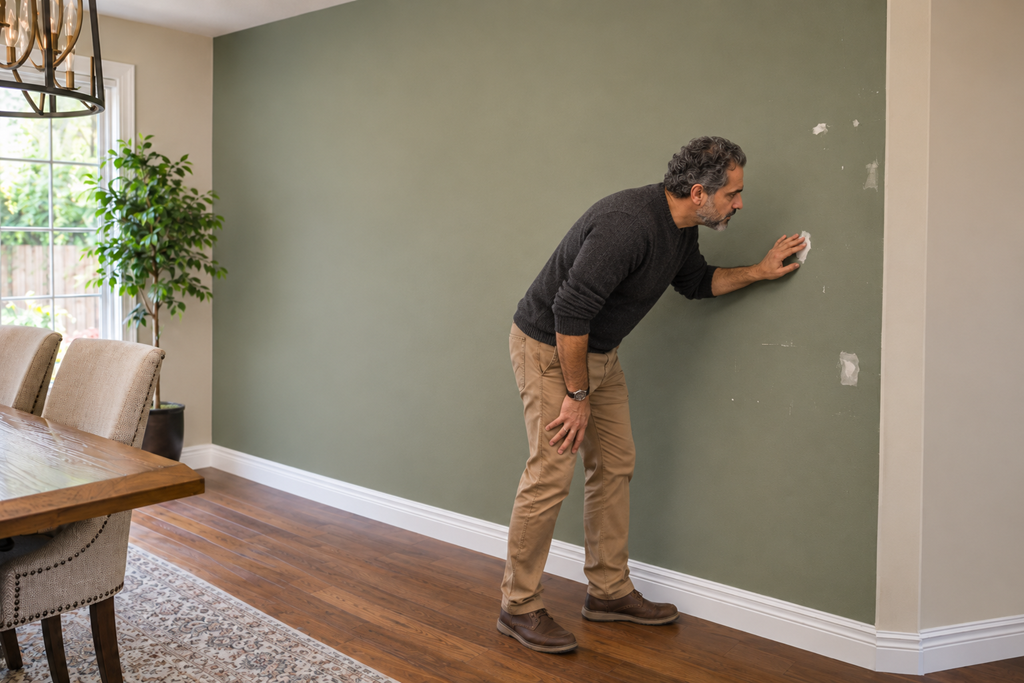
- A few scuffs from furniture along an interior wall.
- Minor marks around a doorway or light switch.
- A small area repaired after routine wall damage.
- Limited paint wear on otherwise sound trim.
- A minor blemish where matching paint is available.
In these situations, repainting an entire room or exterior elevation may be unnecessary.
However, a small repair is not automatically invisible. Even when the damaged area is limited, differences in color, sheen, or texture can make a touch-up noticeable.
When repainting a larger area makes more sense
A larger repaint becomes more reasonable when the existing finish has deteriorated across much of the surface.
Examples include:
- Multiple walls showing widespread discoloration or wear.
- Exterior paint peeling or cracking in several locations.
- Significant color fading across an exposed exterior wall.
- Numerous repairs that would leave visible patches.
- A painted surface with inconsistent sheen throughout.
- Coating problems that extend beyond one isolated location.
The important distinction is that larger repainting should address a broader condition or appearance goal.
A homeowner does not necessarily need to repaint the entire house because one room or exterior wall has deteriorated. Sometimes repainting a complete wall, room, or exterior section provides a more appropriate middle option.
Understand the difference between cosmetic damage and paint failure
Not every visible paint problem means the coating has stopped performing properly.
This distinction is especially important because repainting over an unresolved surface problem may improve the appearance temporarily without addressing its cause.
Cosmetic problems usually affect appearance first
Cosmetic damage typically involves marks or imperfections that do not necessarily indicate a wider coating problem.
These may include:
- Surface scuffs.
- Minor scratches.
- Small areas of discoloration.
- Limited marks around frequently used spaces.
- Isolated patching from previous repairs.
If the finish remains securely attached and the underlying material is sound, localized repainting may be practical.
Appearance still matters. A highly visible wall may justify repainting the entire surface even when the damage is technically minor.
Paint failure raises different questions
Peeling, blistering, flaking, widespread cracking, and heavy chalking can suggest that the existing coating is losing adhesion or deteriorating.
These conditions deserve more attention than ordinary cosmetic wear.
For example, peeling paint on exterior trim may reflect coating age, weather exposure, inadequate previous preparation, or moisture affecting the underlying material.
Simply covering loose or deteriorating paint with another coat does not correct the condition that caused it.
A painting professional may need to evaluate the existing coating and recommend appropriate surface preparation before determining the suitable painting scope.
For a closer look at the work behind a durable finish, see why surface preparation matters before house painting.
Some problems need repair before painting
Painting should not be treated as a substitute for repairing damaged building materials.
Warning signs worth having evaluated include:
- Soft or deteriorating exterior wood.
- Repeated paint bubbling or peeling in the same location.
- Water stains with an unidentified source.
- Cracks or damaged surfaces that extend beyond the paint layer.
- Visible moisture-related deterioration.
These problems do not automatically require full-house repainting. They may require a separate repair or investigation before any painting decision can be finalized.
A qualified professional can help determine whether the issue is primarily cosmetic, coating-related, or connected to another property condition.
Why matching old paint can be harder than expected
One of the most overlooked parts of the touch-up decision is whether new paint will blend with the existing finish.
A homeowner may have the original paint container, color name, or product information and reasonably expect a near-perfect match.
Unfortunately, identifying the original color does not always guarantee that a repaired area will disappear into the surrounding surface.
Existing paint changes over time
Paint can gradually change in appearance because of:
- Sunlight exposure.
- Normal aging.
- Cleaning and surface wear.
- Moisture or environmental exposure.
- Differences in the surrounding surface.
- Changes in the original finish's sheen.
This is particularly relevant to exterior surfaces exposed to Sacramento's strong sunlight.
A freshly painted patch may reproduce the original color more closely than the surrounding weathered paint, creating an obvious difference.
Color is only part of the match
Two painted areas can have similar color but noticeably different appearances.
Factors include:
Sheen: A fresh patch may reflect light differently from the surrounding finish.
Texture: Previously rolled, brushed, or otherwise textured surfaces may show differences when repaired.
Application history: The number of previous coatings and the condition of the existing surface can affect the appearance.
Lighting: A patch that looks acceptable in indirect daylight may become more noticeable under strong side lighting.
These differences can be especially apparent on broad interior walls, smooth surfaces, and areas where sunlight enters at an angle.
When repainting one complete wall is the better compromise
Suppose an interior wall has several repaired spots that are visible from the main seating area.
Even if each individual patch is small, attempting to blend all of them into an aged finish may create a noticeably uneven appearance.
Repainting the complete wall from natural boundary to natural boundary could produce a more consistent result without requiring the entire room to be painted.
The same principle may apply to individual exterior walls or architectural sections.
This middle option deserves consideration before choosing between tiny spot repairs and full-house repainting.
Interior painting decisions depend on visibility and daily wear
Interior paint problems often develop differently from exterior paint problems.
Inside the home, ordinary contact, furniture movement, cleaning, household activity, and previous repairs may be more significant than weather exposure.
The best painting scope often depends on how the room is used and how noticeable the affected surface is.
High-contact areas may need more than repeated patches
Hallways, stairways, children's rooms, entry areas, and spaces around doors may develop multiple small marks over time.
One isolated scuff may be easy to address.
But if the same wall has numerous marks, scratches, and previous repairs, repeatedly touching up individual spots may create a patchwork appearance.
For these surfaces, repainting a complete wall or room may offer a more consistent finish.
The decision depends on the total condition of the area, not simply the size of the most obvious mark.
Lighting changes how repairs look
A repaired area near a large window may be much more noticeable than the same repair inside a shaded room.
Strong directional lighting can reveal differences in surface texture and sheen.
Before choosing touch-ups, consider how the affected area looks throughout normal daily use.
A wall that appears acceptable in the evening may reveal multiple patches in daylight.
If appearance consistency is important, especially in a highly visible living space, a broader repaint may be justified.
Consider whether surrounding surfaces still look consistent
A single repainted wall may look noticeably fresher than adjacent walls.
That difference may be acceptable, particularly when walls are separated by corners, trim, or architectural features.
However, if the surrounding room has widespread fading, discoloration, or uneven sheen, painting only one wall may leave the space looking inconsistent.
This is a matter of visual expectations rather than an automatic technical requirement.
Homeowners should decide how uniform they want the finished room to appear before approving the scope.
Exterior painting requires a closer look at surface condition
Exterior painting decisions involve both appearance and the condition of the coating protecting the home's surfaces.
A small area of fading does not necessarily mean the entire exterior needs repainting.
However, deteriorating paint across several exposed surfaces can suggest that localized repairs will not address the broader issue.
Different sides of the home can age differently
Sacramento-area homes may experience uneven exterior paint wear because sunlight and weather exposure vary around the property.
For example:
- An exposed wall may fade faster than a shaded wall.
- Trim near rooflines may deteriorate differently from protected entry areas.
- Covered patios may retain their finish longer than open exterior surfaces.
- Wood, stucco, and other painted materials may show different wear patterns.
This uneven aging makes it useful to evaluate the house by surface or section rather than assuming every area needs identical treatment.
If one exterior wall is significantly faded while the others remain sound, repainting that elevation may be worth discussing.
On the other hand, if multiple elevations show deteriorating coatings, a more comprehensive project may be appropriate.
Understanding how sun exposure affects exterior paint can help explain why one side of a Sacramento-area home may need attention before another.
Look beyond the most visible side
The front of a house may look reasonably well maintained while less visible areas have greater wear.
Before requesting painting estimates, observe the condition of accessible exterior surfaces around the property.
Pay attention to areas such as:
- Fascia and exterior trim.
- Garage doors and surrounding trim.
- Siding and stucco surfaces.
- Entryways and covered areas.
- Walls receiving prolonged direct sun.
- Exterior sections showing stains or coating damage.
Homeowners should observe only from safely accessible locations. Elevated or difficult-to-reach areas should be evaluated by qualified professionals.
The purpose is to recognize differences in condition, not to diagnose every paint defect.
A full exterior repaint may be appropriate when wear is widespread
If a professional finds that multiple exterior surfaces have deteriorated coatings, repainting individual spots may become less practical.
A broader project may allow damaged areas to be prepared and recoated as part of a coordinated plan.
Still, the painting scope should reflect actual conditions.
A recommendation to repaint the entire exterior should be supported by an explanation of why smaller sections would not adequately address the problem.
Three painting scopes worth comparing
The decision does not always have to be limited to small touch-ups versus repainting the whole property.
In many situations, there are three reasonable scopes to evaluate.
Painting option | When it may fit | Main consideration |
|---|---|---|
Localized touch-ups | Small, isolated marks with sound surrounding paint | Whether the repair will blend with the existing finish |
Repainting a complete surface or section | One wall, room, or exterior elevation shows concentrated wear | Whether the new finish will look consistent beside adjacent areas |
Full-room or full-exterior repainting | Wear is widespread or a uniform appearance is important | Whether the larger scope is justified by condition and goals |
These are not rigid categories.
A homeowner might choose localized repairs for less visible areas while repainting an entire wall in a prominent room.
Similarly, an exterior project may involve repainting several exposed sections rather than the whole house.
Appearance goals can legitimately change the decision
Consider two homeowners with the same minor wall damage.
One may simply want the marks covered so the room remains presentable.
The other may be preparing for a broader interior refresh and wants all walls to have the same finish.
Both may reasonably choose different approaches.
The important point is to distinguish what the surface needs from the level of appearance the homeowner wants.
That prevents a cosmetic preference from being mistaken for an unavoidable repair requirement.
How cost and long-term value affect the choice
Touch-ups generally involve less painted area than full repainting, but the cost difference is not always proportional to square footage.
Even a small professional painting project may involve preparation, materials, setup, travel, protection of nearby surfaces, and cleanup.
Some painters may also have minimum service charges.
As a result, several small repairs can sometimes become less attractive financially than repainting a larger continuous surface.
When localized work may provide better value
Touch-ups may offer good value when:
- Only a few areas need attention.
- The surrounding coating is sound.
- The existing color and finish can be matched acceptably.
- The repair does not require extensive preparation.
- The homeowner is comfortable with the expected appearance.
In these situations, a full repaint may add substantial work without addressing a meaningful additional problem.
When a broader project may be more practical
A larger repaint may be worth considering when many small areas are deteriorating or when repeated spot repairs have become visually distracting.
It may also make sense when other planned work will affect multiple painted surfaces.
For example, if a room is already scheduled for several wall repairs, the homeowner can ask whether repainting the complete room would create a more consistent result than individual touch-ups.
That does not mean larger projects always cost less over time.
The benefit depends on surface condition, preparation requirements, material choices, labor, and the homeowner's expectations.
Avoid comparing estimates by total price alone
Two painting estimates may look substantially different because they include different work.
One might propose spot repairs, while another includes repainting entire walls or exterior sections.
Those proposals should not be treated as identical services.
A meaningful comparison should clarify:
- Exactly which surfaces are included.
- Whether the existing coating needs preparation.
- Whether minor repairs are included.
- What paint products and finishes are proposed.
- Whether adjacent areas will be protected.
- How additional deterioration would be handled.
- What appearance can reasonably be expected.
A lower estimate may be suitable when its scope matches the actual need. A higher estimate may be reasonable when the proposed work is more extensive and properly explained.
Neither price alone establishes which recommendation is more appropriate.
Our guide to reviewing local service estimates before approving work explains how to compare project scope, preparation, exclusions, and other important details before committing.
What to prepare before requesting a painting estimate
A little preparation can make the difference between requesting a general painting price and receiving an assessment based on the condition of your home.
You do not need to identify the technical cause of every paint problem.
Instead, collect the information that helps a professional understand what you are seeing and what you want to accomplish.
Identify the affected areas
Walk through accessible interior rooms or around safely reachable exterior areas.
Make a simple record of:
- Where the most noticeable damage appears.
- Whether similar problems occur elsewhere.
- Which areas still look acceptable.
- Whether the problem has spread or returned.
- Which surfaces are especially important visually.
Photographs can help document differences between areas.
Include wider views showing the surrounding wall or exterior section, not only close-ups of individual marks.
This gives the painter more context.
Gather existing paint information when available
If you have records from an earlier painting project, they may be useful.
Examples include:
- Paint brand and color information.
- Finish or sheen information.
- Previous project invoices.
- Approximate painting dates.
- Notes about prior repairs.
These details may make the conversation more efficient, but they do not guarantee that the original finish can be matched.
If the information is unavailable, a painting professional can discuss other ways to evaluate a suitable finish.
Decide what result matters most
Before contacting providers, identify your main objective.
Is the priority to:
- Improve a few visibly damaged areas?
- Restore a consistent appearance throughout a room?
- Address widespread exterior coating deterioration?
- Complete necessary preparation and repainting?
- Refresh the home's appearance as part of a larger project?
A clear goal helps separate required work from optional improvements.
It also makes it easier to recognize when a proposal extends beyond what you originally intended.
Questions that help determine the appropriate painting scope
When a Sacramento-area painting professional evaluates your home, focus the conversation on the reasoning behind the recommendation.
A useful set of questions includes:
1. Does the existing paint appear sound enough for localized touch-ups? Ask whether the visible problem is isolated or part of broader coating deterioration.
2. Can the original color, sheen, and texture be matched closely enough? Find out what differences might remain noticeable after the work.
3. Would repainting the entire wall or exterior section produce a better result? This can reveal a practical middle option.
4. What preparation or surface repairs are needed before painting? Ask which problems require attention beyond the final coat.
5. Why are you recommending this particular scope? A painter should be able to explain why localized repairs, section repainting, or full repainting is appropriate.
6. What is included in the written estimate? Confirm surfaces, materials, preparation, protection, cleanup, and exclusions.
7. What could change the recommendation once work begins? Understand how additional deterioration or preparation needs would be communicated and approved.
The objective is not to obtain identical recommendations from every painter.
It is to understand what each recommendation is based on and whether it fits the property's condition.
When a recommendation deserves another look
A larger painting recommendation is not necessarily excessive, and a smaller recommendation is not necessarily inadequate.
However, consider requesting clarification or another estimate when:
- Full repainting is recommended without an explanation of the existing surface condition.
- A provider promises that all touch-ups will be completely invisible.
- Visible peeling or moisture-related problems are dismissed without evaluation.
- Important preparation work is excluded without clear explanation.
- The estimate does not identify the areas being painted.
- The proposed scope changes substantially without a clear reason.
- You feel pressured to approve a large project before understanding the alternatives.
A reasonable recommendation should connect the proposed work to specific observations, realistic appearance expectations, and an understandable scope.
For older homes with potentially hazardous existing coatings, such as lead-based paint, ask about appropriate evaluation and safe work practices before any coating is disturbed. Avoid scraping, sanding, or otherwise disturbing suspect paint yourself.
Know when to repair now and when to plan a larger project
Sometimes the most reasonable decision is to address a limited problem now while planning broader repainting later.
For example, a homeowner may have a generally acceptable interior finish with a few worn locations. Localized repairs might be sufficient until a planned room refresh.
Exterior conditions require more careful judgment because some deteriorating areas may expose materials to further damage.
When coating failure, moisture, or damaged materials are present, ask a qualified professional whether work should be addressed sooner rather than postponed for appearance reasons.
Separate necessary attention from optional improvements
A useful way to organize the decision is to divide concerns into three groups:
Needs evaluation or repair: Peeling associated with moisture, damaged wood, recurring coating failure, or other unresolved material concerns.
May benefit from painting soon: Widespread fading, repeated surface wear, multiple patches, or areas where the finish is becoming inconsistent.
Primarily cosmetic preferences: Minor scuffs, small marks, or a desire for a fresher color when the existing finish remains sound.
These categories help organize priorities, but they do not replace a professional assessment.
The aim is to avoid treating all imperfections as equally important.
Consider planned work that may affect painted surfaces
If you already expect to complete related home improvements, the sequence may affect the sensible painting scope.
For example, planned wall repairs, trim replacement, or other surface-altering work may change which areas ultimately need repainting.
Discussing those plans with the painter can help avoid completing finish work that will soon be disturbed.
However, necessary repairs should not be delayed merely to coordinate a cosmetic project without understanding the potential consequences.
Make the final choice based on condition, scope, and expectations
Touch-ups and full repainting are not competing solutions where one is always better.
They address different levels of wear and different appearance goals.
A localized repair can be entirely appropriate when the surrounding paint remains sound and the expected finish is acceptable.
Repainting a complete wall, room, or exterior elevation can be a useful compromise when isolated patches would look inconsistent.
Full repainting becomes more reasonable when deterioration is widespread or when a uniform result is an important project objective.
Before hiring a Sacramento-area house painter, make sure the proposed scope reflects what was observed, what needs preparation, and what the finished work can realistically accomplish.
The most useful decision is not necessarily the smallest or largest painting project. It is the one that fits the home's actual condition and the result you want without including unnecessary work or overlooking problems that deserve attention.