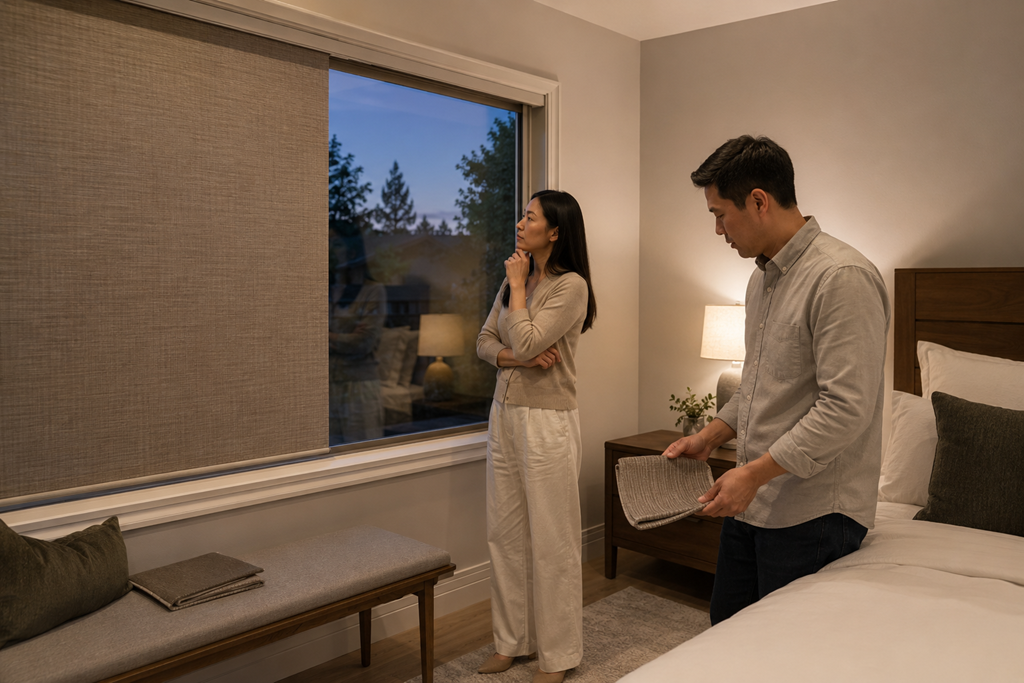
Choosing the right window treatments is less about finding one “best” option and more about matching each room’s needs for light control, privacy, heat reduction, appearance, and daily use. A treatment that works well in a shaded bedroom may be frustrating in a bright family room, so the strongest decision usually starts with how the window affects the room—not with fabric, color, or a popular style.
This decision can feel surprisingly complicated. Blinds, shades, shutters, curtains, and layered treatments may all look suitable at first, but they do not solve the same problems. Once you identify what needs to change in each room, the number of practical choices usually becomes much smaller.
Start With What the Room Needs to Do
Before comparing materials or colors, consider what the window treatment needs to accomplish.
A bedroom may need privacy and substantial light control. A home office may need glare reduction without becoming dark. A living room may benefit from filtered daylight, while a street-facing bathroom may require dependable privacy throughout the day.
The same treatment does not have to perform every possible function. It simply needs to address the most important conditions in that particular room.
Useful questions include:
- Is privacy needed during the day, at night, or both?
- Does direct sunlight make the room uncomfortable?
- Is glare interfering with a television or computer screen?
- Does the room need to become very dark?
- Will the treatment be opened and closed several times a day?
- Is the window difficult to reach?
- Does the window sit beside a door, sink, bathtub, cooking area, or frequently used walkway?
These practical details often matter more than whether a treatment looks appealing in a showroom photograph.
Light Control, Privacy, and Heat Are Different Problems
One reason window-treatment decisions become confusing is that light control, privacy, and heat are often treated as though they are the same issue.
They are related, but a product that performs well in one area may be less effective in another.
A sheer treatment can soften strong daylight while preserving an open appearance, but it may not provide the level of nighttime privacy a bedroom needs. A room-darkening shade can reduce incoming light, but that does not automatically mean it blocks all light around the edges. A solar shade may help control glare and sun exposure while preserving some outward visibility, yet its privacy performance can change after dark.
Understanding the main purpose of each treatment helps narrow the choice:
Blinds
Blinds use adjustable slats to vary light and visibility. They can work well in rooms where occupants want to redirect daylight throughout the day rather than simply cover or uncover the window.
Roller and Solar Shades
Roller shades offer a clean, simple appearance and come in materials ranging from light-filtering to room-darkening. Solar shades are often considered when glare and strong sun exposure are central concerns, although privacy should be evaluated separately.
Cellular Shades
Cellular shades create a softer look and can provide light filtering, privacy, and an additional layer between the room and the window. Their suitability depends on the fabric, opacity, and operating style selected.
Roman Shades
Roman shades combine fabric with a structured folding design. They may suit rooms where a softer decorative appearance is important, but the folds and fabric should also make sense for the room’s moisture, dust, and cleaning conditions.
Curtains and Drapery
Curtains and drapery can soften a room, cover wide openings, and add another layer of light control or privacy. Their performance depends on the fabric, lining, width, mounting position, and how fully they close.
Shutters
Interior shutters provide adjustable light control and a more permanent architectural appearance. Because they become a prominent part of the window, homeowners may want to consider sightlines, frame depth, opening clearance, and how the style fits the rest of the home.
These categories are starting points rather than guarantees. Materials, construction, fit, and installation can significantly affect how a treatment performs.
Pay Attention to the Window’s Actual Exposure
Two windows of the same size can create very different conditions.
A Sacramento-area room receiving strong afternoon sun may need more glare and heat control than a window protected by a porch, mature tree, or neighboring structure. A treatment chosen for the shaded side of the home may not perform as comfortably on a brighter exposure.
Observe the room at the times when it is normally used. Morning conditions alone may not reveal afternoon glare, and daylight privacy does not show what happens when interior lights are on after dark.
This is an important reframe: choose for the conditions the room regularly experiences, not just how the window looks during a single measurement or consultation.
Daily Use Matters More Than Showroom Appeal
A window treatment can look excellent and still become inconvenient.
Consider who will operate it, how often it will move, and whether furniture or architectural features limit access. A treatment behind a sofa may be difficult to reach. Long drapery near a sliding door may interfere with frequent movement. A shade above a kitchen sink may need a different operating arrangement than one beside a reading chair.
Cleaning also matters. Fabric that feels appropriate in a quiet bedroom may be less practical near cooking residue, moisture, dust, or an active entryway.
For households with children or pets, ask the provider to explain available operating designs and any features intended to reduce loose to reduce loose or accessible control components. The goal is not merely to choose a treatment that fits the window. It should also fit the way the household uses the room.
Different Rooms Rarely Need Identical Treatments
Many homeowners initially assume every visible window should receive the same product.
Matching treatments can create visual consistency, but identical products are not always necessary. A street-facing bedroom, shaded dining area, sunny office, and frequently used patio door may have very different functional needs.
Consistency can come from coordinated colors, materials, trim details, or fabric families rather than using the exact same treatment everywhere.
This approach can be especially useful in open floor plans. Treatments may look related from one area to another while still providing different levels of privacy, light control, or ease of operation.
The objective is a home that feels visually connected without forcing every room into the same solution.
Layering Can Solve Conflicting Needs
Some rooms need more than one kind of control.
A bedroom may need filtered daylight during the day and stronger coverage at night. A living room may need glare reduction during bright afternoons while still benefiting from the softness of decorative curtains. A front-facing room may need privacy without feeling closed off all day.
Layered treatments can address these competing needs. Examples include pairing a shade with drapery or combining a light-filtering treatment with a more opaque secondary layer.
Layering is not automatically better, however. It adds material, depth, hardware, visual weight, and cost. It may also affect how easily the window opens.
Before choosing a layered arrangement, ask what each component is expected to do. If two layers serve essentially the same purpose, the added complexity may not provide much practical value.
When Professional Input Becomes Useful
A consultation may be worth considering when the decision involves more than choosing a standard covering for a straightforward window.
Professional input can be particularly helpful for:
- Very wide, tall, or unusually shaped windows
- Sliding doors and other frequently used openings
- Several connected windows that need visual alignment
- Rooms with strong or changing sun exposure
- Treatments that must clear handles, trim, furniture, or built-ins
- Layered designs
- Motorized or hard-to-reach treatments
- Situations where an exact inside or outside mounting position matters
The purpose of a consultation should be to clarify the fit and function of the treatment, not simply to present more products.
A helpful provider should be able to explain why a particular option fits the room, what compromises it involves, and how it will operate after installation.
Questions Worth Asking Before Installation
When comparing Sacramento-area window-treatment providers, ask questions that connect the recommendation to your actual concerns:
- What problem is this treatment intended to solve?
- How will it perform during the brightest part of the day?
- What level of privacy should I expect after dark?
- Will there be visible light around the edges?
- How will the window, screen, lock, or door operate afterward?
- What cleaning or maintenance does the material require?
- Are measuring, hardware, installation, and adjustments included?
- Can I see a material sample in the room before making the final choice?
- What happens if the finished treatment does not fit or operate as described?
Clear answers make it easier to compare providers on more than appearance or price.
Common Choices That Can Lead to Regret
Several patterns tend to make the decision harder than necessary.
One is choosing a style before defining the problem. This can lead to falling in love with a fabric or product that does not provide the necessary privacy or light control.
Another is assuming descriptive terms mean the same thing across every product. Words such as light-filtering, room-darkening, and blackout may describe different performance levels depending on the material and installation.
Homeowners may also focus only on the treatment itself while overlooking mounting position, edge gaps, window hardware, and furniture placement. These details can change both appearance and function.
Finally, it is easy to choose based on how a treatment looks while fully closed. Ask to see how it looks when raised, stacked, tilted, or moved aside. A treatment occupies space even when it is open.
Let the Room Lead the Decision
The right window treatment is the one that fits the window, supports the room’s purpose, and remains practical during everyday use.
Begin with the conditions you want to change. Separate privacy from light control, and separate both from appearance. Consider exposure, operation, cleaning, surrounding furniture, and whether different rooms truly need the same solution.
Before hiring a local installer, ask the provider to connect each recommendation to a specific need. When the reason behind the recommendation is clear, comparing materials, designs, and estimates becomes much easier.