Evaluating a bathroom remodeler is less about finding the company with the most impressive photos and more about noticing how carefully each provider understands your specific project before recommending a solution. A strong comparison looks at how clearly the remodeler discusses scope, materials, scheduling, communication, changes, and what is actually included in the estimate—not just the final price.
That distinction can be easy to miss. When several remodelers seem professional, show attractive finished projects, and appear capable of doing the work, the differences may not become obvious until you pay attention to how each one approaches your bathroom.
For Sacramento-area homeowners, evaluating that approach before hiring can help turn a complicated remodeling decision into a more manageable comparison.
Pay Attention To How Carefully They Study Your Bathroom
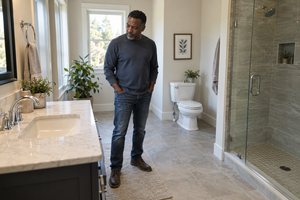
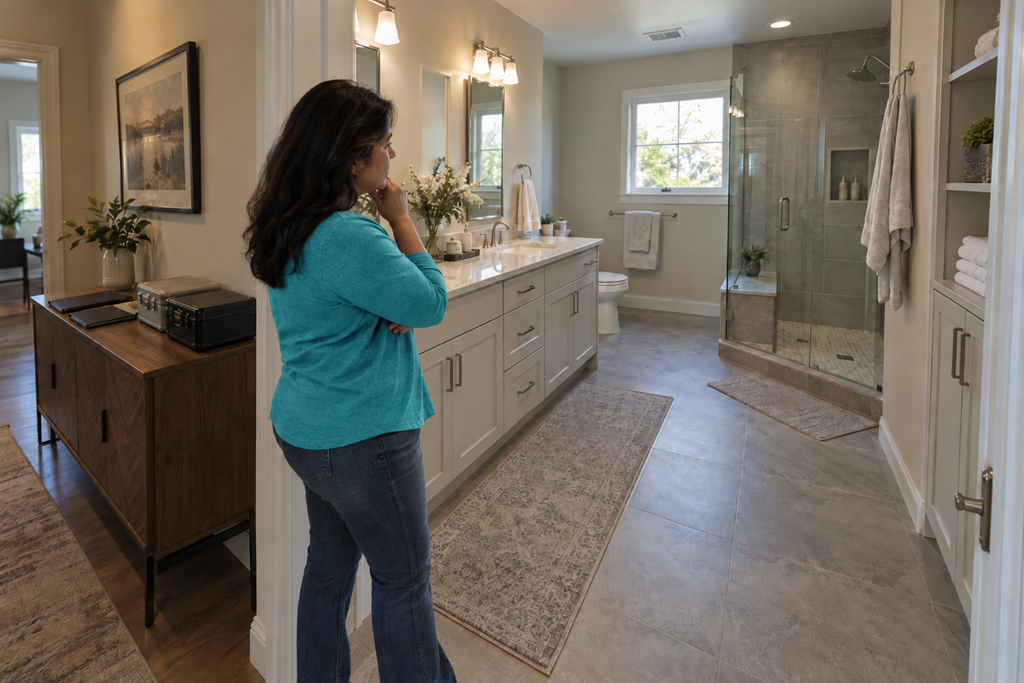
A bathroom remodel is tied to a specific space. The existing layout, shower or tub area, vanity, flooring, lighting, storage, ventilation, fixtures, access, and surrounding rooms can all affect the conversation about the project.
That means a remodeler should not need to rely entirely on a standard presentation to explain what they recommend.
Notice whether the provider takes time to understand how the bathroom is currently arranged and what you actually want to change. A thoughtful evaluation should feel connected to the room in front of you rather than to a prepackaged remodeling package.
You do not need to judge the technical details yourself. Instead, pay attention to whether the remodeler appears interested in the details that make your project different from another homeowner's project.
A Beautiful Portfolio Does Not Tell You Everything
Finished-project photos can be useful because they give you a sense of a remodeler's past work and general style.
But photographs do not show the entire experience of working with the company.
They may not tell you how clearly the project scope was defined, how changes were handled, how questions were answered, or whether the homeowner understood what was included before the work began.
A portfolio is therefore one piece of the evaluation rather than the entire evaluation.
When comparing bathroom remodelers, consider whether the provider can connect examples of previous work to the decisions you are currently facing instead of simply showing you the most visually impressive bathrooms they have completed.
Listen For Specific Explanations Instead Of Vague Assurances
A provider does not need to overwhelm you with technical information to demonstrate that they understand your project.
Clear explanations are often more useful.
For example, if you ask about what the estimate includes, scheduling expectations, material selections, project changes, or communication during the remodel, the answers should help you understand what working with the company would actually look like.
Be cautious about relying too heavily on broad statements such as everything being "taken care of" when you still do not understand the scope.
The goal is not to receive an answer to every possible question during the first conversation. It is to determine whether the provider communicates in a way that reduces uncertainty rather than creating more of it.
Compare What Each Estimate Actually Covers
It is natural to look at the total price first when several bathroom remodeling estimates arrive.
The totals matter, but they may not describe identical projects.
One remodeler may be discussing a different scope, different material assumptions, different preparation work, or different responsibilities than another provider.
That can make two estimates difficult to compare solely by looking at the bottom line.
Before treating one quote as clearly higher or lower, try to understand what each remodeler believes they are providing.
You may discover that an apparent price difference is partly a scope difference.
You may also discover that important parts of the project are described more clearly by one company than another.
That information can be just as useful as the number itself when you are deciding which provider appears to understand the project best.
Notice How Questions And Possible Changes Are Handled
Bathroom remodeling projects often involve decisions that are easier to understand once the planning conversation becomes more specific.
You may reconsider a material, fixture, storage feature, layout preference, or other part of the original idea.
You do not have to predict every possible change before hiring someone.
What you can evaluate is how the remodeler discusses the possibility of changes.
Does the provider explain how questions would be handled? Do they distinguish between the original scope and something that would change it? Do you understand who you would communicate with if a decision came up later?
A remodeler who communicates clearly before the project begins gives you useful information about what the working relationship may feel like once more decisions are involved.
The Lowest Quote And The Highest Quote Both Need Context
A low estimate is not automatically a warning sign, and a higher estimate does not automatically mean better work.
Either conclusion skips an important part of the comparison.
Price makes more sense when viewed alongside the proposed scope, materials, communication, project expectations, and the provider's understanding of your bathroom.
If one estimate is noticeably different from the others, that difference can simply become something worth understanding.
Ask what is included.
Ask what is not included.
Ask whether the providers are describing the same project.
A useful comparison is not about trying to prove that one price is right and another is wrong. It is about understanding what you would actually be agreeing to.
A Few Questions Can Reveal A Lot About The Working Relationship
You do not need an enormous interview checklist.
A handful of practical questions can help you see how clearly a bathroom remodeler communicates:
- What parts of the project are included in this estimate?
- Are there parts of the project that are not included?
- How are material selections handled?
- Who would I communicate with once the project begins?
- How are proposed changes to the original scope discussed?
- What should I understand about the expected project sequence before making a decision?
The usefulness of these questions comes from the discussion they create.
Pay attention not only to the answer, but also to whether you leave the conversation understanding the project better than you did before.
Feeling Pressured Makes Comparison Harder
Bathroom remodeling can involve many choices, and it is reasonable to need time to think through them.
Pressure can make it harder to compare providers carefully.
If you feel pushed to focus on a promotional offer, immediate commitment, or quick decision before you understand the project, the problem is not necessarily that the offer itself is bad. The problem is that you may not yet have enough information to evaluate what you are accepting.
A good hiring decision usually becomes easier when you can separate the sales presentation from the practical questions surrounding your bathroom.
You should be able to understand the proposed work, ask reasonable questions, and compare your options without feeling that the decision has to be made before you are ready.
The Best Comparison Is About Fit, Not Just Appearance
Evaluating a bathroom remodeler does not require you to become an expert in remodeling.
It requires you to notice how the provider approaches your project.
A polished portfolio, attractive samples, and a competitive estimate can all be useful. But they become more meaningful when they are supported by careful observation of your bathroom, a clearly described scope, understandable communication, and realistic discussion of how decisions will be handled.
When comparing Sacramento-area bathroom remodelers, focus on the company that helps you understand what is being proposed and why it fits the actual project you are considering.
That gives you a stronger basis for making the hiring decision than relying on price, presentation, or finished-project photos alone.