If you notice soft, crumbling, discolored, or suspicious-looking wood before painting your home, treat the concern as a condition question before it becomes a paint-selection question. Fresh paint can improve appearance, but it does not resolve deteriorated wood beneath the surface. The useful next step is to understand what material is affected, how much of it may need attention, and whether repair should be addressed before the painting scope is finalized.
That distinction matters because painting projects naturally draw attention toward colors, finishes, preparation, and scheduling. A homeowner may be ready to refresh the exterior and then notice a questionable section of trim, siding, fascia, or another wood surface. Suddenly, what seemed like a straightforward painting project includes a separate question: Is this surface actually ready to be painted?
A Paint Problem And A Wood Condition Problem Are Not The Same Thing
Homeowners sometimes use “dry rot” as a general description for wood that looks deteriorated. The visible condition may include softness, crumbling edges, damaged paint, discoloration, or areas that simply do not look as solid as the surrounding material.
The important point is not to diagnose the wood yourself. It is to recognize that suspicious deterioration may need to be evaluated separately from ordinary paint preparation.
Paint can cover a surface visually, but it does not make compromised wood structurally sound. If repair is needed, understanding that before the painting scope is finalized can reduce uncertainty about what work belongs in the project.
For Sacramento-area homeowners, this can be especially useful when planning exterior work that has been exposed to years of sun, seasonal rain, irrigation, or ordinary weathering. Those conditions do not automatically mean dry rot is present, but they are good reasons to look beyond color when a wood surface appears questionable.
The Visible Spot May Not Tell You The Whole Story
One damaged-looking section can make a project feel deceptively simple.
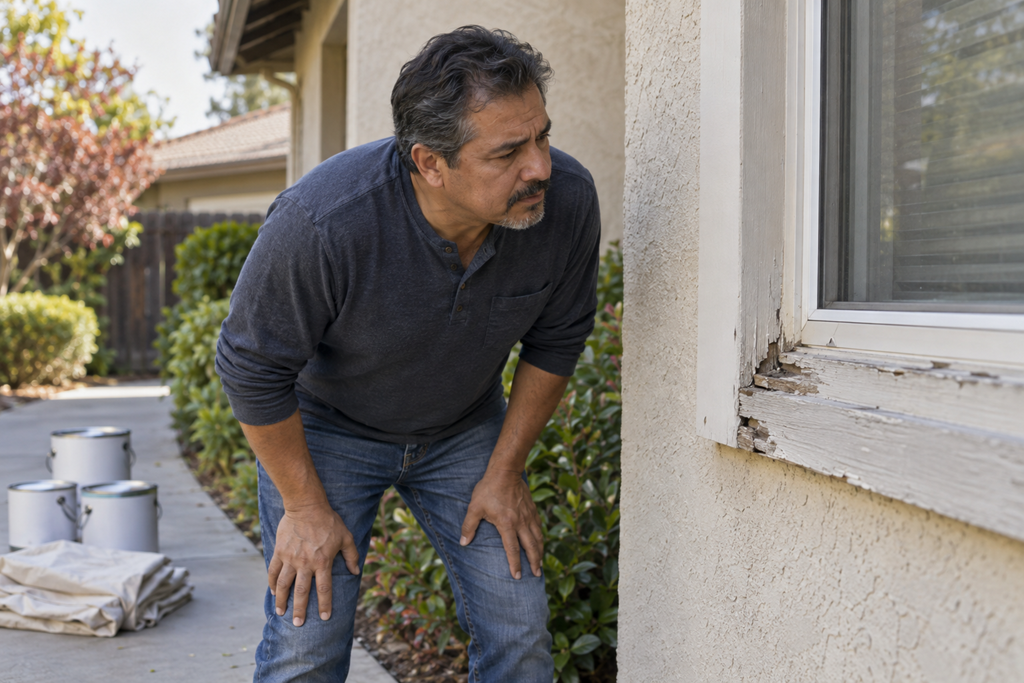
A homeowner may see a small deteriorated corner near a window or a worn section of trim and assume that only that piece needs attention. In other cases, the visible area may be the easiest part of a larger condition to notice.
The opposite can also be true. A rough-looking surface may turn out to be more limited than expected.
That uncertainty is why it helps to avoid deciding the repair scope based only on appearance. Before committing to a painting estimate, it can be useful to understand whether the questionable area is considered a minor surface issue, a repair item, or something that deserves further evaluation.
The goal is not to make the problem seem bigger than it is. It is to keep a cosmetic project from moving ahead before an underlying condition has been adequately understood.
Clarify What The Painting Estimate Actually Covers
One of the easiest misunderstandings is assuming that wood repair is automatically included in exterior painting.
Painting companies and repair providers may define their scopes differently. One estimate may include limited replacement or repair work, while another may treat it as separate work. A painting proposal may also contain allowances or exclusions that become important when deteriorated wood is discovered.
Before comparing quotes, ask what happens if questionable wood is found during preparation.
Useful questions include:
- Does this estimate include repair of deteriorated wood, or only painting and surface preparation?
- Are there visible areas that should be evaluated before the painting work is scheduled?
- If additional damaged material is discovered, how would the scope and price be updated?
- Who is responsible for determining whether a wood area needs repair before it is coated?
- Would resolving the repair concern first make the painting estimate more accurate?
These questions help separate the condition of the home from the finish being applied to it.
Do Not Let The Paint Schedule Create A Rushed Repair Decision
Once a painting project is scheduled, there can be a natural desire to keep everything moving.
That can make an unexpected wood concern feel like an interruption. A homeowner may be tempted to approve whatever additional work is suggested simply because painters are already preparing to begin.
There is nothing unusual about wanting to avoid delays. But an unexpected repair is still a separate decision worth understanding.
If new deterioration changes the original scope, ask what was found, where it is located, what work is being recommended, and how it affects the original estimate. You should be able to understand the difference between normal painting preparation and additional repair work before agreeing to a change.
A short pause for clarification can be more useful than trying to preserve the original schedule at all costs.
Fresh Paint Should Not Be Used As Proof That The Problem Is Solved
A newly painted surface can look clean and finished, which makes it easy to associate appearance with condition.
They are not the same thing.
If deteriorated material remains underneath a coating, the improved appearance does not by itself answer whether the underlying concern was addressed. That is why the better time to ask questions is before the surface disappears beneath new paint.
This does not mean every imperfection requires major repair. It means the condition should be understood well enough that the homeowner knows what is being painted and why.
The Order Of The Decisions Matters
When questionable wood is discovered, it can help to think about the project in a simple order:
First, understand the condition.
Then, clarify any repair scope.
After that, finalize the painting scope.
This is less about creating extra steps and more about avoiding two different decisions being bundled together without explanation.
If a repair professional and painting contractor are both involved, make sure it is clear where one scope ends and the other begins. That can make estimates easier to compare and reduce confusion about who is responsible for preparation, repair, finishing, and any unexpected changes.
A Better Painting Decision Starts Before The Paint Goes On
Dry rot concerns can turn an ordinary painting project into a more complicated decision, but the complication is manageable when the condition and the cosmetic work are treated separately.
You do not need to determine the cause or repair the wood yourself. You do need enough information to understand whether questionable material should be evaluated or repaired before it is painted.
For a Sacramento-area homeowner, that means looking beyond the new color and asking whether the surface underneath is actually ready for the project. Once the condition, repair scope, and painting scope are clear, it becomes easier to compare estimates and move forward with more realistic expectations.