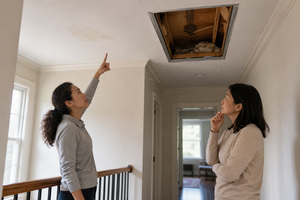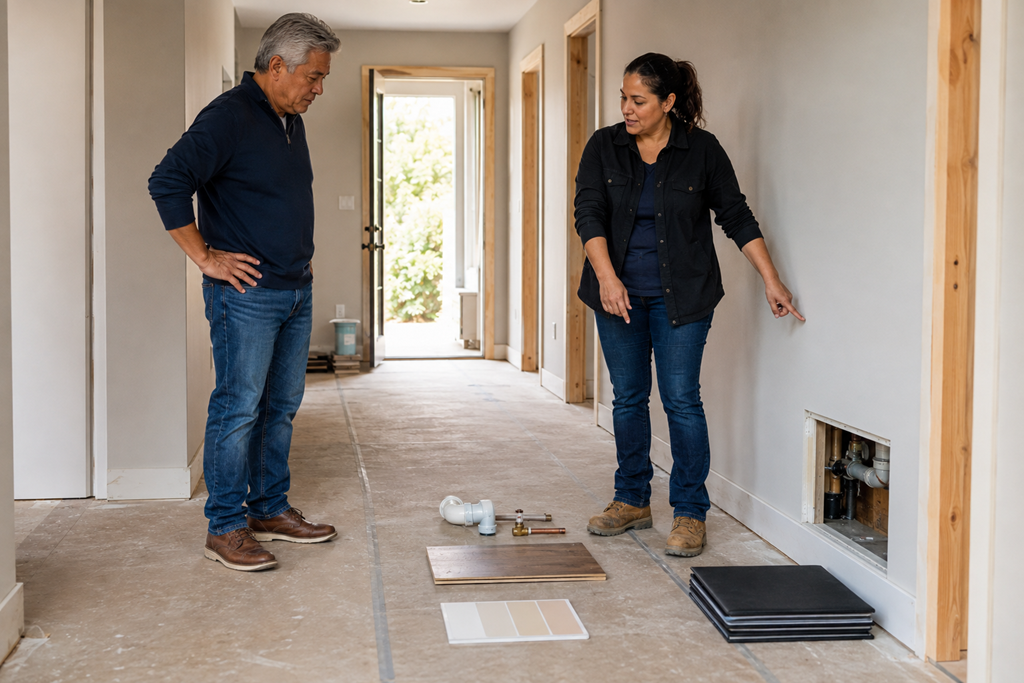
When several parts of a home need attention, the first decision is not necessarily which contractor to call. It is deciding which problems deserve attention first, which repairs may be connected, and what information a professional will need to evaluate them properly.
Without that preparation, homeowners may contact several contractors at once, receive estimates for different scopes of work, and struggle to compare recommendations that do not address the same underlying problem. A repair that looks urgent may turn out to be mostly cosmetic, while a less noticeable issue may be allowing damage to continue.
A practical repair priority list helps you approach contractors with clearer questions. It also gives each provider a better starting point for discussing scope, timing, project order, and possible complications.
Who this guide can help
This guide is for Sacramento-area homeowners who:
- Have several known repairs but are unsure where to begin
- Recently noticed multiple problems after inspecting the property
- Are preparing to contact contractors for the first time
- Have received conflicting opinions about what should be repaired first
- Want to separate urgent work from improvements that can wait
- Need to understand whether several repairs should be coordinated
- Are concerned that one project could interfere with another
- Want to compare contractor recommendations more carefully
The goal is not to diagnose every home problem independently. It is to organize what you know so qualified professionals can evaluate the right issues in a sensible order.
Prioritization should come before contractor shopping
When a home has a leaking fixture, damaged flooring, worn paint, an aging fence, an uncomfortable room, and a cracked surface, every item may feel like part of one large repair problem.
Contractors, however, usually work within particular service categories. A plumber may focus on the source of moisture. A flooring professional may focus on damaged material. A painter may discuss surface preparation. A remodeling contractor may consider how several parts of the project fit together.
If you begin by calling every possible provider, each conversation may start from a different assumption. You could receive one estimate for visible damage, another for replacing materials, and another for a broader renovation. Those estimates may all be reasonable within their own scope, but they will be difficult to compare.
Prioritization creates a shared starting point. It helps you decide:
- Which condition should be evaluated first
- Which work may depend on another repair
- Which problems could become more complicated if ignored
- Which items affect normal use of the home
- Which improvements are mainly cosmetic or optional
- Which contractors may need to coordinate their work
You do not need a perfect master plan before making a call. You only need a clear record of the problems and a reasonable idea of which concerns should lead the conversation.
Start with consequences, not appearance
The most visible problem is not always the most important one.
Peeling paint may be obvious, while the moisture source beneath it is less noticeable. A stained floor may attract attention, but the reason it became stained may deserve the first evaluation. A damaged cabinet door may be frustrating, but an electrical concern affecting normal use may require more immediate professional attention.
A useful way to rank repairs is to consider what could happen if each condition remains unchanged.
Conditions involving immediate safety or active damage
Concerns that may involve personal safety, active water entry, electrical problems, structural movement, gas odors, sewage, unstable materials, or rapidly worsening damage should generally be treated as evaluation priorities.
This does not mean assuming the cause or attempting a hazardous inspection yourself. It means describing the condition accurately and contacting an appropriate professional rather than placing it behind cosmetic projects.
When there appears to be an immediate danger, active flooding, fire risk, gas concern, or other emergency, use the appropriate emergency or utility contact rather than waiting to collect several routine estimates.
Problems that protect the home from further damage
Some home components help keep weather, moisture, pests, heat, or outdoor conditions from affecting the interior. Problems involving the roof, drainage, exterior openings, plumbing, ventilation, or protective surfaces may deserve attention because delaying them could affect additional materials.
Sacramento-area properties can experience strong sun, extended heat, dry conditions, and seasonal rain. Those conditions may influence how quickly exposed materials deteriorate or when certain exterior concerns become noticeable. A contractor should evaluate the property itself rather than relying only on general assumptions about local weather.
Repairs affecting essential use
A problem may not be dangerous, but it may interfere with the normal use of a bathroom, kitchen, entryway, cooling system, door, window, appliance connection, or other important part of the home.
Consider how the issue affects daily life:
- Is a room unusable?
- Is access restricted?
- Is the problem disrupting cooking, bathing, cooling, security, or sanitation?
- Is the condition affecting a child, older adult, tenant, guest, or household member with mobility needs?
- Is a temporary workaround creating additional inconvenience?
These questions help distinguish an essential functional repair from an improvement that is merely desirable.
Work that must happen before another project
Project order can matter as much as urgency.
For example, it may not make sense to repair or refinish a visible surface before the source of damage has been addressed. New flooring may need to wait until plumbing, moisture, subfloor, or built-in work has been evaluated. Painting may need to follow repairs that require opening or patching a wall.
The exact sequence depends on the home and the proposed scope, but the general principle is simple: avoid completing finish work that another contractor may need to disturb.
Comfort, efficiency, and recurring inconvenience
Some problems mainly affect comfort, energy use, noise, temperature, storage, convenience, or maintenance effort. These can still be worthwhile projects, especially when the same frustration keeps returning.
They may rank below active damage or essential repairs, but they can move higher when:
- The problem affects several rooms
- Temporary fixes are no longer practical
- The condition repeatedly interrupts daily routines
- The repair could be combined efficiently with related work
- A household change makes the improvement more important
Cosmetic and preference-based improvements
Faded finishes, outdated colors, minor dents, decorative updates, and similar projects often have more scheduling flexibility.
That does not make them unimportant. Cosmetic work can protect some surfaces, improve enjoyment of the home, and help a space feel maintained. The distinction is that postponing the project may have fewer immediate consequences than postponing an active leak or essential system repair.
Build one home repair inventory
Before contacting contractors, create a single list of the repairs you are considering. Keeping everything in one place makes it easier to recognize patterns and explain the situation consistently.
For each item, record:
- The room or exterior location
- What you can see, hear, smell, or experience
- When you first noticed it
- Whether it is constant or intermittent
- Whether it has changed
- What parts of the home it affects
- Any previous repair or service history you know
- Photos taken from a safe location
- Whether another project may touch the same area
- Questions you want a provider to answer
Describe observations rather than declaring a diagnosis. “The paint below the window becomes discolored after rain” is more useful than assuming the window must be replaced. “The room stays warmer than nearby rooms” gives an HVAC or insulation professional a starting point without claiming a specific cause.
A contractor may discover that two items are related, unrelated, or part of a larger condition. Your inventory is meant to organize the conversation, not predetermine the conclusion.
Group repairs that may be connected
Once the inventory is complete, look for repairs involving the same location, material, system, or sequence.
Possible groupings might include:
- Water source, damaged wall material, flooring, and paint
- Exterior drainage, soil erosion, siding, and foundation-area concerns
- Window operation, damaged trim, interior staining, and exterior sealing
- Plumbing access, cabinet work, countertop work, and finish repairs
- Electrical changes, wall patching, lighting installation, and painting
- Roof evaluation, ceiling damage, insulation, and interior finishes
Grouping does not mean one provider should perform every task. It means the first professional should understand the full situation.
A narrow repair request can produce a narrow estimate. If a contractor only sees a damaged finish, the estimate may not address the condition that affected it. Showing related photos and describing the larger sequence gives the provider an opportunity to explain what falls within their scope and what may require another specialist.
Decide what should be evaluated first
Your first call should usually focus on the repair that has the greatest potential consequence, affects the largest number of other projects, or requires diagnosis before the remaining work can be planned.
Ask yourself:
- Could this condition be causing continuing damage?
- Could it create a safety concern?
- Does another repair depend on resolving it?
- Is it preventing normal use of an important area?
- Is the cause uncertain?
- Would repairing the visible damage first risk wasted work?
- Does this issue require a specialist before a broader contractor can plan the rest?
Sometimes the first step is not requesting a final project quote. It may be arranging an inspection, diagnostic visit, or scope discussion.
That distinction is important. An estimate based on an unresolved cause may contain allowances, exclusions, or assumptions that make it difficult to compare with another provider’s proposal.
What can affect cost, timing, and scope
Two repairs that appear similar from a distance may involve very different amounts of work. Contractors may need to consider factors that are not visible in the first photograph or phone conversation.
The source and extent of the problem
A surface repair is usually different from correcting the condition that damaged the surface. The visible area may be limited, or the provider may find that nearby materials also need evaluation.
Ask what the estimate assumes about hidden or inaccessible conditions and how the contractor would handle a change in scope.
Access to the work area
Work in an open, accessible location may differ from work behind cabinetry, beneath flooring, inside a wall, above a high ceiling, near built-in features, or in a narrow exterior area.
Access can affect labor, preparation, protection of nearby surfaces, equipment needs, and the number of trades involved.
Materials and matching requirements
Standard replacement materials may be easier to source than discontinued, custom, specialty, or difficult-to-match materials. A small repair can become more involved when the surrounding finish must blend with an existing surface.
Ask whether the proposal is for a close functional repair, a visual match, replacement of a larger section, or another clearly defined result.
Coordination between providers
A project involving plumbing, electrical, carpentry, flooring, painting, roofing, restoration, or other specialties may require more than one provider.
Clarify who is responsible for:
- Identifying the work sequence
- Communicating with other trades
- Protecting completed work
- Removing and reinstalling nearby materials
- Patching or finishing opened areas
- Scheduling follow-up work
- Explaining changes to the original plan
Do not assume those responsibilities are included unless the estimate says so.
Household and site conditions
Occupied rooms, pets, children, stored belongings, parking limitations, access instructions, home-based work, and other property conditions can affect preparation and scheduling.
Mention these issues early so the contractor can explain what needs to be moved, protected, disconnected, or made accessible.
Questions worth asking before hiring
You do not need to ask every contractor an exhausting list of questions. Focus on the questions that reveal scope, assumptions, project order, and communication.
Consider asking:
- What problem is this proposal intended to correct?
- Are you addressing the cause, the visible damage, or both?
- What is included in the estimate?
- What is specifically excluded?
- What conditions could change the scope or final cost?
- Does another repair need to happen first?
- Will another type of contractor be needed?
- Who coordinates the different parts of the work?
- What preparation is expected from the homeowner?
- How will nearby surfaces and belongings be protected?
- What materials or finish level are included?
- What happens if hidden damage is found?
- How will changes be documented and approved?
- What should I expect after the work is completed?
- Who should I contact if I have questions during the project?
For projects with several connected repairs, ask the provider to explain the sequence in plain language. A contractor should be able to distinguish what needs attention now, what can follow later, and what falls outside the company’s work.
Compare the same scope whenever possible
Calling multiple contractors is most useful when each one is evaluating substantially the same problem.
If one provider proposes a limited repair, another recommends full replacement, and a third includes unrelated improvements, the prices alone will tell you very little. Before comparing totals, identify what each proposal is actually promising to do.
Review:
- The stated problem
- The proposed solution
- Included labor and materials
- Preparation and protection
- Removal and disposal
- Repairs to surrounding surfaces
- Finish work
- Exclusions
- Assumptions
- Project sequence
- Communication process
- Change-order process
- Follow-up expectations
A lower estimate may simply include less. A higher estimate may include a broader scope, different materials, more preparation, or work that another provider excluded. Higher cost does not automatically mean better service, and lower cost does not automatically mean poor service.
The useful question is whether the proposal is clear, appropriate for the condition, and aligned with what you are trying to accomplish.
Look beyond speed and review scores
Online reviews can help you notice patterns in communication, reliability, cleanliness, workmanship, and problem resolution. They should not replace a direct evaluation of the provider’s fit for your specific repair.
A company with many positive reviews may still specialize in a different type of project. A contractor who can start quickly may not be the right first provider if the underlying cause has not been evaluated. A provider with a polished presentation may still offer an unclear scope.
Compare contractors using a broader set of factors:
- Experience with the specific repair
- Willingness to explain the recommendation
- Clarity of written details
- Understanding of related projects
- Communication style
- Responsiveness to reasonable questions
- Realistic discussion of uncertainty
- Qualifications appropriate to the work
- Explanation of insurance, credentials, or other documentation relevant to the project
- Comfort with involving another specialist when needed
- Consistency between the conversation and written proposal
The right fit is often the provider whose explanation helps you understand the repair—not simply the provider with the lowest number or fastest opening.
Reasons to pause before approving work
A red flag does not always prove that a contractor is unsuitable. It is a reason to slow down, ask for clarification, or seek another opinion.
Be cautious when:
- The provider gives a firm solution without adequately reviewing the condition
- The estimate does not identify what is being repaired
- Important exclusions are only discussed verbally
- The contractor pressures you to approve immediately
- Questions about project order are dismissed
- The proposal includes a major expansion without explaining why
- Added costs are described vaguely
- The contractor cannot explain whether another trade is needed
- The conversation and written estimate do not match
- You are asked to assume that patching, painting, cleanup, or restoration is included
- The provider makes unrealistic promises about outcomes
- Communication is already inconsistent before work begins
- The contractor avoids reasonable questions about qualifications or project responsibility
You should not need technical expertise to receive a clear explanation. A professional may not be able to predict every hidden condition, but the estimate should identify important assumptions and explain how unexpected findings would be handled.
Prepare the home before the first conversation
Good preparation can make an initial contractor conversation more productive.
Gather:
- Your repair inventory
- Current photos and older photos when available
- Dates or approximate timeframes
- Records of previous related work
- Product information for existing materials or equipment when known
- Notes about when the problem appears
- A list of rooms or surfaces that may be affected
- Your questions
- Access limitations
- Household scheduling concerns
- Any plans for related upgrades or remodeling
You can also separate your goals into three levels:
The immediate goal
What must be evaluated or corrected so the home can be used safely and normally?
The complete repair goal
What damaged materials, finishes, or related components may need attention after the primary issue is addressed?
The optional improvement goal
Are there upgrades you would consider while the area is already being worked on?
Keeping these goals separate helps prevent a necessary repair from becoming confused with a larger renovation. It also allows a contractor to explain whether combining work makes practical sense or unnecessarily expands the project.
Avoid calling every contractor at the same time
When multiple repairs are connected, contacting all possible providers simultaneously can create more confusion than clarity.
One contractor may assume another provider has already confirmed the cause. Another may estimate finish work without knowing that the area could be opened again. A third may propose replacement because they were not told that a diagnostic visit is still pending.
A more organized sequence may be:
- Document the visible conditions.
- Identify the issue with the greatest consequence or widest project impact.
- Contact the professional most appropriate for evaluating that issue.
- Ask what related work may be required.
- Update the repair inventory with what you learn.
- Contact the next contractor using the clarified information.
- Compare proposals that address the same scope.
This does not require committing to the first provider. You can still obtain multiple opinions or estimates. The difference is that each conversation begins with better information.
Know when a broader project conversation may help
Some homeowners have several unrelated repairs. In that situation, separate specialists may be the simplest approach.
Other homeowners have a cluster of problems in one area, such as a kitchen, bathroom, exterior wall, roofline, or entryway. When several trades may be involved, a broader project-planning conversation can help clarify sequence and responsibility.
A broader contractor may be useful when:
- Several repairs affect the same room or building section
- Work from one trade will need to be opened, patched, or finished by another
- The homeowner wants one coordinated scope
- There is uncertainty about the proper project order
- The repair is becoming part of a larger remodel
A specialist may be the better first call when:
- The cause is likely within a particular system
- Diagnosis is needed before finish work can be planned
- The problem requires expertise outside a general project scope
- The homeowner needs a focused evaluation rather than a full renovation proposal
Neither approach is automatically better. The decision depends on whether you need specialized diagnosis, project coordination, or both.
A practical way to move forward
You do not need to solve every repair decision before speaking with a professional. You do need enough organization to explain what is happening, what has changed, and what other projects may be connected.
Begin by recording every known repair. Rank the items by safety, continuing damage, essential use, project dependency, comfort, and appearance. Then choose the issue that should be evaluated first—not necessarily the issue that is most visible.
As contractors provide information, revise the priority list. A professional evaluation may move an item higher, show that two problems are connected, or confirm that a cosmetic project can wait.
This approach gives Sacramento-area homeowners a clearer way to contact local pros. Instead of requesting unrelated estimates from several contractors at once, you can ask each provider to address a defined concern, explain the project sequence, and put important details in writing.