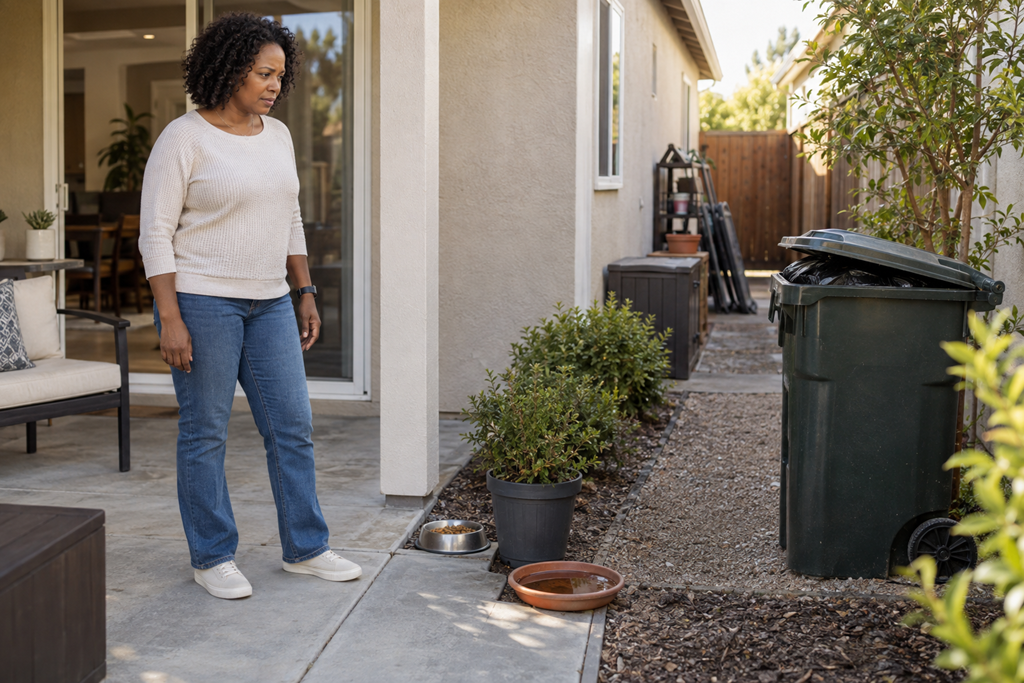
Reducing pest attractants around your home usually starts with making food, water, shelter, and easy access less available. That does not mean trying to make a property perfectly pest-proof. It means noticing the ordinary conditions that can make a home, garage, patio, yard, or entry area more inviting to insects, rodents, or other unwanted pests before those conditions become harder to ignore.
One reason this can be easy to miss is that pest attractants are often ordinary parts of daily life. A pet bowl left outside, moisture beneath a planter, food residue in a recycling container, stored cardboard in a garage, or vegetation close to the house may not seem important on its own. The larger issue is how several small conditions can add up around the same property.
A clean, well-maintained home can still have pest attractants. The question is less about whether a property looks tidy and more about what food, moisture, hiding places, and access may be available.
Pests Respond To What A Property Provides
When people think about pest prevention, they may focus on the pest itself. Seeing an ant, cockroach, mouse, or other unwanted visitor naturally draws attention to getting rid of what is visible.
But the more useful question can be: What is making this location attractive or accessible in the first place?
Pests generally need some combination of food, water, shelter, and a way to reach those resources. Around a home, those needs can be met by conditions that were never intended to attract anything.
That is why reducing attractants is less about maintaining a flawless property and more about noticing patterns.
For a Sacramento-area homeowner, that might mean looking beyond the room where a pest was spotted and considering the surrounding patio, garage, side yard, storage area, landscaping, trash area, or other nearby spaces.
Food Sources Are Not Always Obvious
An open garbage container is an easy example of a possible food source, but everyday attractants can be much less noticeable.
Pet food left outside, birdseed that collects below a feeder, fallen fruit, food residue around an outdoor eating area, spilled dry goods in a garage, or recyclable containers with leftover residue can all contribute to the availability of food.
The important point is not that every crumb will create a pest problem.
It is that consistently available food can give pests a reason to return to the same part of a property.
This is also why reducing attractants does not necessarily require a major cleanup project. Sometimes it is a matter of noticing which everyday habits repeatedly leave food accessible and deciding whether those habits can be adjusted.
Moisture Can Be Easy To Overlook
Water does not have to appear as a large puddle to be worth noticing.
Moisture may collect beneath planters, around irrigation, near outdoor faucets, in containers left outside, or in other areas where water remains longer than expected. Indoors, persistent moisture around plumbing or appliances may also deserve attention.
During Sacramento's hot, dry stretches, a dependable source of moisture around a property can be particularly noticeable in an otherwise dry environment.
The goal is not to eliminate every trace of outdoor water. Landscaping, pets, gardens, and ordinary household activities all involve water.
Instead, pay attention to moisture that is repeatedly available in places where it serves no useful purpose.
If persistent moisture appears to come from plumbing, drainage, irrigation, or another property issue, that may be something to discuss with the appropriate qualified professional rather than treating it only as a pest concern.
Shelter Often Looks Like Ordinary Storage
Pests do not need an obviously abandoned area to find shelter.
A quiet corner of a garage, stacks of cardboard, crowded storage, accumulated leaves, dense vegetation, or objects that remain undisturbed for long periods can create protected spaces.
This does not mean homeowners need to remove everything stored around their properties.
The useful distinction is between intentional storage and areas that have gradually become difficult to see, reach, or monitor.
When an area stays undisturbed for a long time, homeowners may not notice what is happening behind or beneath stored materials until another reason causes them to look.
Keeping frequently overlooked areas visible enough to notice changes can make it easier to recognize a developing concern.
Attractants Matter More When Access Is Easy
Food, water, and shelter outside do not automatically mean pests will enter a home.
Access is another part of the picture.
Doors, windows, screens, garage areas, utility penetrations, rooflines, vents, and other transitions between indoors and outdoors can all be worth considering when trying to understand how pests may be moving around a property.
Homeowners do not need to diagnose every possible entry point themselves.
What matters is recognizing that repeatedly addressing pests inside without considering how they may be getting there can leave an important part of the situation unexplored.
If you are speaking with a pest control professional, asking where they believe pests may be entering can be more informative than simply asking what treatment will be used.
Reducing Attractants Is Usually About Patterns, Not Perfection
One of the easiest ways for pest prevention to become frustrating is to treat it like a one-time cleanup.
A homeowner may clear one area, put away food, or reorganize storage and expect that the property is now permanently less attractive to pests.
But most attractants are connected to routines.
Trash comes back. Pets continue to eat. Packages create more cardboard. Plants are watered. Leaves accumulate. Outdoor meals happen. Storage areas change.
That is normal.
A more useful mindset is to recognize which conditions tend to return around your particular home.
For one household, the recurring issue might be pet food on a patio. For another, it might be garage storage. Another property may have recurring moisture or landscaping close to the structure.
Once the pattern is recognizable, keeping an eye on it becomes much simpler.
Treating Only The Visible Pest Can Miss The Larger Picture
Another common misunderstanding is assuming that seeing fewer pests means the underlying attraction has necessarily disappeared.
A product or treatment may address pests that are currently visible without changing the conditions that made the location useful to them.
That does not mean professional treatment is unnecessary. Depending on the pest and the situation, treatment may be an important part of the response.
It simply means treatment and attractant reduction answer different questions.
One addresses the pest activity itself.
The other asks why the property may continue providing what pests need.
Understanding both sides can help a homeowner have a more useful conversation with a pest control provider.
A Professional Inspection Can Help Identify What You Are Missing
Some pest attractants are easy to recognize. Others are not.
If pest activity keeps returning, appears in multiple areas, involves possible property damage, or seems to be coming from a location you cannot identify, a professional evaluation may provide useful context.
Before hiring a Sacramento-area pest control provider, consider asking questions such as:
- What conditions around the property appear to be contributing to the activity?
- Where do you believe the pests are getting food, water, shelter, or access?
- Which recommendations are preventive and which are part of the proposed treatment?
- Are there property conditions that should be evaluated by another type of professional?
- What changes should the homeowner watch for after the service?
Clear answers can help you understand whether a provider is looking only at the immediate pest activity or also considering the conditions surrounding it.
Small Conditions Can Tell A Bigger Story
Reducing pest attractants does not require assuming that every outdoor bowl, planter, storage box, or leaf pile will cause a problem.
It means recognizing that pests respond to opportunity.
Food that remains available, moisture that repeatedly collects, protected areas that rarely get disturbed, and convenient ways into a structure can create that opportunity even around a home that otherwise appears well maintained.
By looking at those conditions together, Sacramento-area homeowners can better understand what may be contributing to recurring pest activity and have more focused conversations with local pest control professionals when an inspection or service becomes appropriate.