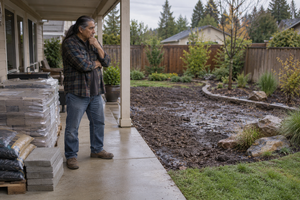
A local service estimate should help you understand what a provider plans to do, what the work may cost, and what could change after the project begins. It should not leave you guessing about the scope, materials, timing, payment expectations, or responsibilities.
The total price matters, but it is only one part of the decision. A lower estimate may leave out work that another provider included. A higher estimate may contain upgraded materials, added preparation, or a broader scope. Two estimates can appear to describe the same service while actually covering very different work.
Before approving an estimate, review the details closely enough to understand what you are agreeing to. The goal is not to analyze every technical detail yourself. It is to make sure the provider has clearly explained the proposed work and that the written estimate reflects your conversation.
Who this guide can help
This guide is for Sacramento-area residents, homeowners, renters, families, and small business owners who are reviewing an estimate for a local service.
It may be especially useful when:
- You have received estimates with noticeably different prices.
- You are unsure whether two providers are proposing the same work.
- The estimate contains broad descriptions that are difficult to interpret.
- You want to understand possible added costs before work begins.
- A provider is asking you to approve the estimate quickly.
- The project may involve several stages, materials, or service visits.
- You want to compare value without automatically choosing the lowest price.
- You have not hired this type of provider before.
The same basic review process can help with many service categories, including repairs, maintenance, installations, cleaning, moving, professional services, property projects, and small business support.
An estimate is more than a price
A useful estimate should describe the proposed agreement in enough detail that both you and the provider understand the starting expectations.
Depending on the service, an estimate may include:
- The work the provider expects to perform
- Materials, products, or equipment that may be used
- Labor or service charges
- Preparation, removal, cleanup, or disposal
- The expected project sequence
- An estimated start date or service window
- An estimated completion period
- Payment amounts and due dates
- Items that are not included
- Conditions that could affect the price
- Procedures for approving changes
Not every service estimate will contain the same level of detail. A simple appointment may require less explanation than a multi-stage property project. The important question is whether the amount of detail matches the size, complexity, and uncertainty of the work.
An estimate that only provides a total price may not give you enough information to compare providers or understand what happens next.
Start by confirming the exact scope of work
The scope of work is the description of what the provider intends to do. It is one of the most important parts of the estimate because it defines the service you are being asked to approve.
Look for clear answers to the following questions:
- What problem, need, or project is the provider addressing?
- What specific work will be performed?
- Which areas, items, rooms, systems, or locations are included?
- What preparation will happen before the main work?
- What cleanup, removal, testing, or follow-up is included?
- What work is specifically excluded?
Broad descriptions can create misunderstandings. Phrases such as “complete service,” “standard repair,” “installation included,” or “all necessary work” may sound reassuring, but they may not explain the actual boundaries of the project.
Ask the provider to clarify vague language before you approve the estimate. The written description should be specific enough that you can later compare the completed work with what was originally proposed.
Check whether the estimate matches the conversation
A provider may explain the project clearly during an inspection, consultation, or service call, but the written estimate may contain fewer details.
Review the estimate while the conversation is still fresh. Confirm that it reflects any important points you discussed, including:
- Your main concern or goal
- The areas that will receive service
- The proposed solution
- Material or product choices
- Preparation responsibilities
- Timing expectations
- Cleanup or disposal
- Follow-up visits
- Possible alternatives
- Known limitations
Do not assume that a verbal explanation automatically becomes part of the written scope. When an important promise, selection, or responsibility affects your decision, ask for it to be included in the estimate or related agreement.
This does not mean every casual comment needs to appear in writing. Focus on details that could affect price, work quality, scheduling, or your expectations.
Understand what is included in the quoted price
A total price can be misleading when it is not clear what the amount covers.
Depending on the type of service, the estimate may combine several cost components:
- Labor
- Materials or products
- Equipment use
- Delivery or transportation
- Preparation
- Removal of existing materials
- Disposal
- Cleanup
- Testing
- Administrative or service fees
- Follow-up work
- Taxes or other applicable charges
You do not necessarily need every cost divided into a separate line. However, you should be able to understand the major components of the price and whether any expected part of the service has been left out.
Ask whether the quoted amount includes everything the provider currently expects to charge for the stated scope. If it does not, ask what additional charges may apply and under what circumstances.
Look closely at exclusions
Exclusions identify what the provider is not agreeing to do. They can be just as important as the included work.
Common exclusions may involve:
- Moving furniture or personal property
- Accessing concealed areas
- Repairing unrelated damage
- Painting or surface restoration
- Electrical, plumbing, structural, or specialty work
- Permit or inspection coordination
- Disposal of certain materials
- After-hours service
- Additional trips
- Unexpected conditions
- Work performed by another provider
An exclusion is not automatically a problem. Some providers appropriately limit their work to their area of responsibility. The concern arises when an excluded item is necessary to complete the project and no one has explained who will handle it.
For example, one estimate may include removal and restoration while another covers only the central repair. The second estimate may appear less expensive even though you will need to hire someone else for the remaining work.
Identify allowances, assumptions, and uncertain items
Some estimates include amounts or descriptions based on information that is not yet final.
An allowance is often a placeholder amount for a product, material, or selection that has not been chosen. An assumption is a condition the provider expects to be true when pricing the work. An uncertain item is something the provider cannot fully evaluate until work begins or access becomes available.
These details may affect the final cost.
Look for language such as:
- Allowance
- Estimated quantity
- Subject to inspection
- Based on visible conditions
- Additional work may be required
- Customer selection pending
- Price may change after access
- Final cost determined after evaluation
Ask the provider to explain what is known, what remains uncertain, and how changes will be calculated.
The presence of uncertainty does not necessarily mean the estimate is unreliable. Some service conditions cannot be fully confirmed in advance. What matters is whether the provider explains the uncertainty plainly instead of presenting a tentative amount as guaranteed.
Review materials, products, and service levels
Two providers may quote different prices because they are proposing different materials, products, methods, or service levels.
When these choices matter, the estimate should provide enough information to identify what is being offered. Depending on the service, this might include:
- Material type
- Product line
- Model or specification
- Quantity
- Finish
- Size
- Quality level
- Warranty category
- Number of service visits
- Frequency of service
- Level of preparation
- Cleanup expectations
Avoid assuming that familiar words such as “premium,” “standard,” “professional grade,” or “high quality” have the same meaning across providers. Ask what the description refers to and why that option was recommended.
You do not need to become a product expert. You only need enough information to compare the proposed options fairly.
Examine the proposed timeline
An estimate may include a start date, a service window, a projected duration, or a general scheduling expectation.
Before approving the work, ask:
- When could the work reasonably begin?
- How long is the service expected to take?
- Will the work occur in one visit or several stages?
- Are materials or outside services needed first?
- Could weather, access, approvals, or product availability affect timing?
- What happens if the schedule changes?
- Will you receive an update if there is a delay?
A fast timeline is not automatically better. It may reflect availability, a smaller scope, a different process, or fewer preparation steps. A longer timeline does not automatically indicate better work.
Compare how clearly each provider explains the schedule and the factors that may affect it.
Understand the payment terms
The estimate should explain when payment is expected and how the payment schedule relates to the work.
Depending on the service, the provider may request:
- Payment after completion
- A deposit before scheduling
- Progress payments at specific stages
- Payment for ordered materials
- A final balance after inspection or completion
- Recurring payments for ongoing service
Review:
- The amount due before work begins
- The events that trigger later payments
- Accepted payment methods
- Whether any payment is refundable
- Whether financing or recurring billing is involved
- What happens if the scope changes
- When the final balance becomes due
Do not rely only on the total amount. Make sure the timing of payments is workable and that you understand what progress should occur before each payment is due.
For questions involving contractual obligations or your legal rights, consider speaking with a qualified professional who can review your specific situation.
Ask how changes will be handled
Many disagreements begin when the work changes but the approval process is unclear.
A change may be needed because:
- The provider discovers an unexpected condition.
- You request additional work.
- A material or product becomes unavailable.
- Measurements or quantities differ from the original assumption.
- Another service must be completed first.
- The original approach is no longer practical.
Before approving the estimate, ask what will happen if the provider believes additional work is necessary.
A clear change process should explain:
- How the provider will describe the change
- Whether you will receive an updated price
- Whether timing will be affected
- Who can approve the change
- Whether approval must be written
- What happens if you decline the additional work
Avoid approving open-ended language that gives no practical explanation of how added costs will be communicated.
Questions worth asking before you approve an estimate
You do not need an exhaustive checklist. A focused set of questions can reveal whether the estimate is complete enough for your decision.
Consider asking:
- What exactly is included in this estimate?
- What is not included?
- Does this reflect everything we discussed?
- What could cause the price to change?
- Are any materials or quantities still estimates?
- Who is responsible for preparation and cleanup?
- Will any part of the work require another provider?
- What timeline should I reasonably expect?
- How will delays or changes be communicated?
- What payment is required before work begins?
- How are additional charges approved?
- Is there anything customers commonly misunderstand about this service?
- What should I prepare before the scheduled work?
- Will I receive a final agreement or updated scope before the project begins?
The provider’s willingness to answer these questions can be as informative as the answers themselves.
Reasons to slow down and ask for clarification
An estimate does not need to be perfectly formatted to be useful. A smaller local provider may use a simple document while still communicating clearly and professionally.
However, certain situations deserve a closer look:
- The estimate provides only a total price with little description.
- Important verbal promises are missing from the written scope.
- The provider cannot explain what is included or excluded.
- The estimate uses vague language for major parts of the work.
- Large potential added costs are mentioned without explanation.
- You are pressured to approve before reviewing the details.
- Payment expectations are unclear.
- The provider dismisses reasonable questions.
- The timeline sounds unusually certain despite obvious variables.
- The estimate does not explain how changes will be approved.
- The proposed work is much broader than the issue you asked about, with little explanation.
- The provider avoids putting important details in writing.
- The estimate contains information that conflicts with what you were told.
These signs do not prove that a provider is unreliable. They are reasons to pause, request clarification, or compare another option before committing.
Compare estimates side by side
When reviewing multiple estimates, do not compare only the totals. Create a simple side-by-side review using the same categories for each provider.
Compare:
- Proposed scope
- Included work
- Excluded work
- Materials or products
- Preparation
- Cleanup
- Project stages
- Timeline
- Payment schedule
- Allowances
- Possible added costs
- Change process
- Follow-up
- Warranty or service assurances
- Communication quality
This process often reveals why prices differ.
One estimate may include more preparation. Another may use a different material. A third may exclude cleanup or restoration. You may also discover that one provider understood your goal differently from the others.
When the scopes do not match, ask whether each provider can clarify or revise the estimate. You will have a more useful comparison when the proposals address the same basic need.
Price, reviews, and speed should not decide everything
Price is important, but the lowest estimate is not automatically the strongest value. It may be appropriate, but you should understand why it is lower.
Likewise, a higher price does not guarantee better service. The additional cost should connect to something meaningful, such as a broader scope, different materials, added preparation, specialized experience, stronger follow-up, or more complete coordination.
Reviews can help you identify patterns in communication and customer experience, but they may not tell you whether the provider is a good fit for your specific project.
Speed can matter when a service need is time-sensitive, but fast availability should not replace a careful review of scope and expectations.
A balanced comparison considers:
- Whether the provider understood the need
- Whether the estimate is clear
- Whether the proposed solution makes sense
- Whether questions are answered directly
- Whether the timeline is explained realistically
- Whether important details are documented
- Whether the provider’s experience fits the service
- Whether you understand what will happen next
Prepare before requesting or reviewing an estimate
You can make the estimate process more useful by giving each provider consistent information.
Before contacting providers, gather what applies to your situation:
- A short description of the problem or goal
- Photos of the relevant area
- Approximate measurements when safe and practical
- Previous service records
- Product or equipment information
- Dates when the issue began
- Examples of recurring conditions
- Access limitations
- Scheduling constraints
- Material or finish preferences
- Questions you want each provider to answer
- A list of work you believe should be included
Try to give each provider the same basic description. If providers receive different information, their estimates may be difficult to compare.
Also decide what matters most to you. Your priorities may include limiting disruption, completing the work in stages, using a particular material, coordinating around business hours, improving long-term reliability, or keeping the scope narrowly focused.
Sharing those priorities can help providers propose a more appropriate solution.
Keep your own written notes
Estimates may arrive by email, service platform, printed document, or message. Keep copies of the estimate and related communication in one place.
Your notes may include:
- The date of the consultation or inspection
- Who you spoke with
- Questions you asked
- Important explanations
- Material or product choices
- Scheduling discussions
- Revisions you requested
- Updated estimates
- Approval dates
This is not about creating unnecessary paperwork. It helps you remember why you chose a provider and what expectations were established.
If an estimate is revised, compare the new version with the earlier one. Confirm which document controls the final scope and price.
Know when you are ready to approve the work
You may be ready to move forward when you can explain, in your own words:
- What the provider will do
- What the provider will not do
- What the estimated price covers
- What could change the price
- What you must prepare
- When the work is expected to happen
- How payments will be handled
- How changes will be approved
- Who will communicate with you
- What happens after the work is completed
You do not need certainty about every possible development. Many service projects contain variables. You should, however, understand the starting agreement and the process for handling changes.
If you cannot clearly describe what you are approving, the estimate may need further explanation.
A practical way to move forward
Reviewing an estimate carefully does not require technical expertise or an adversarial approach. It requires a clear understanding of the proposed work.
Start with the scope. Confirm the inclusions and exclusions. Ask what could change. Review the materials, timing, payment terms, and change procedure. Then compare providers based on the completeness of the proposal and the quality of the communication—not only the final number.
For Sacramento-area consumers, this approach can make a wide range of local service decisions easier to evaluate. A clear estimate gives you a stronger basis for choosing a provider, preparing for the work, and recognizing when the project begins to move beyond the original plan.