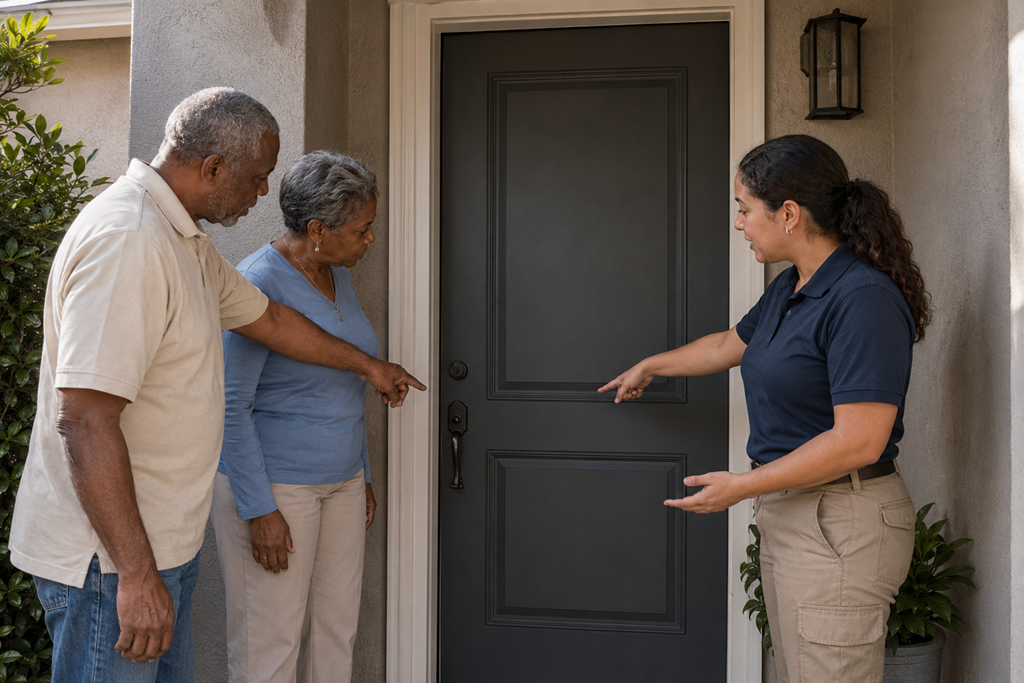
A door usually needs repair when the problem is limited to one replaceable part, such as worn weatherstripping, a loose hinge, damaged hardware, or a minor alignment issue. Replacement becomes more likely when the door, frame, threshold, or surrounding opening has widespread damage, significant movement, water intrusion, poor security, or problems that keep returning after repair.
The difficulty is that many door problems look similar at first. A door that sticks might need a relatively modest adjustment, or it might be warped. A draft could come from worn weatherstripping, or it could indicate that the door no longer fits the opening evenly. Understanding the scope of the problem is usually more helpful than judging the door by one symptom.
The Decision Is About the Whole Door System
A residential door is more than the visible panel that swings open and closed. Its performance also depends on the frame, hinges, lock hardware, threshold, weatherstripping, and the condition of the surrounding opening.
This is why the same symptom can lead to different recommendations in different homes.
A loose handle on an otherwise solid, properly aligned door is usually a contained problem. A loose handle combined with a split door edge, a sagging slab, and a damaged frame suggests that replacing one piece of hardware may not restore dependable operation.
The useful question is not simply, “Can this part be fixed?” It is, “Would repairing this part address the actual cause of the problem?”
Contained Problems Often Point Toward Repair
Repair may make sense when the door itself remains structurally sound and the concern can be traced to one limited component.
Examples may include:
- Worn or compressed weatherstripping
- A loose hinge or minor alignment concern
- A damaged lockset, latch, handle, or door closer
- A worn door sweep
- Limited surface damage that has not affected the door’s structure
- One broken component in an otherwise dependable door system
A repair is more promising when the door still sits evenly in the frame, opens and closes consistently, locks securely, and shows no signs of widespread moisture or structural damage.
The age of the door does not automatically rule out repair. An older, well-built door with a localized hardware problem may still have years of useful service left. A relatively new door, however, may deserve replacement if it has extensive impact damage, severe warping, or a poor fit that cannot be corrected reasonably.
Replacement Becomes More Likely When Problems Overlap
Replacement is more worth discussing when several parts of the door system are failing at the same time or when the damage affects the door’s ability to close, seal, or lock reliably.
Examples include a door that is visibly warped, cracked through a structural area, separating at its joints, or repeatedly falling out of alignment. Significant deterioration around the lower frame or threshold may also indicate that the concern extends beyond a piece of weatherstripping.
Other signs that deserve a closer evaluation include:
- Persistent gaps that remain after previous adjustments
- Water entering around the door during seasonal rain
- Soft, swollen, or deteriorated material around the frame
- Repeated sticking, dragging, or latch misalignment
- Damage that affects the lock or security of the entry
- Several repairs that have not produced lasting improvement
- A door or frame that no longer sits square within the opening
One sign does not always settle the decision. The pattern matters. A single worn seal is different from a door that has a worn seal, a bowed slab, frame deterioration, and recurring water entry.
Repeated Repairs Can Reveal a Larger Problem
Homeowners sometimes continue repairing the most visible symptom because each individual repair seems manageable.
Weatherstripping is replaced, but the gap returns. Hinges are adjusted, but the door begins dragging again. The latch is repositioned, but the door still needs to be lifted or pushed firmly before it will lock.
When the same problem repeatedly returns, the original repair may have addressed the symptom rather than the underlying condition. The door may be moving, the frame may be damaged, or the opening may need a broader evaluation.
This does not mean replacement is always required. It does mean another isolated repair should come with a clear explanation of why the previous problem returned and why the proposed work is expected to last longer.
Appearance Alone Does Not Decide the Issue
A faded or outdated door may still operate well. A freshly painted door may still have serious problems underneath the finish.
Cosmetic preferences can be a valid reason to consider replacement, especially when a homeowner wants a different style, more glass, less glass, or a different type of entry system. However, appearance should be kept separate from performance when the main question is whether the door needs repair.
Likewise, surface damage should not automatically be dismissed as cosmetic. Cracks near hinges, locks, corners, or door joints can affect the strength and operation of the door even when the rest of the surface looks acceptable.
A useful evaluation should distinguish among cosmetic wear, replaceable-component failure, and structural deterioration.
Sacramento Conditions Can Make Certain Symptoms More Noticeable
Sacramento-area doors may experience strong sun exposure, prolonged dry heat, temperature changes, and seasonal rain. These conditions can make existing weaknesses easier to notice.
A sun-exposed door may expand, contract, fade, or begin fitting differently over time. A small gap may become more apparent during hot weather. Seasonal rain may reveal a drainage, threshold, seal, or frame concern that was not obvious during dry conditions.
Weather exposure does not automatically mean the entire door needs replacement. The important question is whether the condition has affected a replaceable surface component or changed the shape, strength, alignment, or surrounding materials of the door system.
It can also be helpful to explain when the problem occurs. A door that sticks only during certain conditions may need a different evaluation from one that drags, gaps, or fails to latch throughout the year.
A Draft Does Not Always Mean the Door Is Failing
Feeling outside air around a closed door often leads homeowners to assume the entire unit needs replacement. Sometimes the cause is worn weatherstripping, an inadequate sweep, or a small adjustment issue.
However, a draft can also result from an uneven door, a warped slab, a damaged threshold, frame movement, or gaps between the frame and the surrounding opening.
The location and consistency of the draft matter. Air entering through one small section of worn material is different from daylight appearing along several sides of the door.
Before approving replacement solely because of a draft, ask the professional to identify where the air is entering and which part of the proposed work addresses it.
Water Around the Door Deserves a Broader Look
Moisture near an exterior door can come from more than the door itself. The threshold, frame, exterior trim, nearby wall, drainage conditions, or surrounding opening may all need to be considered.
Replacing only the visible door panel would not correct water entering through another part of the assembly.
A qualified professional should be able to explain where the moisture appears to be entering, what materials have been affected, and whether the proposed repair or replacement includes the damaged area.
Any significant deterioration, ongoing leakage, or concern involving hidden damage may require evaluation beyond a simple door adjustment.
What a Useful Professional Evaluation Should Explain
A recommendation is easier to assess when it identifies the condition of each major part of the opening instead of jumping immediately to “repair” or “replace.”
The explanation should clarify:
- Which component is causing the problem
- Whether the door slab and frame remain structurally sound
- Whether the concern is isolated or affecting multiple areas
- Why a repair is expected to hold
- What replacement would include
- Whether surrounding damage needs separate attention
It is also important to understand what “door replacement” means in the estimate. Some proposals may involve replacing only the door slab, while others include a new frame, threshold, weatherstripping, and related components.
Neither approach is automatically right for every situation. The scope should match the condition of the existing door system.
Questions to Ask Before Approving the Work
A few focused questions can make repair and replacement recommendations easier to compare:
- Is the problem limited to one component or affecting the entire opening?
- What evidence suggests the door or frame is structurally damaged?
- Would the proposed repair correct the cause or only the visible symptom?
- If replacement is recommended, which parts of the door system are included?
- Are there surrounding moisture, alignment, or opening concerns that need separate work?
- What would make the problem likely to return?
Clear answers should connect the recommendation to conditions that can be observed and explained. Be cautious when a provider recommends complete replacement without discussing the frame, threshold, alignment, hardware, or reason the existing door is failing.
Choose the Scope That Matches the Problem
A repair is often reasonable when the problem is isolated, the door remains sound, and correcting one component is likely to restore dependable operation. Replacement becomes more appropriate to discuss when damage is widespread, security or weather protection is affected, the door no longer fits the opening properly, or repairs keep failing.
Before hiring a Sacramento-area door professional, look for an explanation that separates the visible symptom from its underlying cause. The best decision is not automatically the smallest repair or the largest replacement project. It is the scope of work that addresses the actual condition of the door and its opening.