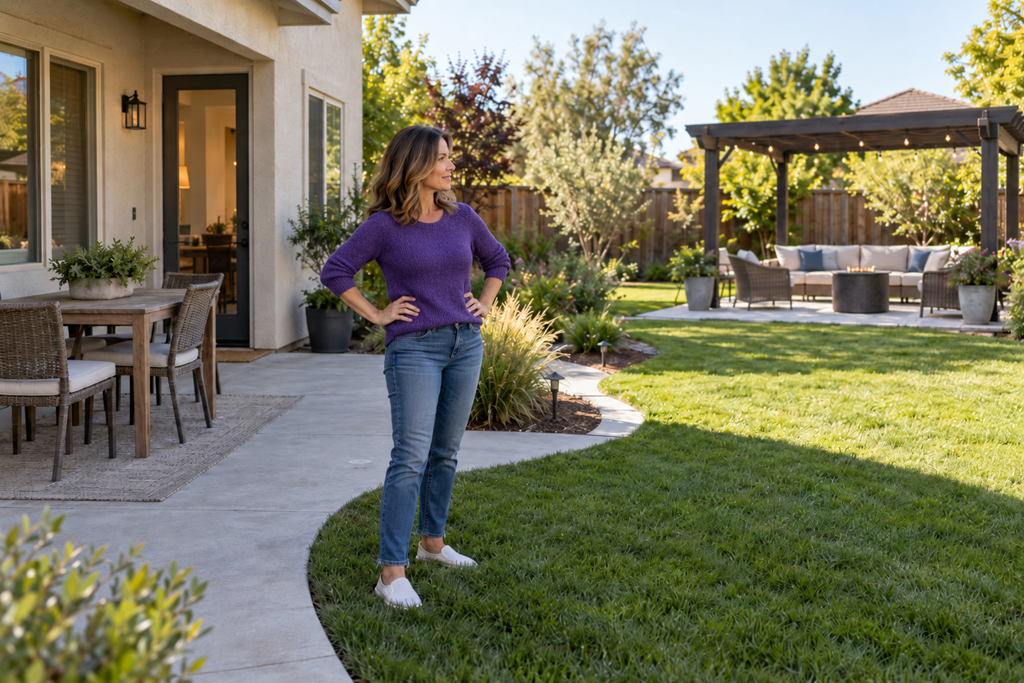
Attached and freestanding patio covers can both create useful outdoor shade, but they solve the space differently. An attached cover connects directly to the home, which can make the patio feel like an extension of the indoor living area. A freestanding cover is supported independently, which can offer more flexibility in where the covered area sits in the yard. The better fit depends less on which style sounds more substantial and more on how you want the space to function.
For Sacramento-area homeowners, the choice often becomes easier once you stop thinking about the patio cover as a structure by itself. Instead, think about the relationship between the house, the yard, the areas where people already spend time, and the places where shade would actually be useful.
Start With Where You Want the Outdoor Space to Feel Connected
One of the clearest differences between the two options is how the covered space relates to the home.
An attached patio cover naturally begins at the house. That can make sense when the main goal is to shade a patio immediately outside a kitchen, living room, family room, or back door. Moving between indoors and outdoors can feel direct because the covered area begins where the home ends.
A freestanding cover works differently. Because it does not depend on being positioned directly against the house, it can create a distinct outdoor area somewhere else on the property.
That may be useful when the place where you most want shade is not right outside the back door.
Neither relationship is automatically better. They simply create different ways of using the yard.
An Attached Cover Can Feel Like an Outdoor Extension of the House
Homeowners considering an attached cover are often trying to improve a patio they already use.
Perhaps the dining table is just outside the kitchen. Maybe the back door opens onto a concrete patio that gets heavy afternoon sun. Or the family naturally gathers immediately outside the house, but the space feels exposed.
In situations like these, attaching the cover to the home can reinforce a layout that already makes sense.
But the connection to the house also means the existing home becomes an important part of the project. The home's exterior, roofline, windows, doors, drainage, and other conditions may affect what is practical.
This is one reason an attached patio cover should not be viewed only in terms of appearance. A qualified patio cover professional can evaluate the property and explain how a proposed design would interact with the existing home.
A Freestanding Cover Can Put Shade Where You Actually Want It
A freestanding patio cover does not have to begin at the exterior wall of the house.
That can change the conversation considerably.
Imagine a backyard where the most comfortable gathering area is farther from the home. There might already be a separate patio, poolside seating area, garden gathering space, or another part of the yard that works better for outdoor dining or relaxing.
A freestanding structure can potentially serve that area without forcing the covered space to remain against the house.
This can also help define a separate outdoor destination. Rather than feeling like a roof extending from the home, the covered area can feel more like its own zone within the property.
The important question becomes: Where would the covered space be most useful in everyday life?
Placement Can Matter More Than the Style of the Cover
It is easy to begin by comparing roof styles, posts, finishes, or photographs of completed projects.
Those details matter later. First, consider how people will actually move through and use the space.
Look at the relationship between the back door, patio, lawn, side-yard access, outdoor furniture, windows, and the areas receiving the strongest sun exposure when you are most likely to use the yard.
An attached cover in the wrong place does not become useful simply because it is connected to the house. Likewise, a freestanding cover positioned away from normal activity may look attractive without improving the way the backyard functions.
For many homeowners, this is the useful reframe: choose the location and function first, then discuss which type of structure supports them best.
Think About What Happens to the Space Around the Cover
A patio cover changes more than the area directly beneath it.
Its position may affect how open the backyard feels, what you see from inside the house, how people walk between different areas, and how sunlight reaches nearby windows or outdoor spaces.
For example, someone who wants immediate shade outside a frequently used back door may value the continuity of an attached design.
Another homeowner may want to preserve the open feeling immediately behind the house while creating shade farther into the yard. A freestanding design may be worth discussing in that situation.
Sacramento's sunny and hot periods can make shade an important part of outdoor comfort, but more shade is not automatically the same as better placement. Where that shade falls—and when you expect to use it—deserves attention before settling on a layout.
Freestanding Does Not Automatically Mean Simpler
Because a freestanding patio cover does not attach to the house, it can be tempting to assume it is automatically the easier option.
That is not necessarily the most useful way to compare the two.
A freestanding structure still has to work with the property, the available space, its intended use, and the conditions where it will be placed. An attached design has its own considerations because it interacts directly with the existing home.
Instead of assuming one type will automatically be easier, faster, or less expensive, ask providers to explain what is involved with the specific location you are considering.
That gives you a more meaningful comparison than relying on the name of the structure alone.
Compare Estimates Based on the Same Intended Outcome
If you request patio cover estimates, make sure the providers understand what you are trying to accomplish.
Two quotes can be difficult to compare if one provider is discussing a cover immediately outside the home while another is imagining a separate structure elsewhere in the yard.
Explain the area you want shaded, how you expect to use it, and why you are considering attached versus freestanding options.
Then pay attention to whether the provider discusses the property itself rather than immediately steering you toward one design.
A useful estimate conversation should help you understand how the proposed cover relates to the home, yard, intended use, and project scope.
Questions That Can Make the Comparison Clearer
When speaking with a Sacramento-area patio cover professional, a few focused questions can help you understand the tradeoffs:
- How would an attached cover interact with this particular part of the house?
- If the cover were freestanding, where could it reasonably be positioned?
- How would each option affect the usable space underneath and around it?
- Are there property conditions that make one layout more practical to discuss?
- What parts of the project scope differ between the two options?
- Can you explain why you recommend one layout for the way we want to use the yard?
You are not looking for a provider to give you a universal answer. You are looking for an explanation that makes sense for your property and the way you expect to use the space.
The Better Choice Starts With the Way You Want to Live Outdoors
The attached-versus-freestanding decision becomes much less abstract when you picture an ordinary day rather than the structure itself.
Where would you carry food outside? Where would people naturally sit? Which door would you use? Do you want the covered area to feel directly connected to the house, or would you rather create a separate gathering place farther into the yard?
An attached patio cover may fit naturally when the goal is to extend the usable space immediately outside the home. A freestanding cover may make more sense to explore when the ideal shaded area sits elsewhere on the property.
Before comparing designs or estimates, get clear about that relationship first. It gives you a much better starting point for discussing the project with local patio cover professionals and understanding why one approach may fit your property better than another.