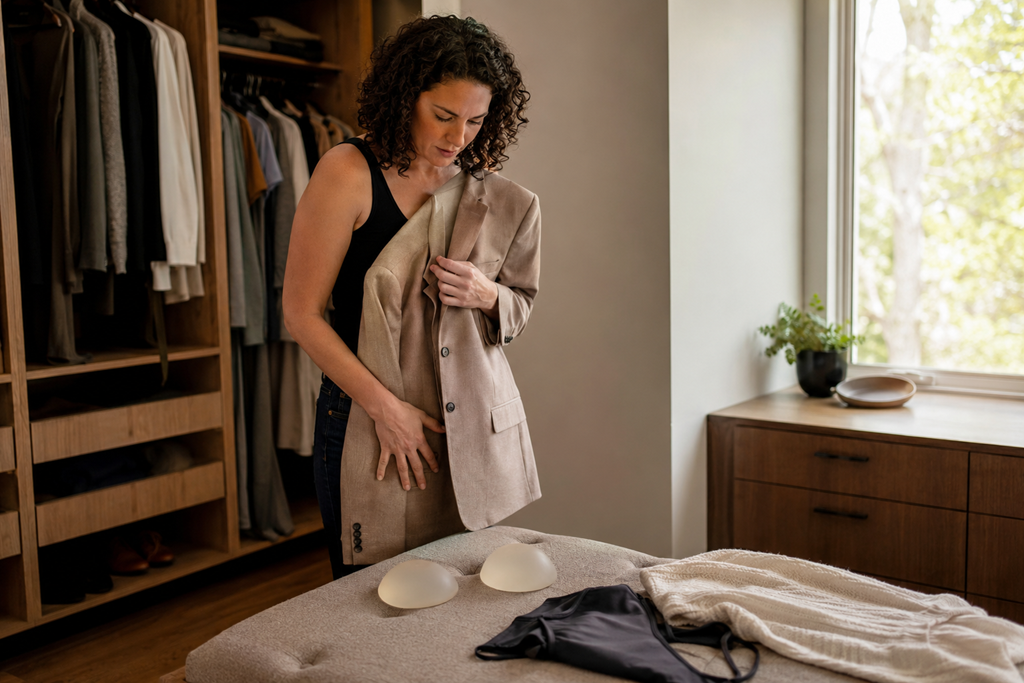
Thinking realistically about breast implant goals means looking beyond cup size or a single inspiration photo. A more useful goal includes how you want your body to look in proportion, how the implants may fit your lifestyle, what tradeoffs you are willing to accept, and what questions you need answered before choosing a provider.
For Sacramento-area patients considering breast implant surgery, the decision often starts with a simple thought: “I want a different shape, size, or balance.” That is understandable. But the most helpful consultation conversations usually go deeper than appearance alone. They include personal anatomy, health history, recovery expectations, implant options, possible risks, and long-term maintenance.
Breast implant surgery is a medical decision as well as a cosmetic one. The FDA notes that breast implants are not considered lifetime devices and that the chance of complications increases the longer someone has them. That does not mean implants are automatically the wrong choice. It means realistic goals should include the possibility of future follow-up, revision, removal, or replacement.
A Realistic Goal Is More Specific Than “Bigger”
Many people begin by thinking about size. That can be part of the conversation, but it is rarely the whole conversation.
A realistic breast implant goal may sound more like:
“I want more upper fullness, but I still want clothing to fit naturally.”
“I want better balance after body changes, but I do not want a result that feels out of proportion.”
“I want to understand what size range makes sense for my frame, activity level, and long-term comfort.”
This kind of goal gives a qualified provider more useful information than simply asking for a specific cup size. Bra sizes vary, photos can be misleading, and two people can have very different results from the same implant volume. What looks balanced on one body may not look or feel the same on another.
Inspiration Photos Can Help, But They Should Not Lead the Decision
Photos can be useful because they show preferences that may be hard to explain in words. They can help communicate whether someone prefers a subtle, fuller, rounder, or more natural-looking result.
The problem comes when a photo becomes the entire goal.
A photo does not show the person’s chest width, skin quality, implant type, surgical history, posture, tissue coverage, or personal healing process. It also does not show what the result looks like in motion, in everyday clothing, or years later.
A better use of photos is to bring several examples and ask what is realistic about them for your body. Instead of asking, “Can I look exactly like this?” a more useful question is, “What parts of this look are realistic for me, and what parts may not translate?”
The Best Goal Fits Your Everyday Life
Breast implant goals should also be connected to real life, not just mirror moments.
Someone who runs, lifts weights, works a physical job, wears fitted professional clothing, carries young children, or prefers low-maintenance routines may have different priorities than someone focused mainly on a dramatic visual change. Neither goal is automatically better. The point is to be honest about how the decision may affect daily comfort, movement, clothing, and long-term satisfaction.
This is where a consultation can be especially helpful. The American Society of Plastic Surgeons describes breast augmentation consultations as a time to discuss expectations, desired outcomes, medical history, medications, allergies, and other personal factors. That kind of conversation helps move the decision from “What size do I want?” to “What choice makes sense for my body, health, preferences, and life?”
Realistic Does Not Mean Settling
Some people hear “realistic expectations” and think it means lowering their hopes. That is not the idea.
Realistic goals are not about dismissing what you want. They are about understanding what can and cannot be controlled. Surgery may change breast size, shape, projection, or balance, but it cannot guarantee a perfect outcome, a specific cup size, a permanent result, or the exact look of someone else’s body.
A realistic goal leaves room for personal preference while also respecting anatomy, safety, healing, and long-term care. It helps you ask better questions and notice whether a provider is giving thoughtful guidance or simply telling you what you want to hear.
Common Ways Breast Implant Goals Become Unclear
One common misunderstanding is treating implant size like clothing size. A number or cup size may feel concrete, but it does not tell the whole story. Implant profile, placement, body proportions, existing breast tissue, and skin quality can all affect how a result looks.
Another pattern is focusing only on the “after” image and not the recovery process. Recovery time, activity limits, discomfort, follow-up visits, and temporary swelling are part of the full decision. A goal that ignores recovery may feel exciting at first but incomplete when planning real life around the procedure.
A third source of confusion is trying to solve multiple concerns with one procedure without understanding whether they are actually related. For example, increasing volume is not always the same as changing lift, position, symmetry, or skin laxity. Those concerns may require different conversations with a qualified provider.
Questions That Can Make a Consultation More Useful
You do not need to know all the answers before scheduling a consultation. But having better questions can help you listen more carefully.
Consider asking:
What part of my goal seems realistic based on my anatomy?
What tradeoffs should I understand with the size or profile I am considering?
How could this choice affect comfort, clothing, activity, or future revision needs?
What risks, limitations, or follow-up care should I understand before deciding?
What would make someone a poor candidate for the result I have in mind?
These questions do not replace medical advice. They simply help you use the consultation to understand the decision more clearly.
A Provider’s Communication Matters
Because breast implant surgery involves personal preferences and medical judgment, the way a provider communicates matters. A helpful consultation should leave room for questions, explain limitations, and avoid making the decision feel rushed.
Be cautious if the conversation focuses only on selling a result, dismisses your concerns, avoids discussing risks, or promises an exact outcome. Breast implants carry risks, and some complications may require additional surgery. A qualified provider should be willing to discuss both the desired result and the practical realities that come with it.
For Sacramento residents comparing local options, this is part of the decision. You are not only choosing a possible look. You are also choosing the person and team who will explain candidacy, planning, risks, recovery, and follow-up in a way you can understand.
The Takeaway
Breast implant goals become more realistic when they include more than size. A stronger goal considers proportion, lifestyle, recovery, risks, future maintenance, and the difference between inspiration and what is appropriate for your own body.
Before committing to surgery, use the consultation process to ask clear questions, discuss personal concerns, and understand what a qualified provider believes is realistic for your situation. That kind of preparation can help you make a more informed local service decision without feeling pushed by photos, trends, or vague expectations.