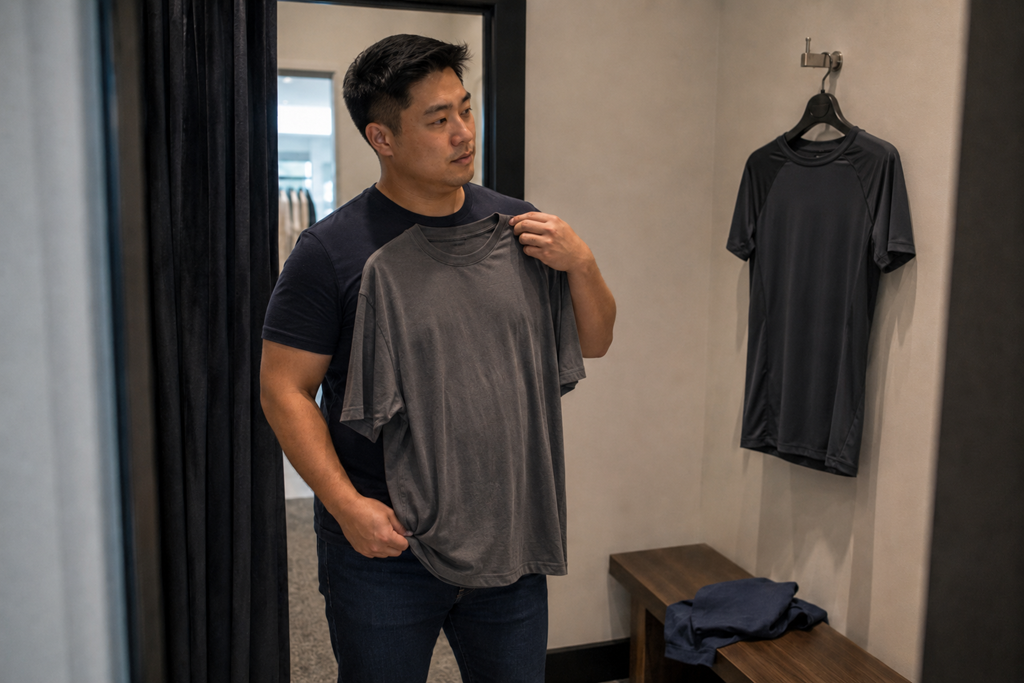
Thinking realistically about a chest appearance concern does not mean dismissing how you feel or convincing yourself that nothing is wrong. It means separating three different questions:
- What specifically concerns you?
- What may be contributing to the appearance?
- What level of change could reasonably be expected from treatment?
Those questions are related, but they are not interchangeable. A mirror, photograph, tight shirt, or comparison with another person can reveal a concern, but it cannot establish a diagnosis or predict what surgery would accomplish.
For Sacramento-area residents considering a gynecomastia consultation, the most useful starting point is not deciding that surgery is necessary. It is developing a clearer understanding of what you are noticing and what you hope will change.
A Concern Can Be Real Without Being Simple
Chest appearance concerns can affect ordinary choices more than other people realize.
A person may repeatedly adjust a shirt, avoid certain fabrics, wear extra layers in warm weather, change posture in photographs, or feel uncomfortable at pools, gyms, locker rooms, and medical appointments. Even a relatively subtle concern can take up considerable mental space.
The amount of distress someone feels does not necessarily indicate how much tissue is present or what caused the appearance. It simply shows that the concern has become meaningful in that person’s daily life.
Chest fullness may involve glandular breast tissue, fatty tissue, skin, natural asymmetry, muscle development, posture, or more than one factor. Gynecomastia specifically refers to increased glandular breast tissue, while pseudogynecomastia refers to increased fat without glandular growth. A qualified medical professional must evaluate the difference rather than relying on appearance alone.
Start With the Specific Concern, Not the Procedure
“I do not like my chest” is an understandable feeling, but it may be too broad to guide a useful consultation.
A more productive conversation begins by identifying what is actually bothering you. It might be:
- Fullness beneath one or both nipples
- Noticeable asymmetry
- A rounded appearance beneath fitted clothing
- Loose skin after weight changes
- Tenderness or another physical sensation
- Difficulty finding shirts that fit as desired
- Self-consciousness during particular activities
These details help a provider understand both the physical concern and the practical outcome you are hoping for.
Someone primarily concerned about nipple prominence may have different expectations than someone concerned about loose skin or overall chest width. Using the same general phrase for every concern can lead to unclear expectations before a provider has even examined the area.
Realistic Expectations Are Not the Same as Low Expectations
Being realistic does not mean accepting an outcome you would not be satisfied with. It means understanding that cosmetic treatment is intended to create improvement, not manufacture a perfectly symmetrical or standardized body.
Natural chests vary in width, muscle shape, nipple position, skin quality, tissue distribution, and side-to-side symmetry. Those differences do not automatically disappear after a procedure.
It is also important to separate your desired result from images that may not represent your anatomy. A heavily edited photograph, a bodybuilding image, or another patient’s result may create a useful conversation starter, but it should not become a guaranteed blueprint.
A better goal is often specific and practical: feeling more comfortable in a plain T-shirt, reducing a particular area of fullness, or making the chest look more proportionate to the rest of the body.
Those goals give a provider something meaningful to discuss without requiring promises of perfection.
Mirrors, Clothing, and Photos Can Change What You Notice
Chest appearance can seem different depending on posture, camera distance, lighting, fabric, and viewing angle.
A close phone photograph may exaggerate the part of the body nearest the camera. Harsh overhead lighting may create deeper shadows. Compression fabric may flatten one area while emphasizing another. A loose shirt may conceal the concern but also make the entire torso look larger.
These effects do not mean the concern is imaginary. They mean that one photograph or one shirt may not provide a complete picture.
Repeatedly checking the same area under changing conditions can also make it harder to judge what is actually changing. The concern may begin to feel larger simply because more attention is being directed toward it.
During a consultation, it can be more useful to explain where the issue appears in everyday life than to demand that the provider agree with the most unflattering image you have seen.
The Cause Matters Before the Cosmetic Plan
A chest appearance concern should not automatically be treated as a surgical problem.
Gynecomastia may be associated with hormonal changes, health conditions, medications, supplements, or other factors. In some cases, additional medical evaluation may be appropriate before cosmetic options are discussed. People should not stop or change prescribed medication on their own because they suspect it may be contributing.
A new or unusual lump, rapid change, nipple discharge, skin change, or persistent pain also deserves medical attention rather than cosmetic self-diagnosis. A qualified healthcare professional can determine what type of evaluation is appropriate for the individual concern.
This is one reason a thoughtful provider should ask about health history, medications, supplements, previous procedures, symptoms, and how long the concern has been present.
The objective is not to turn every cosmetic concern into a medical emergency. It is to avoid planning a procedure before the underlying situation has been understood.
A Useful Consultation Should Make the Decision Clearer
A gynecomastia surgery consultation should do more than confirm that a procedure is available.
Depending on the situation, a provider may review general health, possible risk factors, medications, the chest’s tissue distribution, skin quality, asymmetry, and the person’s goals. The provider may then discuss whether additional evaluation or a particular treatment approach is appropriate.
Useful questions include:
- What appears to be contributing to the chest shape?
- Is any additional medical evaluation appropriate?
- What change would be realistic for my anatomy?
- Which features may remain after treatment?
- What type of scarring or contour irregularity is possible?
- What would recovery mean for my work, exercise, and responsibilities?
- What happens if I decide not to proceed?
The answers should be understandable and specific to the person being evaluated. A patient should not feel embarrassed about asking a provider to explain unfamiliar language or repeat an unclear answer.
The American Society of Plastic Surgeons also recommends asking about the proposed technique, risks, recovery, complication management, and options if the patient is dissatisfied with the outcome.
Watch for a Conversation That Moves Too Quickly
A consultation may be less helpful when the discussion jumps directly from dissatisfaction to scheduling.
Be cautious when a provider guarantees a particular appearance, minimizes risks, recommends the same procedure for nearly everyone, avoids discussing medical history, or pressures you to commit before your questions have been answered.
Another warning sign is communication that treats normal questions as resistance. Asking about limitations, scars, recovery, credentials, facility arrangements, and alternatives is part of making an informed decision.
A reputable consultation should leave room for three possible outcomes: proceeding, seeking another opinion, or deciding that surgery is not the right choice at that time.
Define Success in Terms of Your Own Life
The most realistic question may not be, “Can my chest be made perfect?”
A more useful question is, “What change would make a meaningful difference in my everyday life, and is that change reasonably achievable?”
For one person, success may mean wearing a fitted work shirt without repeatedly adjusting it. For another, it may mean feeling less distracted during exercise. Someone else may decide that understanding the cause is enough and that surgery is unnecessary.
All three outcomes can represent a well-handled consultation.
Chest appearance concerns deserve a respectful conversation, but they do not have to lead to a rushed decision. Understanding the specific concern, obtaining an appropriate evaluation, and discussing realistic limitations can help Sacramento residents decide whether treatment is worth considering without allowing embarrassment, comparison, or pressure to make the decision for them.