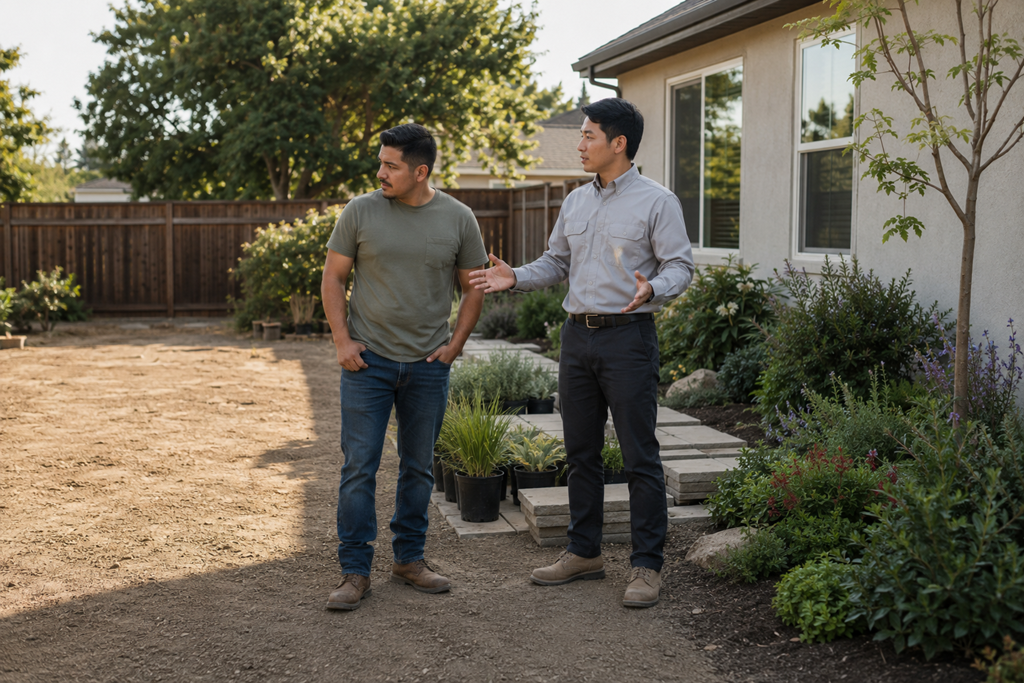
Choosing between landscaping design, installation, and maintenance is mainly about identifying what kind of help your property needs right now. Design is for planning the look, layout, and function of the space. Installation is for building or planting that plan. Maintenance is for keeping an existing landscape healthy, usable, and presentable over time. Many Sacramento-area property owners need one service, while others need a combination in a specific order.
The choice can feel less obvious in real life. You may have a yard that looks unfinished but already contains plants worth keeping. You may know that you want more shade or less upkeep without knowing what should be planted or built. You may also have an established landscape that has gradually become difficult to manage.
The most useful question is not simply, “What does my yard need?” It is, “Am I trying to develop a plan, carry out a plan, or care for what is already here?”
Landscaping Design Helps Define What the Property Should Become
Landscaping design is usually the right starting point when the main challenge is uncertainty.
You may know that the yard does not work well, but you have not decided how the space should be organized. Perhaps a sunny area is uncomfortable during Sacramento’s warmer months, the irrigation layout does not match your planting goals, or the yard contains disconnected features that do not feel like one usable space.
A designer helps turn general preferences into a clearer direction. Depending on the project, that may involve considering:
- How different areas will be used
- Which existing plants or features should remain
- Sun and shade exposure
- Drainage and irrigation needs
- Planting and hardscape priorities
- Water use and maintenance tolerance
- How the project may be completed in stages
The defining feature of design work is that important choices are still unresolved. The property owner needs help deciding what should happen before anyone begins substantial planting or construction.
A design does not necessarily mean creating an elaborate garden or transforming the entire property. It may be appropriate for a modest side yard, a front-yard update, a more functional rental property, or a phased plan that can be installed over time.
Landscaping Installation Turns a Defined Plan Into a Finished Space
Installation becomes the primary need when the desired result is already reasonably clear and the property is ready for physical work.
This may include planting trees and shrubs, adding mulch or groundcover, installing irrigation components, creating planting beds, placing certain hardscape features, or completing another defined part of an approved landscape plan.
Installation is different from design because the central decisions should already be sufficiently developed. The provider needs to know what is being installed, where it will go, what preparation is required, and what the finished scope is supposed to include.
A property owner may still need some practical guidance during installation. Material availability, site conditions, access, drainage, or irrigation may require adjustments. However, those adjustments are different from beginning a project without a clear plan.
If several providers interpret the project in noticeably different ways, the scope may not be ready for accurate installation estimates. In that situation, investing more time in design or scope development can make provider comparisons more meaningful.
Landscaping Maintenance Protects What Is Already Established
Maintenance is usually appropriate when the landscape already has a workable layout and the main need is ongoing care.
The property may require pruning, mowing, cleanup, irrigation monitoring, weed management, mulch renewal, seasonal attention, or general appearance upkeep. The goal is not to reinvent the yard. It is to keep existing plants and features in reasonable condition.
Maintenance needs can vary widely. A small property with simple planting beds may require limited recurring attention. A larger landscape with trees, lawn, irrigation zones, ornamental plants, and multiple outdoor-use areas may require a more detailed service scope.
This is why “landscape maintenance” should not be treated as one universal package. Before comparing providers, clarify what you expect them to handle and what remains outside the agreement.
For example, routine mowing and cleanup do not automatically mean that irrigation troubleshooting, tree care, plant replacement, drainage correction, or major pruning are included. A clear maintenance proposal should explain the actual recurring tasks rather than relying on a broad label.
Some Properties Need More Than One Type of Help
Design, installation, and maintenance are not mutually exclusive. A project may move through all three, but they should usually occur in a logical order.
A homeowner might begin with a design because the yard lacks shade, privacy, and comfortable gathering space. Once the layout and priorities are clear, an installation provider can complete the approved work. After the plants and features are established, a maintenance provider may help preserve the result.
A different property may need only two services. For example, a landlord may already know that a worn planting bed needs a simpler, lower-maintenance arrangement. A provider may be able to help refine the limited scope and install it without producing a comprehensive property design.
An established landscape may also reveal a problem that maintenance alone cannot solve. Repeated plant decline, poor drainage, mismatched irrigation, or a layout that demands more care than the owner can realistically provide may point toward redesign rather than simply increasing maintenance visits.
The important distinction is whether the existing plan is working. Maintenance supports a workable landscape. It does not correct every underlying design or installation problem.
Start With the Result You Want, Not the Service Label
Property owners sometimes contact a maintenance company because the yard looks untidy, even though the deeper issue is that the space was never designed around their needs. Others request installation estimates before deciding which plants, surfaces, or features they actually want.
A clearer approach is to describe the desired result first.
Instead of saying, “I need landscaping,” you might explain that you want:
- A front yard that requires less recurring attention
- More usable shade near an outdoor seating area
- An established landscape brought back under control
- A planting plan that works with the property’s sun exposure
- A defined installation completed from an existing plan
- Ongoing care for specific lawn, planting, and cleanup needs
That description gives a provider more useful information than a broad service label. It also helps reveal whether the provider’s role should begin with planning, physical installation, recurring care, or a combination.
Your Maintenance Tolerance Should Shape the Decision
A landscape can look appealing at installation and still become frustrating if its upkeep does not match the owner’s time, budget, or expectations.
Before approving a design or installation, think honestly about how much ongoing care the finished space should require. Consider whether you expect to handle basic upkeep yourself, hire recurring help, or keep maintenance demands relatively low.
This matters in Sacramento-area conditions because sun exposure, heat, dry periods, irrigation performance, and plant placement can affect how manageable a landscape feels. These factors do not produce one universal answer, but they should be discussed before the project scope is finalized.
A provider should be able to explain the general care expectations associated with the proposed landscape. Be cautious when a proposal emphasizes the finished appearance but says little about what will be needed to preserve it.
Compare Providers Based on the Work You Actually Need
Not every landscaping provider offers the same depth of design, installation, and maintenance services.
Some companies primarily maintain established properties. Some focus on installations based on plans that have already been developed. Others offer design-build services that combine planning and installation. Specialized work may also require a provider with experience beyond general yard care.
When comparing providers, look beyond whether their website or estimate uses the word “landscaping.” Ask how they approach the specific stage your property is in.
Useful questions include:
- Do you provide design, installation, maintenance, or a combination?
- How will you determine whether the existing landscape should be retained, modified, or replaced?
- What parts of the proposed scope are still undecided?
- What preparation is included before installation begins?
- Which recurring tasks are included in maintenance?
- Who handles irrigation, drainage, tree work, or other needs outside the basic scope?
- What care will the completed landscape require?
The answers should help you understand both what the provider will do and what the provider will not do.
Watch for Vague or Mismatched Proposals
A proposal can be difficult to evaluate when it combines planning, installation, and maintenance without distinguishing them.
For example, an installation quote may list plants and materials without explaining who selected them or why they fit the property’s conditions and upkeep goals. A maintenance agreement may promise general yard care without identifying the recurring tasks. A design proposal may offer attractive ideas without explaining whether installation documents, material guidance, or phased priorities are included.
Unclear scope does not always indicate a bad provider. It may simply mean that the property owner and provider are discussing different stages of the project.
Before committing, ask for the scope to be clarified in plain language. You should be able to tell whether you are paying for decisions to be made, work to be installed, an existing landscape to be maintained, or some combination of those services.
The Right Starting Point Depends on What Is Still Unresolved
Choose landscaping design when you need help determining how the space should function and what should be included.
Choose installation when the intended result is defined and you are ready to have the physical work completed.
Choose maintenance when the landscape is already established and the main goal is preserving its condition and appearance.
When the answer appears to be “all three,” avoid treating them as one indistinct project. Clarify the sequence, who is responsible for each stage, and how decisions will move from planning to installation and ongoing care.
That distinction makes it easier to compare Sacramento-area landscaping providers, understand proposals, and avoid hiring for one type of service when your property is actually at a different stage.