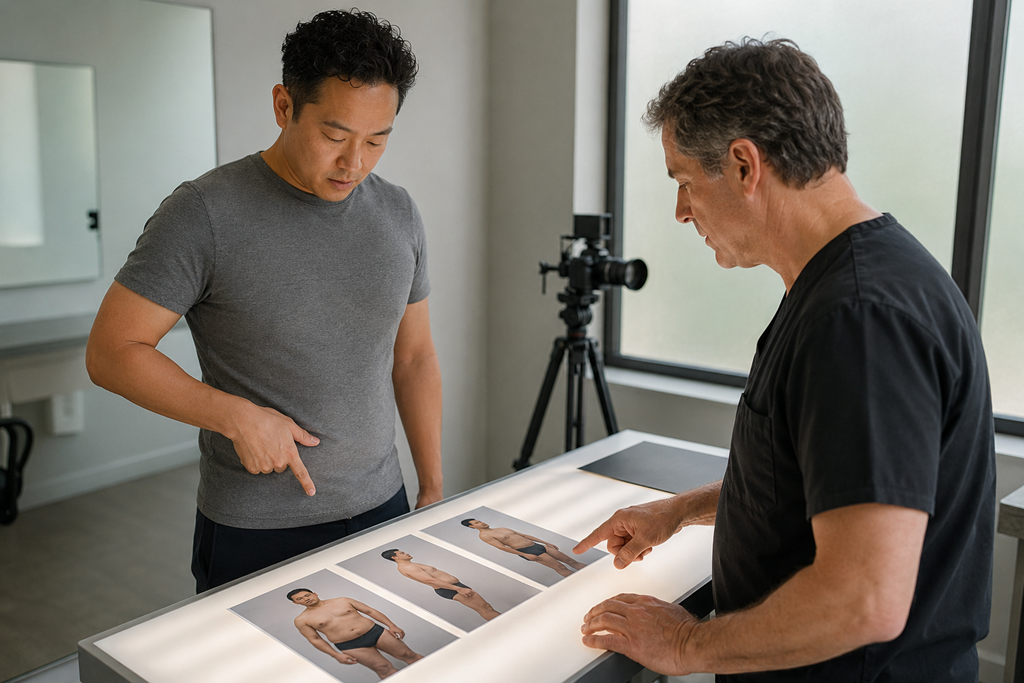
Thinking realistically about cosmetic surgery goals does not mean lowering your standards or talking yourself out of change. It means describing the improvement you hope to see in specific, very personal terms while leaving room for your anatomy, healing, safety, and the limits of any procedure. A useful goal is not “I want to look perfect.” It is “I want this feature to feel more balanced with the rest of me, and I want to understand what change may actually be possible.”
Many people begin thinking about cosmetic surgery with a general feeling rather than a clearly defined goal. They may feel that one feature looks out of proportion, clothing does not fit the way they would like, or their appearance no longer reflects how they see themselves.
That feeling can be genuine even when it is difficult to explain. The challenge is turning it into a goal that a qualified provider can evaluate and discuss honestly.
A Realistic Goal Is Specific Without Being Rigid
Broad goals such as “I want to look younger,” “I want a better body,” or “I want my face fixed” can mean very different things to different people. They may also place too much weight on the idea of one perfect result.
A more useful goal describes the particular change that matters to you.
You might want a certain feature to look less prominent, improve how one area relates to the surrounding features, or address a change that has continued to bother you despite giving yourself time to think about it.
Specific goals give a provider something meaningful to discuss. However, they should not be so rigid that only one exact measurement, shape, or appearance would feel acceptable.
Cosmetic surgery involves living tissue, individual anatomy, healing, and medical judgment. A consultation should help you understand which parts of your goal may be achievable, which parts may require compromise, and which expectations may need to be reconsidered.
Your Starting Point Matters More Than Someone Else’s Result
It is natural to notice another person’s appearance and think, “That is the result I want.” Reference images can help communicate preferences, but another person’s result is not a template that can simply be transferred to you.
Your bone structure, skin, tissue, proportions, previous procedures, health history, and natural asymmetries all contribute to what may be appropriate or possible.
This is why realistic goal-setting begins with your own starting point rather than someone else’s finished appearance.
For example, two people may request the same procedure but have different concerns, proportions, and definitions of improvement. Even when the procedure name is the same, the planning and likely result may not be.
A helpful consultation should keep bringing the conversation back to you: your features, your concern, your priorities, and the range of change that may be reasonable for your body.
Reference Photos Can Explain Preferences, Not Promise Results
Photos can still be useful when they are treated as communication tools rather than guarantees.
A reference image may help you show that you prefer a subtle change instead of a dramatic one. It may reveal that you value softer contours, a more natural transition, or better balance between two features.
The most useful question is not, “Can you make me look exactly like this?”
It is, “What do I like about this result, and how might that preference apply to my own features?”
A qualified surgeon should be willing to explain where a comparison is helpful and where it becomes misleading. Be cautious when a provider treats an outside photograph as a guaranteed preview of what you will look like.
A Procedure Name Does Not Describe the Entire Goal
People sometimes focus on choosing a procedure before they have clearly defined the concern they want evaluated.
They may decide that they need a facelift, liposuction, eyelid surgery, breast surgery, or another procedure because the name seems to match what they see. However, the same visible concern may have more than one possible explanation or approach.
The procedure you first research may not be the procedure a qualified provider recommends after evaluating you. In some cases, the provider may explain that surgery is unlikely to create the particular change you want.
That does not automatically mean the consultation was unsuccessful. Learning that a procedure does not match your goal can protect you from committing to an option based mainly on assumptions.
For Sacramento-area patients comparing cosmetic-surgery providers, it can be helpful to notice whether the conversation begins with your concern or immediately jumps to selling a named procedure.
Realistic Goals Include the Process, Not Just the Final Appearance
It is easy to picture the hoped-for result without thinking as carefully about what comes before it.
A realistic goal also leaves room for questions about recovery, scarring, temporary swelling, follow-up care, activity limitations, uncertainty, and the possibility that the change may be more modest than expected.
This does not mean assuming the worst. It means evaluating the complete experience rather than focusing only on an idealized final image.
A result that sounds appealing in isolation may feel different when you understand the recovery involved, the tradeoffs being accepted, or the limits of how much change can be made safely.
Only a qualified provider who evaluates you personally can discuss your candidacy, individual risks, recovery expectations, and likely range of outcomes.
Improvement and Perfection Are Not the Same Goal
Cosmetic surgery may be considered to improve a specific concern. It cannot remove every insecurity, create complete symmetry, stop aging, or guarantee that you will never notice another feature you would like to change.
The desire for improvement can be reasonable. The expectation of perfection is much harder to satisfy because perfection has no stable definition.
A person may initially focus on one feature, achieve a visible change, and then begin closely examining another area. This can happen when the underlying goal was not clearly defined or when the person expected surgery to change how they felt about their entire appearance.
A more realistic question is:
“What specific difference would feel meaningful to me, even if the result still looks natural and imperfect?”
That question creates room for a useful conversation about proportion, degree of change, and what satisfaction would realistically mean.
Pressure and Comparison Can Distort the Goal
Cosmetic-surgery decisions deserve enough time for the goal to feel like your own.
A decision may become less clear when it is heavily influenced by a partner’s opinion, social media, filtered images, an upcoming event, a promotional offer, or pressure to decide during the first consultation.
It may help to pause when the desired result keeps changing depending on who you are comparing yourself with or what image you recently viewed.
A stable goal usually remains understandable even when the comparison image, outside opinion, or sense of urgency is removed.
Providers should not shame you for your appearance, intensify ordinary insecurities, or suggest that additional procedures are necessary simply because another feature could also be changed. Thoughtful communication should help you evaluate your concern rather than expand it.
Questions That Can Clarify the Consultation
A few focused questions can reveal whether you and the provider are discussing the same goal:
- What part of my goal seems reasonably achievable?
- Which part may be limited by my anatomy or safety considerations?
- What degree of change would you consider subtle, moderate, or significant for me?
- What tradeoffs, scars, recovery demands, or uncertainties should I understand?
- How will we know whether my expectations and your proposed plan match?
Listen for answers that are specific to your situation. A provider who only speaks in general promises may not be giving you enough information to make an informed decision.
It is also reasonable to seek another qualified opinion when recommendations differ, the proposed plan feels unclear, or you feel pressured to commit before your questions have been answered.
A Good Goal Leaves Room for an Honest Answer
Thinking realistically about cosmetic surgery is not about assuming that your concern is unimportant. It is about defining the concern clearly enough to evaluate whether surgery is an appropriate way to address it.
The strongest goal is personal, specific, and open to professional input. It focuses on meaningful improvement rather than copying another person, achieving perfection, or forcing one predetermined result.
Before choosing a Sacramento-area cosmetic-surgery provider, pay attention to whether the consultation helps you understand both the possibilities and the limits. A thoughtful provider should help you refine the goal, not simply agree with everything you initially request.
The purpose of the consultation is not to guarantee a particular appearance. It is to help you decide whether the proposed change, recovery, tradeoffs, and likely range of results make sense for you.