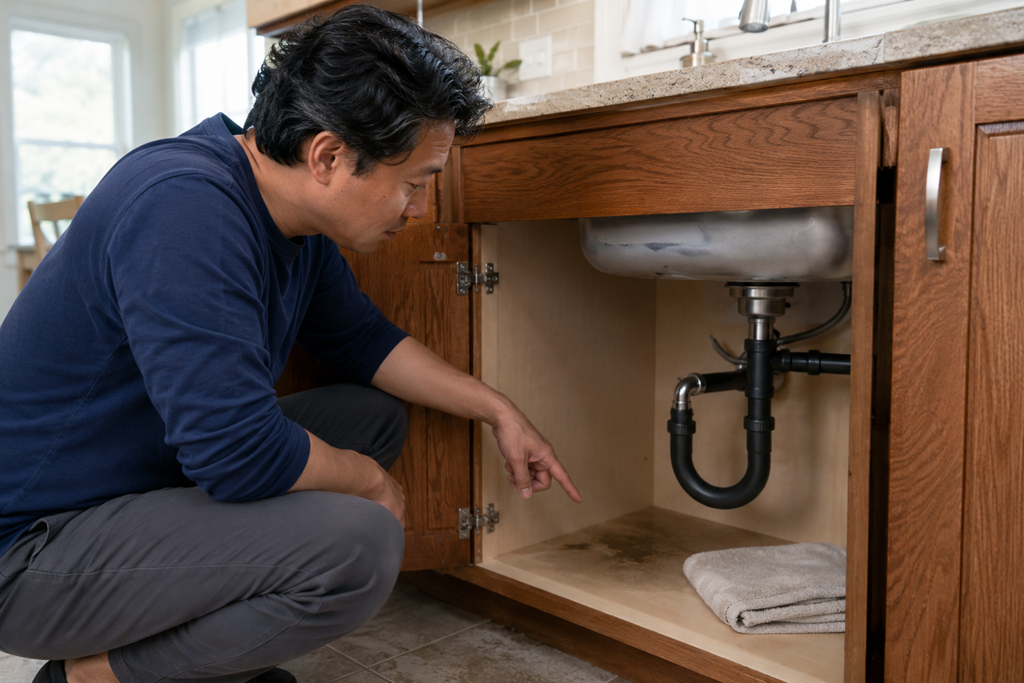
A plumbing leak does not always begin with water pouring across the floor. Many leaks first appear as small changes: a faint stain, a musty smell, a cabinet surface that feels damp, or the sound of water when no fixture is running.
These signs do not automatically prove that a pipe is leaking. However, noticing a pattern early can help you describe the problem clearly and decide whether a qualified plumber should evaluate it before the affected area becomes harder to inspect or repair.
Small changes often appear before visible water
An obvious drip is easy to recognize. A slow leak behind a wall, under a fixture, or near an appliance can be less noticeable.
The first clue may be something that simply looks, smells, or feels different than it normally does. You might notice that a baseboard has started separating from the wall, the floor near a toilet feels slightly different underfoot, or the inside of a sink cabinet has developed a damp odor.
These changes are easy to dismiss because each one may seem minor on its own. What matters is whether the condition is new, recurring, spreading, or appearing near plumbing.
Dampness where the area should normally be dry
Unexpected moisture is one of the clearest reasons to look more closely.
Common places where subtle dampness may appear include:
- Inside cabinets beneath sinks
- Around the base of a toilet
- Near a water heater or washing machine
- Along a wall shared with a shower or bathtub
- Beneath exposed plumbing connections
- On flooring near a refrigerator water line or dishwasher
A small amount of water may come from condensation, a recent spill, or normal household use. The concern becomes more meaningful when the moisture returns after being dried, appears without an obvious explanation, or continues spreading.
Rather than opening walls or taking fixtures apart, note where the moisture appears and when you notice it. That information can help a plumber narrow down the possible source.
Stains, bubbling paint, or changing surfaces
Water can affect building materials before a leak becomes directly visible.
A ceiling stain may begin as a faint ring. Paint may bubble or peel. Drywall may appear slightly swollen, and wood or laminate surfaces may begin to warp. Cabinet shelves can also darken, soften, or separate along their edges.
One small mark does not always indicate an active plumbing problem. An old stain may remain long after a previous issue was repaired. A stain that grows, changes color, feels damp, or returns after drying deserves more attention.
Comparing the area over time can be useful. A simple photograph can help show whether the mark is actually changing rather than relying on memory.
A musty odor may be an early clue
A persistent musty or damp smell can develop when moisture remains in a hidden area.
The odor may be strongest inside a cabinet, near a wall, around a bathroom fixture, or in a utility space. Cleaning the visible surface may temporarily reduce the smell without addressing moisture behind or beneath it.
A musty odor alone does not confirm a plumbing leak. Ventilation, humidity, wet towels, drains, and other household conditions can create similar smells. The clue becomes more significant when it is concentrated in one location and appears alongside staining, dampness, or surface changes.
Water sounds when fixtures are not being used
Dripping, trickling, hissing, or faint running-water sounds may be easier to hear when the home is quiet.
Some plumbing systems make normal sounds as water moves through pipes or appliances complete a cycle. The question is whether the sound is new, persistent, or occurring when toilets, faucets, showers, appliances, and irrigation systems are not in use.
Try to note where the sound seems loudest and whether it happens continuously or only at certain times. Avoid cutting into walls or attempting to reach concealed pipes. A plumber may need to evaluate the system with appropriate diagnostic tools.
Changes in water pressure or fixture performance
A noticeable change in water flow can sometimes accompany a plumbing problem.
A faucet may begin delivering less water than usual, pressure may fluctuate, or one fixture may behave differently from the others. These symptoms can have several causes, including fixture buildup, valve issues, supply conditions, or plumbing leaks.
The location of the change matters. Reduced flow at one faucet may point to a local fixture issue, while changes affecting several parts of the property may require a broader evaluation.
Instead of assuming that low pressure proves a leak, describe which fixtures are affected and when the change began.
Unexplained water use can support other warning signs
A higher-than-expected water bill or an unusual change in recorded water use may suggest that more water is being consumed somewhere on the property.
Usage can also change because of guests, outdoor watering, appliance use, household routines, or seasonal habits. For that reason, water use by itself does not identify the location or cause of a problem.
It becomes a stronger clue when it appears alongside recurring dampness, running-water sounds, stains, or changes in fixture performance.
A qualified plumber can help determine whether the pattern is related to a leak or another plumbing condition.
One sign does not always tell the whole story
Many early leak symptoms overlap with ordinary household issues.
Condensation can create moisture. Roof or window problems can cause stains. Drain odors may be mistaken for damp building materials. A loose fixture seal may produce water in the same area as a damaged pipe.
This is why diagnosing a plumbing leak from one visual clue can be difficult. The more useful approach is to look for a combination of signs:
- The condition is new
- It keeps returning
- It is getting larger or more noticeable
- It appears close to plumbing
- More than one warning sign is present
Recognizing a pattern can help you avoid both extremes: ignoring a developing issue or assuming that every mark requires a major repair.
What to observe before contacting a plumber
You do not need to diagnose the leak yourself before requesting an evaluation.
It may help to note:
- Where the sign first appeared
- Whether the area feels damp or only looks stained
- How often the condition returns
- Which fixtures or appliances are nearby
- Whether water pressure or usage has changed
- Whether the affected area has grown
- Whether the issue appears during or after using a particular fixture
Photographs can also provide a useful record, especially when moisture appears intermittently.
Avoid covering the area, painting over stains, or making invasive changes before the appointment when possible. Leaving the evidence visible may make the source easier to evaluate.
A clear evaluation should explain more than the visible symptom
When speaking with a Sacramento-area plumber, ask how the suspected source will be identified before agreeing to a larger repair.
Useful questions may include:
- What are the most likely causes of this sign?
- How will you determine where the water is coming from?
- Does the estimate cover diagnosis, repair, and testing afterward?
- Could accessing the leak affect walls, flooring, cabinets, or other finishes?
- Who would be responsible for restoring any opened surfaces?
- Are there multiple repair options worth comparing?
A plumber may not be able to provide a final answer until the area is inspected. That is different from giving vague explanations or recommending extensive work without clearly connecting it to the evidence.
Early attention can make the decision easier
The earliest sign of a plumbing leak is often not a dramatic puddle. It is a small, unexplained change that continues to return.
Watch for recurring dampness, new stains, musty odors, altered surfaces, unusual water sounds, pressure changes, and unexplained water use. No single clue confirms the cause, but several related signs can make professional evaluation worth discussing.
The goal is not to diagnose concealed plumbing on your own. It is to notice when something has changed, document what you are seeing, and give a qualified local plumber enough information to evaluate the problem clearly.