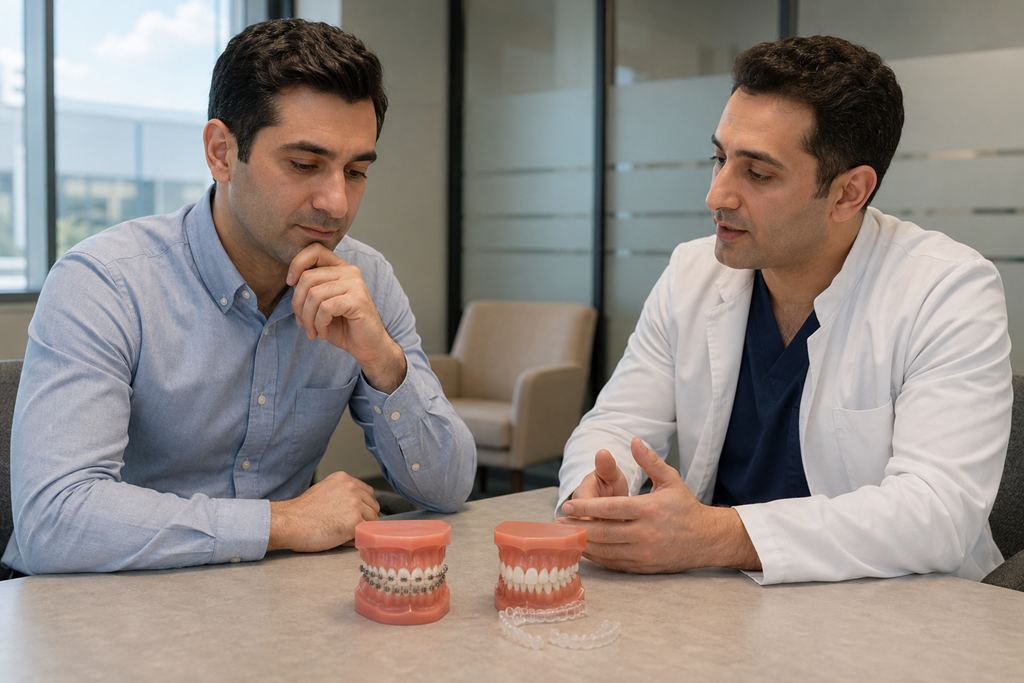
Braces and clear aligners can both help move teeth, but the better fit often depends on more than appearance. The right option may be shaped by the complexity of the tooth movement needed, how consistently the appliance must be worn, comfort with maintenance, lifestyle habits, budget expectations, and what an orthodontic provider recommends after evaluating your mouth.
For many Sacramento families and adult patients, the confusing part is not simply choosing between “metal” and “clear.” It is understanding why one option may be more practical, predictable, or manageable for a specific situation.
This article is not a substitute for an orthodontic evaluation. Instead, it can help you understand the kinds of questions worth thinking about before a consultation so you can have a clearer conversation with a qualified provider.
The Choice Is Usually About Fit, Not Just Preference
It is easy to think of braces and aligners as two versions of the same treatment. In everyday conversation, they may get grouped together because both are used to improve tooth position and bite alignment. But they work differently, and that difference can matter.
Braces are fixed to the teeth. Because they stay in place, they can be useful when treatment requires steady control or when a patient may not want the responsibility of removing and replacing appliances throughout the day.
Aligners are removable trays. They can be appealing because they are less noticeable and can be taken out for meals and brushing. But that flexibility also means the patient must be consistent about wearing them as directed.
A helpful way to frame the decision is this: braces may offer more built-in structure, while aligners may require more day-to-day follow-through from the patient.
Why This Can Feel Confusing Before A Consultation
Many people start with a simple question: “Can I use aligners instead of braces?” That question makes sense, especially if someone is thinking about appearance, comfort, work, school, photos, or social situations.
But the answer often depends on details that are difficult to judge from the outside. Crowding, spacing, bite issues, tooth rotation, jaw relationship, previous dental work, and growth stage may all affect what an orthodontic provider recommends.
This is why online examples can be misleading. A friend’s aligner experience, a before-and-after photo, or a short advertisement may not reflect your own situation. Two people can have smiles that look similar in casual photos but require very different treatment planning.
For Sacramento-area patients comparing orthodontic options, the goal is not to guess the answer before the appointment. The goal is to understand what may influence the recommendation so the consultation feels less rushed and easier to follow.
Braces May Make Sense When More Built-In Control Is Needed
Braces may be discussed when a provider wants a fixed appliance that stays active all the time. Since the brackets and wires remain in place, the treatment does not depend on remembering to put trays back in after meals or keeping track of wear time.
That does not mean braces are always better. It means they may offer a type of structure that fits certain treatment needs or patient habits.
Braces may be worth asking about when:
- The tooth movement seems more complex
- A bite issue needs careful correction
- The patient is younger and may struggle with removable trays
- Consistency could be a concern
- The provider wants more direct control over movement
There are also practical realities. Braces may affect food choices, brushing routines, and comfort during adjustments. Those details matter because orthodontic treatment is not only about the final result. It is also about what the patient can realistically manage during the process.
Aligners May Fit Better When Removable Treatment Is Realistic
Clear aligners may appeal to adults, teens, and families who want a less visible option. Being able to remove trays for eating and brushing can feel simpler in some ways, especially for people who are comfortable following routines.
But aligners are not passive. Their success depends heavily on whether the patient wears them as instructed. A removable option can become less effective if trays are misplaced, worn inconsistently, or removed too often.
Aligners may be worth discussing when:
- The orthodontic issue is appropriate for tray-based treatment
- The patient can follow daily wear instructions
- Appearance during treatment is a major concern
- The patient prefers removing appliances for meals or brushing
- The provider believes aligners can move the teeth predictably
The important point is that aligners are not just a cosmetic convenience. They are a treatment system that requires responsibility. For the right person and the right case, that flexibility can be a good fit. For another person, it may create avoidable frustration.
Lifestyle Matters More Than Many Patients Expect
A treatment option can look ideal in theory and still be difficult in daily life. That is why lifestyle should be part of the conversation.
For a teen, the question may be whether they will remember to wear aligners at school, keep them safe during lunch, and follow instructions without constant reminders. For an adult, the question may be whether frequent meetings, travel, meals away from home, or public-facing work will make one option easier to manage than another.
Braces come with their own routine. Patients may need to be more careful with certain foods and spend more time cleaning around brackets and wires. Aligners require tray care, consistent wear, and a habit of putting them back in after eating or brushing.
Neither path is effortless. The better question is often, “Which set of responsibilities fits my real life better?”
Cost And Timing Should Be Discussed Clearly
Cost and treatment length can vary based on the situation, the provider, and the treatment plan. It is better not to assume that one option is automatically cheaper, faster, or simpler.
A clear consultation should help you understand what is included, what may affect the timeline, how follow-up visits work, and whether extra steps may be needed. If you are comparing orthodontic providers in the Sacramento area, similar-sounding options may not include the same level of monitoring, planning, or follow-up.
This is where vague answers can create confusion. A patient may hear “braces” or “aligners” and focus only on the appliance, when the larger decision is really about the full treatment plan.
Questions That Can Make The Conversation Clearer
You do not need to arrive with a long checklist. A few focused questions can help you understand why a provider recommends one option over another.
Consider asking:
- What makes braces, aligners, or both possible in my situation?
- Are there tooth movements or bite issues that make one option more predictable?
- What would I need to do every day for this option to work well?
- How would missed wear time, broken brackets, or lost trays affect the plan?
- What is included in the quoted treatment fee?
- How will progress be checked during treatment?
- Are there reasons you would not recommend my preferred option?
These questions are not about challenging the provider. They are about making sure the recommendation is explained in plain language.
A Common Misunderstanding About “Easier” Treatment
Many patients hope one option will be clearly easier. In reality, each option has tradeoffs.
Braces may be easier because they stay in place, but they may require more care around food choices and cleaning. Aligners may feel easier because they are removable, but they require consistent wear and responsibility.
Another misunderstanding is that appearance should be the only deciding factor. Appearance matters, especially for adults and teens who feel self-conscious. But treatment fit, predictability, daily habits, and provider guidance should also be part of the decision.
A better question is not, “Which option is easiest?” It is, “Which option is most realistic for my orthodontic needs and my daily routine?”
Clear Communication Is Part Of The Decision
When choosing orthodontic care, the explanation you receive matters. A provider should be able to describe why one option may fit your situation, what the tradeoffs are, and what responsibilities come with each path.
If the conversation feels unclear, it is reasonable to ask for the recommendation to be explained another way. You can ask what the provider sees in your bite, spacing, crowding, or treatment goals that shapes the plan.
For Sacramento-area patients, this can be especially helpful when comparing consultations. You are not only comparing appliances. You are comparing how well each provider explains the plan, answers questions, and helps you understand what to expect.
The Takeaway Before Choosing Braces Or Aligners
Braces and aligners are both common orthodontic options, but they are not interchangeable for every person. Braces may offer more fixed structure, while aligners may offer more flexibility with more responsibility. The better fit depends on your orthodontic needs, daily habits, treatment goals, and the guidance of a qualified provider.
Before committing, focus on understanding why an option is being recommended, what it requires from you, and how the provider will monitor progress. That kind of conversation can help you make a more informed decision before starting orthodontic care.