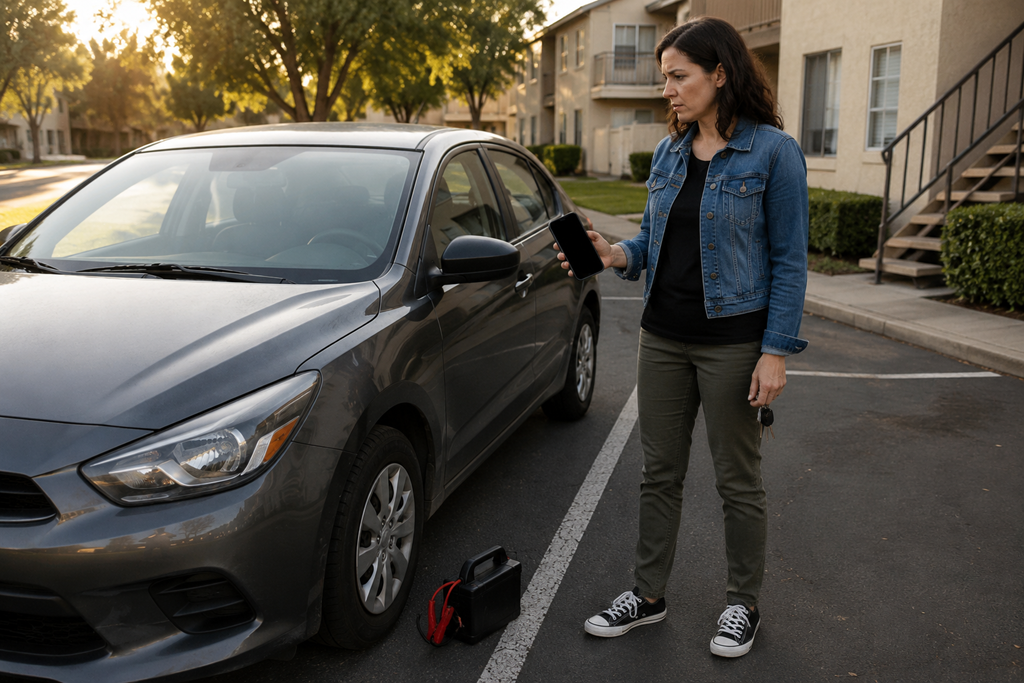
A car that will not start may need more than a battery jump because the battery is only one part of the starting system. A jump can help when the battery is simply too weak to power the car, but it may not solve problems involving the starter, alternator, ignition system, fuel delivery, electrical connections, or deeper diagnostic issues.
For many Sacramento drivers, the moment feels simple at first. The car was fine yesterday. The key turns, the button is pressed, or the dashboard lights flicker, but the engine will not start. It is easy to assume the battery is dead, especially if the car has been sitting, the weather has been hot, or the lights seem dim.
A battery jump may be the right first thought. But when the car still will not start, starts only briefly, or keeps having the same problem, the issue may deserve a closer look from a qualified mobile mechanic.
A No-Start Problem Can Look Like A Battery Issue At First
Many starting problems feel similar from the driver’s seat. The car may click, hesitate, crank slowly, make no sound at all, or show lights on the dashboard without actually starting. Because weak batteries are common, many people naturally focus there first.
The confusing part is that other problems can create the same experience. A loose connection, worn starter, charging problem, or electrical fault may all leave the driver thinking, “Maybe it just needs a jump.”
That is why the result of the jump matters. If the car starts normally and continues to work afterward, the issue may have been a low battery. If it does not start, needs repeated jumps, or dies again soon after, the battery may not be the whole story.
The Jump Is A Clue, Not A Complete Diagnosis
A battery jump is often treated like an answer, but it is really more like a test. It may tell you whether extra power helps the vehicle start, but it does not explain why the battery was weak or whether another part is failing.
For example, a car may start with a jump but still have a charging issue. In that case, the battery may lose power again because it is not being replenished properly while the car runs. Another car may not respond to a jump at all because the problem is not mainly battery power.
This is where a mobile mechanic can be helpful. Instead of guessing from one symptom, they can evaluate the starting and charging system more broadly and help explain what the signs point toward.
Repeated Jumps Usually Mean Something Needs Attention
One of the most common misunderstandings is thinking that repeated battery jumps are just part of owning an older car. They may happen once in a while, but they should not become routine.
If a vehicle needs a jump again and again, something is causing that power loss or starting failure. It may be an aging battery, but it could also involve a parasitic drain, corroded terminals, alternator trouble, or a part that is placing extra demand on the system.
For Sacramento residents who depend on their vehicle for work, school drop-offs, errands, medical appointments, or business use, repeated no-start problems can quickly become more than an inconvenience. The practical question is not only “Can I get it started today?” but “Will this happen again when I need the car most?”
Heat, Short Trips, And Sitting Can Add Confusion
Sacramento-area drivers may notice no-start issues after periods of hot weather, short local trips, or time spent parked. These conditions can make a weak battery more noticeable, but they do not automatically prove that the battery is the only problem.
Heat can be hard on batteries and electrical components. Short trips may not give the charging system much time to restore power. A vehicle that sits unused may slowly lose charge. These situations can all point toward the battery, but they can also expose issues that were already developing.
That is why it helps to describe the pattern, not just the final failure. When the problem happens, how often it happens, whether the engine cranks, and what changed before the no-start moment can all help a mobile mechanic understand where to begin.
A New Battery May Not Fix Every No-Start Problem
Buying a new battery can feel like the cleanest solution, especially when the car will not start at the worst possible time. Sometimes that is exactly what the vehicle needs. Other times, replacing the battery without checking the rest of the system can lead to the same frustration later.
A battery can test weak because it is old, but it can also be drained by another problem. If the alternator is not charging properly, the new battery may lose power too. If the starter is failing, the battery may be blamed even when it is doing its job. If a cable or connection is loose or corroded, power may not be reaching the right place consistently.
The better question is not simply, “Do I need a battery?” It is, “What is preventing the car from starting reliably?”
What To Tell A Mobile Mechanic Before The Appointment
A mobile mechanic does not need a perfect explanation from you. But a few practical details can make the service visit more productive.
Helpful information may include whether the car makes a clicking sound, whether the engine cranks, whether lights come on, whether the vehicle recently needed a jump, and whether the problem happens after sitting overnight or after short trips.
It also helps to mention anything that changed recently. This might include a battery replacement, a long period without driving, unusual dashboard behavior, dim headlights, slow cranking, or the car starting once and then failing again.
You are not expected to diagnose the issue yourself. The goal is to give the mechanic a clearer starting point so the appointment is less about guessing and more about narrowing down the cause.
Questions Worth Asking Before Approving A Repair
When a car will not start, it is easy to feel pressured to say yes to the first explanation that sounds plausible. A few simple questions can help you better understand the recommendation.
You might ask what was checked before the repair was suggested, whether the issue appears to be the battery alone or part of the broader starting and charging system, and what signs point to the recommended repair.
You can also ask whether there are related parts that may need attention soon, whether the car is likely to start reliably after the repair, and what would be checked if the same symptom returns.
These questions are not about challenging the mechanic. They are about making the decision clearer before you approve work, especially when the problem could involve more than one possible cause.
Clear Communication Matters As Much As The Repair Itself
A good mobile mechanic visit should leave you with more than a running car. It should also leave you with a clearer understanding of what was found, what was ruled out, and what the recommended next step means.
Be cautious if the explanation feels vague, if every answer is reduced to “it is probably the battery,” or if you are pushed toward a repair without any discussion of the symptoms. Some car problems are difficult to confirm immediately, but the communication should still make sense.
For local service decisions, clear explanations matter. They help Sacramento drivers compare options, understand repair priorities, and avoid paying for work that does not address the real cause.
The Real Issue Is Reliability, Not Just Starting Once
A successful jump can be a relief, but it does not always mean the problem is solved. The more important question is whether the vehicle will start again later without help.
If the car will not start, needs repeated jumps, starts only temporarily, or shows inconsistent symptoms, the situation may call for more than a quick boost. A mobile mechanic can help evaluate whether the issue is the battery, the charging system, the starter, a connection problem, or another cause.
The takeaway is simple: a jump may get you moving, but it should not be treated as a full diagnosis. When the pattern does not make sense, asking better questions before scheduling or approving a repair can help you make a more informed local service decision.