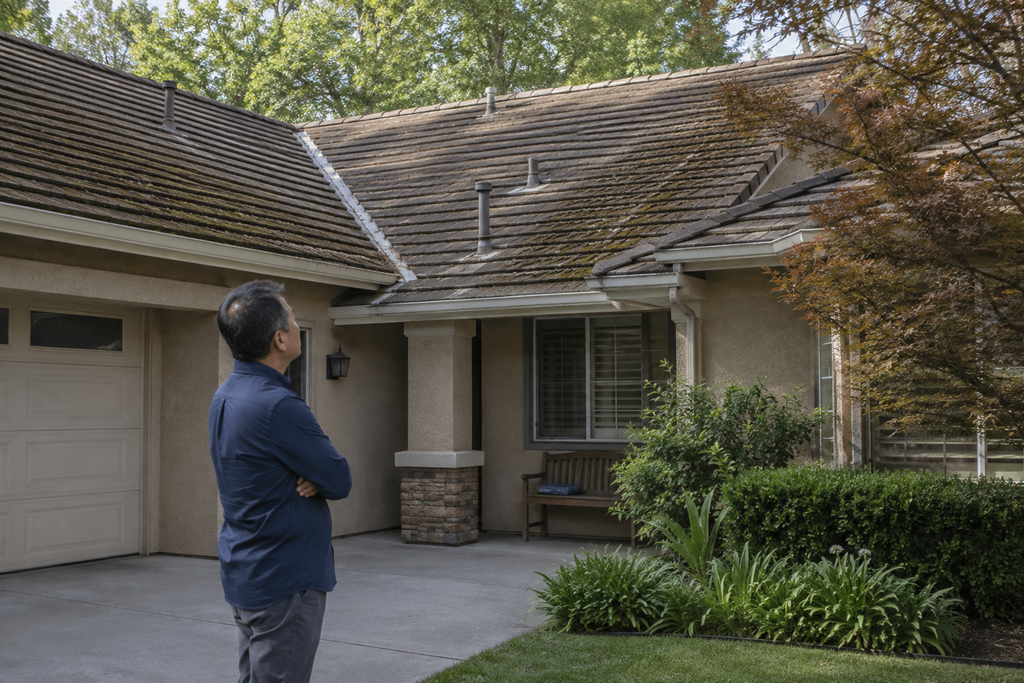
A roof cleaning company may not be the right fit if the estimate feels rushed, the proposed scope is vague, or the company seems more interested in booking the job than understanding your roof. Sacramento-area homeowners do not need to diagnose roofing conditions themselves, but they should be able to understand what the company plans to clean, what it will avoid, how it describes expected results, and what questions remain before agreeing to the service.
Some warning signs are obvious, such as strong pressure to schedule before your questions are answered. Others are subtler. You might receive a price but still be unclear about which roof areas were evaluated, what the service includes, how nearby property features factor into the plan, or what the company believes the cleaning can realistically accomplish.
A single concern does not automatically mean a company is a poor choice. What matters more is whether a pattern develops that makes it difficult for you to understand the proposed work and make an informed comparison.
The Process Should Make Sense Before You Commit
A roof cleaning estimate should leave you with more understanding than you had before the company arrived.
That does not mean you need a technical lesson about roof-cleaning equipment or methods. It means the company should be able to explain the proposed service in practical terms: what it observed, what areas it expects to address, whether anything falls outside the quoted scope, and what you should reasonably expect afterward.
Be cautious when a conversation moves from a quick look at the property directly into scheduling without much discussion of the actual roof.
Roofs are not simply interchangeable surfaces. A property may have multiple roof sections, different levels of exposure, gutters, roof penetrations, nearby landscaping, limited access areas, or other conditions that affect how a company thinks about the job.
A provider does not need to turn every estimate into a lengthy inspection. But the proposed service should feel connected to the property in front of you.
A Vague Scope Can Make a Reasonable Price Hard to Evaluate
One of the clearest warning signs is an estimate that gives you a number without helping you understand what that number covers.
For example, you may still be wondering whether the quoted service applies to the entire roof or only certain areas. You might not know whether cleanup is included, whether nearby surfaces or landscaping need consideration, or whether there are circumstances that could change the proposed scope.
These questions matter even when the price itself seems reasonable.
A lower estimate is not necessarily a problem, and a more expensive estimate is not automatically more complete. The difficulty comes when you cannot tell what you are comparing.
When two Sacramento-area roof cleaning companies describe the same job differently, the details behind those descriptions can be more useful than looking at the final price alone.
A One-Size-Fits-All Explanation Deserves a Closer Look
Another reason to keep comparing providers is a company that seems to give essentially the same explanation for every property.
Homeowners should not be expected to determine which cleaning process is appropriate for their roofing material or condition. That evaluation belongs with the professional.
You can, however, pay attention to whether the company appears interested in the specific property before recommending its service.
A useful explanation connects the proposed work to what the company actually observed. A less reassuring explanation relies heavily on broad claims about what the company “always” does while giving little attention to your roof.
This distinction can be especially helpful when one provider asks thoughtful questions and another seems ready to quote the job before learning much about it.
Pressure Can Make Unanswered Questions Easier to Ignore
A company may have legitimate scheduling considerations, but those considerations should not prevent you from understanding what you are agreeing to.
Be careful when normal questions are repeatedly redirected toward booking the appointment, approving the estimate, or making a decision.
The concern is not that a company invited you to schedule. That is a normal part of a service conversation.
The concern is when scheduling starts taking priority over explaining the service.
If you are still asking what is included, what areas will be addressed, or what results are realistic, you should have room to get those answers before committing.
A provider that fits your needs should generally be able to let the service make sense before asking you to move forward.
Good Communication Includes Talking About Limits
Promises that sound unusually absolute can also be worth examining more carefully.
Roof cleaning can be discussed in terms of goals and expected appearance, but a thoughtful provider should also be comfortable explaining limitations. Existing roof condition, staining, aging, access, and other property-specific factors can influence what the completed service may look like.
That makes statements suggesting a guaranteed visual result worth asking about rather than simply accepting at face value.
A useful conversation does not require pessimism. It simply distinguishes between what the company intends to do and what it can responsibly predict before the work begins.
Clear expectations can be more valuable than an impressive promise.
The Company Should Be Willing to Explain What Happens if Conditions Differ
An estimate is based on what can reasonably be evaluated beforehand. Sometimes a provider may discover that a situation differs from what was initially expected.
The important question is how the company communicates about that possibility.
You should not need to anticipate every scenario yourself. Instead, listen for whether the provider can explain how unexpected conditions, changes in scope, or additional concerns would be handled before additional work is performed or additional charges are discussed.
An unwillingness to talk about possible changes can leave a homeowner uncertain about where the original agreement ends.
A straightforward explanation of boundaries helps you know what you are actually approving.
Pay Attention to How Your Questions Are Treated
The tone of the conversation can tell you something too.
You do not need a provider who agrees with every assumption you make. In fact, a professional may need to correct misunderstandings or explain why a request is not appropriate.
What matters is whether reasonable questions receive useful answers.
Repeatedly dismissing questions, responding vaguely, changing the subject, or making you feel as though basic clarification is an inconvenience can be a sign that the working relationship may not be a comfortable fit.
Roof cleaning is a service you are hiring someone else to perform. You should be able to understand the basic plan without feeling that you are interfering simply by asking about it.
Questions That Can Reveal Whether the Fit Is Right
You do not need an exhaustive interview. A few direct questions can tell you a great deal about how clearly a company approaches the job:
- What did you notice when evaluating my roof?
- What roof areas are included in this estimate, and is anything excluded?
- Are there property conditions that could change the proposed scope?
- How do you account for nearby gutters, exterior surfaces, landscaping, or other property features?
- What should I realistically expect the roof to look like after the service?
- If something different is discovered, how would you discuss changes with me before proceeding?
The usefulness of these questions is not just in the answers themselves. Notice whether the provider can respond specifically and comfortably rather than falling back on vague assurances.
One Warning Sign Matters Less Than the Overall Pattern
It is easy to turn a red-flag article into a search for one disqualifying mistake. That is usually not the most useful way to approach the decision.
A short estimate is not automatically a bad estimate. A busy company is not necessarily applying pressure. A provider who cannot answer an unexpected question immediately may simply need to verify something before responding.
Look instead at the overall pattern.
Does the company seem to understand the property? Can you tell what you are being quoted? Are limitations explained realistically? Can you ask questions without being pushed past them? Do you understand what would happen if the scope needs to change?
When those pieces are consistently missing, comparing another roof cleaning company may give you a useful point of reference.
For Sacramento-area homeowners, the goal is not to find a company that delivers the most persuasive presentation. It is to choose a provider whose proposed service is understandable, property-specific enough to evaluate, and comfortable to approve without unanswered questions getting pushed aside.