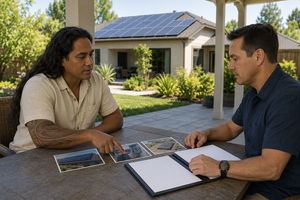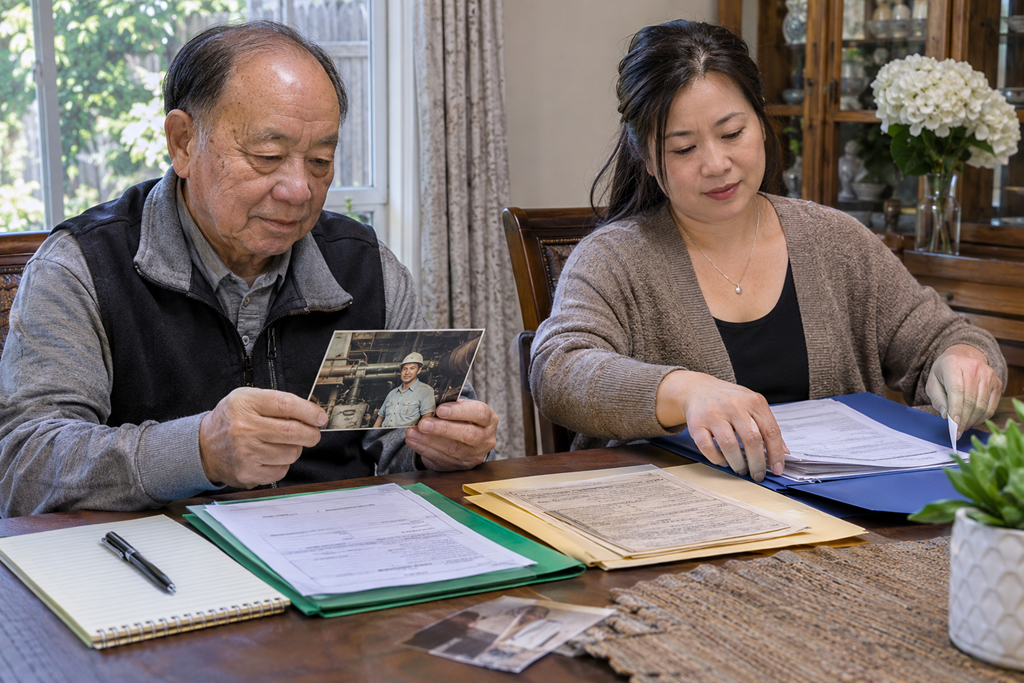
Preparing for a mesothelioma legal consultation usually begins with gathering a few basic records, memories, and questions—not assembling a complete legal case. Sacramento-area families may find it helpful to collect available medical information, outline past employment and possible asbestos exposure, identify documents already in their possession, and decide who should participate in the conversation. The goal is to give a qualified attorney a useful starting point while recognizing that older records, exact dates, and exposure details may still be uncertain.
A mesothelioma diagnosis can bring several responsibilities into focus at once. Families may be coordinating medical appointments, helping with everyday needs, reviewing financial paperwork, and considering whether a legal consultation would provide useful information. Gathering records can become another responsibility, especially when the events a lawyer may want to discuss happened many years earlier.
The important distinction is between preparing for a conversation and proving a legal claim. Families generally do not need to investigate everything themselves before contacting a lawyer. A focused collection of available information can help the attorney understand the situation, identify gaps, and explain which additional details may deserve attention.
This guide explains what families may want to gather, how to organize uncertain information, what does not need to be complete, and how to make the initial consultation more productive.
Start with the information that is easiest to confirm
The first step is to identify a small group of basic facts that can help the attorney understand whose situation is being discussed and why the family is seeking guidance.
These facts may include:
- The name of the person diagnosed with mesothelioma.
- The approximate date of diagnosis.
- The healthcare provider or medical facility involved in the diagnosis.
- The general locations where the individual has lived or worked.
- Whether the individual has previously spoken with an attorney about asbestos exposure.
- The main questions the individual or family wants to discuss.
There is no need to turn this into a lengthy personal history immediately. A simple written summary can help everyone begin with the same understanding.
Separate confirmed facts from information that still needs checking
Not every detail will be equally certain.
For example, a family may know the diagnosis date from medical paperwork but only remember that a particular job took place during a certain decade. They may remember a workplace clearly while being unsure of the employer's legal name.
It helps to distinguish among three categories:
- Confirmed information: Details supported by records or remembered with reasonable certainty.
- Approximate information: Dates, locations, or circumstances recalled generally but not precisely.
- Unresolved information: Questions the family cannot currently answer.
These distinctions allow the attorney to understand the available information without mistaking estimates for verified facts.
Avoid filling gaps with assumptions simply to make the summary appear complete. An honest description of uncertainty is more useful than an inaccurate answer.
Gather available medical records without trying to interpret them
Medical information may help establish the background of the consultation. Families can begin with records already available rather than immediately requesting every document from every healthcare provider.
Potentially useful materials include:
- A diagnostic report or medical summary identifying mesothelioma.
- Relevant pathology or biopsy reports, if available.
- Imaging reports that were part of the diagnostic evaluation.
- Appointment summaries or specialist notes.
- A list of healthcare providers and facilities involved.
- Basic information about treatment discussions or care already received.
Some families may have access to these records through a patient portal. Others may only have printed appointment paperwork or a small collection of documents.
Either situation can provide a starting point.
Medical records do not need to tell the entire story
Families should not assume they must understand the medical terminology or determine which findings matter legally.
For example, a pathology report may contain technical language that is difficult to interpret. The family can identify the document and ask whether the lawyer wants a copy, without attempting to explain its medical conclusions.
A qualified healthcare professional remains the appropriate person to answer medical questions about diagnosis, treatment, prognosis, or care.
The attorney can explain which medical documentation may be relevant to the legal consultation and whether additional records should be requested.
Ask before collecting extensive medical histories
A legal office may eventually need records beyond the initial diagnosis information. However, gathering a large collection before the first conversation may create unnecessary work.
Consider asking the firm:
- Which medical documents would be most useful for the initial review?
- Is a diagnosis summary sufficient for the first discussion?
- Should additional records be requested now or after the consultation?
- How should sensitive medical information be transmitted?
The purpose is to gather enough information to begin a meaningful conversation, not to make the family responsible for evaluating medical evidence.
Reconstruct employment history in broad stages
Employment history may be an important subject during a mesothelioma legal consultation because an attorney may need to understand where the individual worked, what duties they performed, and whether certain environments could be relevant to possible asbestos exposure.
For Sacramento-area families, this history may include workplaces inside and outside California.
Rather than attempting to reconstruct an entire career in perfect chronological order, start with the major periods of employment.
For additional guidance on reconstructing older employment details, see our article on organizing work history before a mesothelioma consultation.
Record workplaces, locations, and approximate dates
For each remembered job, note whatever information is available:
- Employer or business name.
- City, state, or general work location.
- Approximate years of employment.
- Job title or position.
- Regular job duties.
- Types of buildings, equipment, or materials encountered.
- Whether work occurred at one location or across multiple job sites.
A person may remember working at a particular industrial facility, construction site, repair shop, or maintenance operation without remembering the exact employer name.
That memory can be recorded as an approximation.
Describe actual duties, not just job titles
Job titles do not always communicate what a person did.
For example, someone described as a maintenance worker may have repaired equipment, assisted other trades, cleaned work areas, or worked in buildings undergoing renovation.
These activities can be more descriptive than the job title alone.
Families can write short explanations of ordinary tasks rather than trying to decide which activities were legally significant.
An attorney familiar with asbestos-related matters can determine what additional questions may be relevant.
Consider records already within reach
Documents that may help reconstruct employment history include:
- Old resumes or employment applications.
- Pay statements or tax records.
- Pension and retirement documents.
- Union membership or employment records.
- Employment correspondence.
- Old workplace photographs.
- Personal calendars or address records.
Not everyone will have these materials, especially when employment occurred decades earlier.
Families should not interpret missing employment records as proof that a consultation would be unproductive.
An initial conversation can help determine whether particular records are worth locating and what assistance the attorney's office may provide.
Note possible asbestos exposure circumstances without drawing conclusions
A family may know that mesothelioma has been diagnosed but remain uncertain about when or where asbestos exposure may have occurred.
That uncertainty can be one of the most difficult parts of preparing for a consultation.
Asbestos-related questions may involve workplaces, military service, building materials, products, or other historical environments. The relevance of any particular circumstance depends on facts that a qualified professional must evaluate.
Our guide to creating a timeline of possible asbestos exposure explains how to organize remembered places, activities, and approximate dates without treating uncertain details as confirmed facts.
Write down remembered environments and activities
It may help to record situations that the individual remembers clearly, such as:
- Working near insulation, piping, boilers, or industrial equipment.
- Performing repair, maintenance, or renovation work.
- Handling or working near automotive or mechanical components.
- Working around other trades or contractors.
- Participating in military service involving specific duties or equipment.
- Recalling particular products, manufacturers, or materials used regularly.
These are subjects to discuss, not evidence that asbestos was necessarily present.
For example, remembering work around insulation does not establish that the insulation contained asbestos. Likewise, recalling an older building does not identify a particular exposure.
The attorney can help distinguish potentially relevant facts from assumptions.
Do not overlook non-workplace information
Depending on the circumstances, a lawyer may ask about experiences outside paid employment.
These might include residential renovation history, household contact with a person's work clothing, or other environments the individual remembers.
Families can mention such information without attempting to determine whether an exposure occurred.
A useful approach is to record the activity, location, approximate time, and reason it comes to mind.
Avoid investigating suspected materials independently
Preparing for legal consultation does not require handling old insulation, disturbing building materials, collecting dust, or obtaining physical samples.
Suspected asbestos-containing materials should not be disturbed as part of gathering legal information.
If a family has questions about potentially hazardous materials in a property, an appropriately qualified asbestos professional can evaluate the situation.
For legal preparation, existing photographs, records, and personal recollections may be more appropriate starting points.
Include military service and other historical records when relevant
Military service may be an important part of an individual's background, particularly when duties involved ships, vehicles, machinery, facilities, or maintenance environments.
Families can begin by identifying:
- The branch of service.
- Approximate years served.
- Duty stations or assignments that are remembered.
- Military occupational roles or regular responsibilities.
- Service records or discharge documents already available.
The individual does not need to determine whether a particular assignment involved asbestos exposure.
That is a separate question for professional review.
Similarly, families may have records of apprenticeships, trade training, seasonal work, temporary assignments, or independent contracting that could help explain the individual's broader history.
These records can be included when readily available without requiring an exhaustive search.
When older records are missing
Some workplaces may have closed. Job titles may have changed. Family members may remember a location better than the organization that operated there.
A person might also remember working alongside a particular trade without recalling the names of the companies involved.
These gaps are worth identifying, but they should not become reasons to postpone an initial conversation indefinitely.
A qualified attorney can explain which missing details may matter and whether further record research would be appropriate.
Identify people who may help clarify the history
Families sometimes have useful information distributed among several people.
A spouse may remember where the individual worked during a particular period. An adult child may have helped organize medical records. A sibling may remember an earlier residence or employer.
Former coworkers or other acquaintances may also be associated with parts of the person's history.
Before contacting people to ask detailed questions, it may be enough to write down their names and why they might remember a relevant period.
Consider noting:
- The person's relationship to the individual.
- The workplace, residence, or time period they may remember.
- The type of information they might be able to clarify.
- Whether the individual would be comfortable involving them.
This is a preparation step, not an instruction to conduct witness interviews.
The lawyer can explain whether contacting particular people would be useful and how any information should be handled.
Keep the diagnosed individual's preferences central
Family support can make organizing information easier, but the person seeking legal guidance should remain involved in decisions about their own information whenever possible.
Before the consultation, discuss whether they want a spouse, adult child, friend, or caregiver present.
Also consider who should receive communications from the law office.
Permission to share confidential information should not be assumed merely because someone is a family member.
The attorney's office can explain what authorization may be necessary.
Organize financial and household information selectively
Financial concerns may be part of the reason a family is considering legal advice, but the initial consultation does not necessarily require an extensive financial inventory.
It may be useful to identify categories of information that could become relevant, such as:
- Medical bills or insurance correspondence already received.
- Records of travel or other expenses connected with medical appointments.
- Employment or income information affected by the individual's circumstances.
- Documents relating to disability or other benefits, if applicable.
- Previous correspondence involving a potential asbestos-related claim.
The legal relevance of these materials varies by situation.
Do not assume that every expense is recoverable, every financial loss is legally compensable, or a particular record establishes entitlement to compensation.
Those questions require individual legal evaluation.
Keep original documents intact
If the family has relevant older correspondence, employment records, product materials, photographs, or other documents, preserving the original information can be useful.
Avoid writing on originals, altering photographs, or discarding records because they appear unimportant.
Digital copies can be organized for easier reference, while original materials remain stored appropriately.
Ask the attorney whether original documents need to be preserved in a particular way.
Build a simple consultation folder instead of a complete case file
Once available information has been identified, the next task is organizing it so the family can find what matters during the conversation.
A modest folder system can work well.
Folder or section | What to include |
|---|---|
Medical background | Diagnosis summary, relevant reports, healthcare provider information |
Work and military history | Employer names, job locations, approximate dates, service details |
Possible exposure history | Remembered materials, workplaces, products, activities, and locations |
Supporting records | Old photographs, employment documents, correspondence, available financial records |
Family notes | People who may recall relevant details and their relationship to the history |
Consultation questions | Questions about records, the legal firm's process, communication, and next steps |
This structure works with paper folders or simple digital directories.
There is no need to purchase specialized software or create an elaborate filing system.
Keep notes separate from original records
A short summary of remembered facts can be helpful, but it should not replace original documentation.
For example, a typed employment timeline can refer to a pay statement or old photograph without modifying the original file.
If a family member is helping prepare the information, identify who supplied a recollection when that distinction matters.
A note such as "approximate date recalled by spouse" can help prevent uncertainty from being overlooked.
Protect private information
Medical records, Social Security numbers, financial documents, and other personal information deserve careful handling.
Before transmitting documents electronically, ask the legal office how it receives and protects confidential records.
Avoid sending extensive sensitive information through an unfamiliar website, unsecured communication channel, or unsolicited request without understanding who will receive it.
It is reasonable to ask whether the firm has a secure document-upload process and who will be permitted to access the information.
Know what does not have to be finished before the first meeting
Families may delay contacting a lawyer because they believe certain tasks must be complete.
In many situations, an introductory consultation can begin without:
- A complete employment history covering every year.
- Exact dates for every workplace or assignment.
- Identification of every product or manufacturer.
- Proof of a specific asbestos exposure.
- A full collection of medical records.
- Interviews with former coworkers.
- A calculation of potential compensation.
- A family decision about whether to pursue a legal claim.
These details may become relevant later, but deciding what is necessary is part of the lawyer's professional role.
A consultation is an opportunity to learn what information matters, not an examination the family must pass.
Families who are still considering whether to schedule a consultation can also review our article on deciding whether to speak with a mesothelioma lawyer.
Preparation should not become a reason to delay asking about timing
Although there is no need to rush into hiring a law firm, legal questions can involve filing deadlines and procedural requirements that depend on individual circumstances and applicable law.
Families should not assume that they can postpone professional guidance until every record has been found.
A qualified attorney can explain whether any timing concerns apply to the specific situation.
The practical distinction is between taking appropriate steps to obtain information and feeling pressured to make an immediate commitment.
Decide how the family will participate in the consultation
For households balancing medical care and family responsibilities, the format of a consultation can affect how useful the conversation becomes.
Before the appointment, consider who should participate and how the information will be presented.
The diagnosed individual may prefer to lead the discussion. They may want someone to take notes, help remember questions, or locate documents during the conversation.
If the person has difficulty participating for health or other reasons, ask the legal office how it accommodates those circumstances and what permissions or authorizations may be required.
Choose a manageable way to present the information
A practical approach is to prepare a short opening summary:
- Who is seeking legal guidance.
- What medical information is currently available.
- Which major employment or historical periods the family remembers.
- What the family is uncertain about.
- What they hope to understand from the consultation.
This summary should make it easier to begin the discussion without requiring someone to read every document aloud.
If multiple family members attend, consider deciding beforehand who will answer questions about particular records.
The goal is to support the individual, not to replace their voice.
Bring questions about what the lawyer actually needs
Gathering information is only one part of consultation preparation. Families should also understand how the attorney intends to use that information.
A few focused questions can clarify the next steps:
- Which documents are most important for your initial review? This helps distinguish essential records from materials that may be useful later.
- How should we describe employment or exposure history when dates and details are uncertain? This allows the family to explain gaps without making unsupported assumptions.
- Will your office help identify or request missing records? This clarifies which research responsibilities belong to the family and which may be handled professionally.
- Who will review the information we provide, and how will it be protected? This addresses both the firm's process and confidentiality.
- Are there deadlines or timing considerations we should understand? This gives the attorney an opportunity to explain issues specific to the circumstances.
- What should we expect after the consultation? This helps the family understand whether further document gathering, another conversation, or a separate decision may follow.
Families may also want to ask about the attorney's experience with mesothelioma matters and whether another lawyer or firm would be involved.
If the discussion progresses toward representation, ask how attorney fees and case-related expenses would work, including whether any costs could become the client's responsibility. The firm should explain the agreement in understandable terms before anyone signs.
Recognize when a request for information needs clarification
Not every document request is unreasonable. Some legal matters require detailed background information, and an attorney may need additional records to evaluate a particular situation.
However, families should understand why information is being requested.
Consider asking for clarification when:
- The office requests extensive sensitive records without explaining their purpose.
- Family members receive conflicting instructions about which documents are necessary.
- Staff cannot explain how medical or financial information will be protected.
- The firm suggests that uncertain memories should be presented as confirmed facts.
- Someone guarantees an outcome before reviewing the relevant circumstances.
- The family feels pressured to sign an agreement before understanding the firm's role and terms.
These situations are reasons to ask further questions or consider another qualified legal professional.
A thoughtful consultation should leave room for uncertainty, particularly when records involve events that happened long ago.
A manageable checklist for the days before the consultation
Families can use this short checklist without treating every item as mandatory.
Basic background
- Identify the person seeking legal guidance.
- Record the approximate diagnosis date.
- Note the primary healthcare providers involved.
Available records
- Locate readily available diagnosis documentation.
- Gather existing employment or military records.
- Identify relevant correspondence and other supporting materials.
Historical information
- List remembered workplaces and general time periods.
- Describe job duties and environments.
- Record possible exposure circumstances without making conclusions.
- Mark uncertain dates, locations, and details.
Family coordination
- Decide who should participate in the conversation.
- Identify who can help organize documents.
- Consider how the individual prefers confidential information to be shared.
Consultation preparation
- Write down the most important questions.
- Ask the office what it wants before the appointment.
- Confirm how records should be submitted securely.
- Prepare a short summary of known facts and unresolved questions.
If some items remain incomplete, the family can explain that during the consultation.
A clear starting point is more valuable than a rushed attempt to assemble everything.
The most useful preparation is accurate, organized, and manageable
Preparing for a mesothelioma legal consultation is not about reconstructing every event, proving exposure independently, or deciding the outcome of a potential claim.
It is about bringing together enough reliable information for an attorney to understand the starting circumstances and explain what may deserve further review.
For Sacramento-area families, that may mean collecting a few medical records, outlining employment history, recording uncertain memories, and preparing questions about the firm's process.
The family should be able to distinguish what it knows from what it still needs help understanding.
That distinction creates a more useful conversation and allows a qualified attorney to explain what additional information, if any, should come next.
This guide is for general educational purposes and does not provide legal or medical advice. Questions about a particular diagnosis, possible asbestos exposure, legal rights, filing deadlines, or potential claims should be discussed with appropriately qualified professionals who can evaluate the individual circumstances.