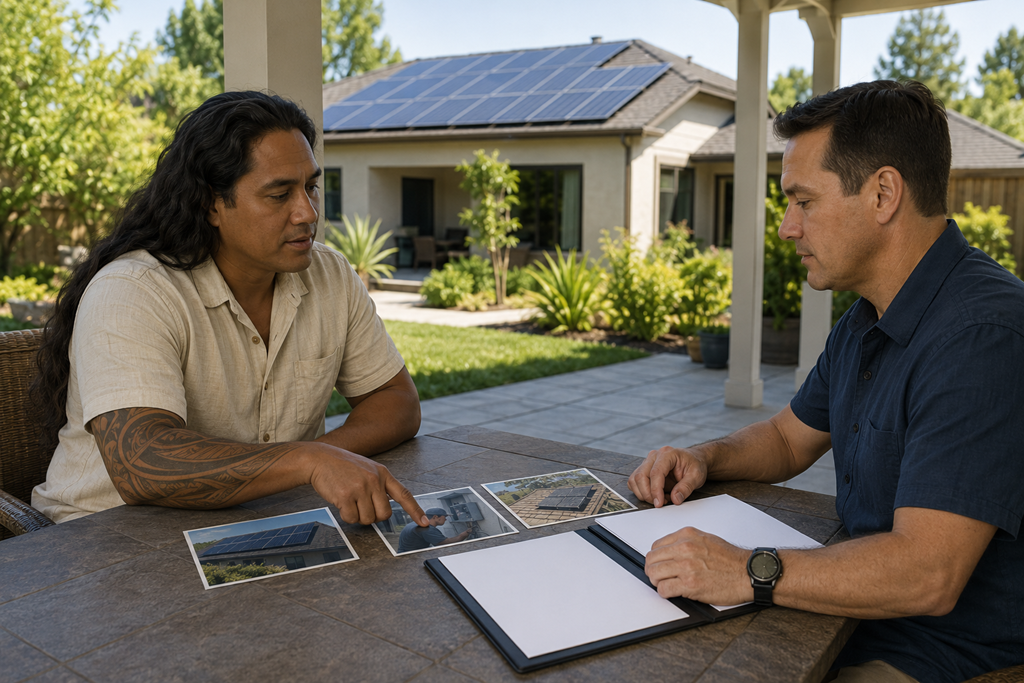
Before planning a solar project, Sacramento-area homeowners should first clarify what they want the system to accomplish, whether the property is ready for the work, and which parts of a proposal need explanation. Solar planning is not simply choosing a panel count or accepting the lowest price. It is a home-improvement decision involving the roof, electrical setup, energy use, financing, warranties, and expectations for future service.
Many homeowners begin with a simple question: “How many panels do I need?” That is understandable, but it can lead the conversation in the wrong direction. The more useful starting point is understanding the household’s goals and the property conditions that may shape the project.
A thoughtful plan should help the homeowner understand not only what may be installed, but why a particular design, scope, and payment arrangement are being recommended.
A Solar Project Should Begin With a Clear Goal
Not every homeowner is trying to accomplish the same thing with solar.
One household may be interested in reducing how much electricity it purchases from the utility. Another may want greater predictability in long-term energy expenses. Someone else may be preparing for increased electricity use from an electric vehicle, home addition, heat-pump system, pool equipment, or other future change.
These goals can lead to different project discussions.
A proposal based only on current electricity use may not reflect a homeowner’s expected needs several years from now. At the same time, planning for every possible future change can result in a system that does not match the household’s realistic plans.
Before comparing equipment or prices, homeowners should be able to explain what they hope the project will improve. A qualified provider should then be able to describe how the proposed design connects to that goal.
The Roof and the Solar System Need to Be Considered Together
Solar panels may remain on a home for a long time, which makes the condition of the roof an important planning consideration.
A roof does not necessarily need to look visibly damaged for questions to arise. Its age, surface condition, previous repairs, drainage patterns, roof shape, shading, and usable space may all influence the proposed installation.
Sacramento-area homes can also experience sustained sun exposure, heat, dry debris, and seasonal rain. These conditions do not automatically create a problem, but they make it reasonable to ask how the roof was evaluated before equipment is attached to it.
Installing solar without discussing foreseeable roof work can create additional inconvenience later. Panels may need to be temporarily removed and reinstalled if roofing work becomes necessary.
Homeowners do not need to diagnose the roof themselves. They should, however, understand whether the solar proposal assumes the roof is ready and who is responsible for making that determination.
A High Electricity Bill Does Not Tell the Whole Story
Past electricity use is an important part of solar planning, but a total monthly bill does not explain exactly how a household uses energy.
Usage may vary because of seasonal heating or cooling, changes in household occupancy, pool equipment, electric appliances, work-from-home schedules, or other routines. A recent increase may be temporary, while a planned home upgrade may increase future demand.
This is why a proposal should not feel like a simple conversion from one monthly payment to another. The provider should be able to explain which usage information was reviewed and what assumptions were made.
Homeowners should also understand that a production estimate is still an estimate. Roof orientation, shade, weather, equipment performance, system design, and household changes can affect how closely actual results match a projection.
The goal is not to eliminate every unknown. It is to make the assumptions visible enough that the homeowner understands what the projection does and does not promise.
More Panels Are Not Automatically Better
It is easy to assume that a larger solar system must provide greater value. That is not always the most useful way to evaluate a design.
A system should be connected to the homeowner’s goals, available roof space, expected electricity use, and any applicable interconnection or property limitations. Adding equipment without a clearly explained reason can increase project cost without necessarily improving the homeowner’s overall outcome.
A smaller design is not automatically better either. A proposal that ignores foreseeable changes in household energy use may leave the homeowner wondering why the system no longer seems aligned with the original goal.
The important question is not whether the system is large or small. It is whether the provider can explain why the proposed size makes sense for that particular home.
The Electrical Setup May Affect the Scope
Solar equipment must connect with the home’s existing electrical system. Depending on the property, that may lead to discussions about the main electrical panel, available capacity, wiring routes, meters, disconnects, or other related components.
Homeowners should not attempt to evaluate or modify this equipment themselves. Electrical work can be hazardous and should be assessed by qualified professionals.
From a planning standpoint, the important issue is whether electrical work is included in the quoted scope. A proposal that appears less expensive may simply leave certain work unaddressed or listed as a possible additional expense.
Before signing, the homeowner should understand which electrical conditions have been reviewed, which upgrades are included, and what might cause the project scope to change.
Payment Terms Can Make Similar Proposals Very Different
Two proposals can describe similar-looking solar systems while creating very different long-term obligations.
The homeowner may be purchasing the system outright, using financing, leasing equipment, or entering another type of payment arrangement. Each structure may handle ownership, maintenance responsibilities, early payoff, property transfer, warranties, and long-term costs differently.
A low initial payment does not explain the full arrangement. Homeowners should look beyond the monthly figure and ask what they will pay over time, who will own the equipment, and what happens if the home is sold.
Any discussion of tax treatment, incentives, financing consequences, or property-transfer obligations should be verified with qualified professionals who can evaluate the homeowner’s specific circumstances. A solar salesperson’s estimate should not be treated as personalized financial or tax advice.
Equipment Names Matter Less Than Understanding the Complete System
Homeowners often hear discussions about panel brands, efficiency ratings, inverters, batteries, monitoring systems, and warranties. These details can be important, but they should not distract from whether the whole project is understandable.
A well-known equipment name does not compensate for unclear installation responsibilities, vague warranty procedures, poor communication, or an unexplained system design.
The homeowner should understand the major components being proposed, why they were selected, who installs them, and who provides support if something stops working as expected.
Battery storage also deserves its own explanation rather than being treated as an automatic addition. Homeowners should understand what the battery is intended to support, what it may not support, and how its inclusion changes the price, equipment layout, maintenance expectations, and warranty coverage.
A Useful Proposal Makes the Project Boundaries Visible
A clear proposal should help the homeowner distinguish between what is included, what is optional, and what could become an additional expense.
That may include:
- Solar panels and mounting equipment
- Inverters and related electrical components
- Permitting and inspection coordination
- Utility interconnection support
- Roof or electrical upgrades
- Monitoring equipment
- Battery storage
- Equipment warranties
- Workmanship coverage
- Post-installation service
- Panel removal and reinstallation policies
A proposal does not need to answer every possible future question. It should, however, make the basic project boundaries understandable.
When important details are discussed verbally but do not appear in the written agreement, the homeowner may have difficulty confirming what was actually promised.
Questions That Can Improve the Planning Conversation
Homeowners can keep the discussion focused by asking a few direct questions:
- What household usage and future changes were considered in this design?
- How was the roof evaluated before preparing the proposal?
- What assumptions were used to estimate electricity production?
- Which roof, electrical, permit, and interconnection costs are included?
- Who is responsible for service if the system develops a problem?
- What happens to the agreement or equipment if the home is sold?
- Which statements are estimates, and which obligations are guaranteed in writing?
A provider should be willing to answer these questions in plain language. Technical terms may be unavoidable in some parts of the conversation, but the homeowner should not be expected to sign an agreement they cannot reasonably explain back in their own words.
Pressure Can Hide Unanswered Questions
Solar projects can involve large numbers, unfamiliar equipment, and lengthy agreements. That can make it tempting to focus on a promotional offer or projected monthly savings and leave other questions for later.
A rushed decision may become especially concerning when a provider discourages comparison, avoids putting statements in writing, promises results without explaining assumptions, or pushes for a signature before the property has been meaningfully evaluated.
Pausing does not mean rejecting solar. It simply gives the homeowner time to compare the proposed system, property conditions, service responsibilities, and payment terms as one complete decision.
A professional provider should be able to explain why the recommended project fits the home without relying on pressure.
The Best Solar Plan Is One the Homeowner Can Understand
Planning a solar project involves more than deciding whether panels would look appropriate on the roof. The homeowner should understand the project goal, the condition of the property, the assumptions behind the design, the complete scope of work, and the long-term responsibilities attached to the agreement.
A proposal may still contain technical details, estimates, and variables. The difference is that those uncertainties should be explained rather than hidden behind a monthly payment or broad savings claim.
Sacramento-area homeowners are better prepared to compare local providers when they can see how the roof, electrical system, energy use, equipment, financing, and future service fit together. A good plan is not simply the one with the most panels or the lowest apparent price. It is the one whose reasoning and responsibilities are clear before work begins.